An EMR and practice management software for eye care professionals.
ROLES
Co-founder
Principal Designer
Lead Engineer
Marketing
Technical support
PERIOD
January 2023 onwards
(3 years)
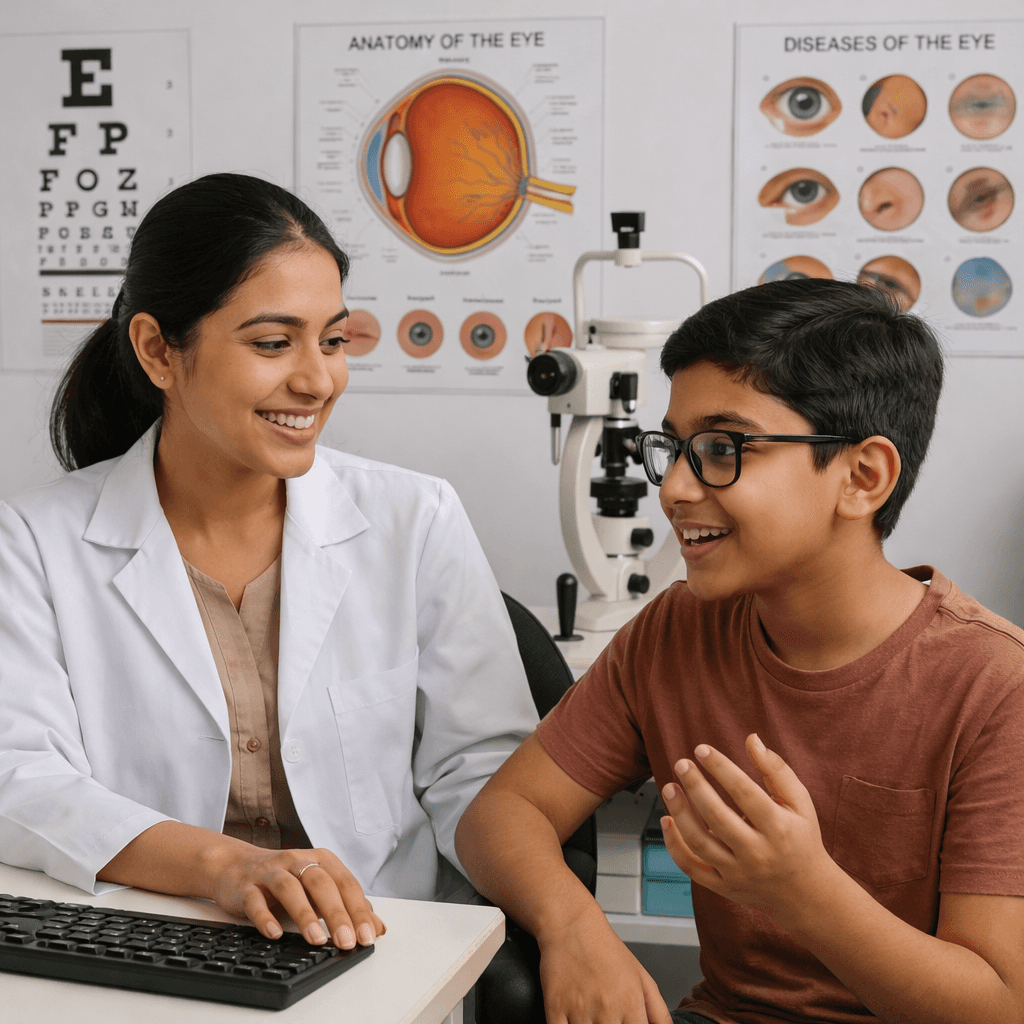

ASIRA Clinical is an affordable and simple, cloud-based practice management and electronic medical record (EMR) software for eye care professionals, particularly hospitals and clinics in developing markets.


Challenge
Majority of eye care practices and hospitals in emerging markets still rely on paper to record patient data. Misplacing or losing records is a poor patient experience which leads to losing the patient and revenue. Owners however, are apprehensive about moving to the cloud due to data theft and privacy concerns. Existing desktop solutions focus on orders and billing and lack comprehensive tests and templates required for an accurate diagnosis.

Solution
Launched a browser-based EMR tool with over 60 tests and features like pre-filled templates for common vision disorders, WhatsApp integration, AI for clinical analysis, and order and invoice management, helping practices save time, reduce overheads, retain patients, and increase revenue. Privacy concerns are addressed using a role-based system which controls which resources a user can access.

Impact

onboarded
200+
hospitals and clinics over 3 years helping them move from paper to digital, saving time and money.
REDUCED CHAIR TIME BY
~ 50%
by auto-populating previous test data, using pre-filled patient history forms and using AI for faster clinical analysis.
INCREASED FOLLOW-UPS BY
60%
using automated WhatsApp reminders a day before the booked follow-up appointment, with an option to reschedule.
Avg. revenue increase of
₹ 250-300
per consultation as patients value more comprehensive reports sent digitally, and a professional clinical experience.
time saved per day
1-3 hours
Since reports are automatically created and sent to patients digitally, there are no paper reports to complete.

~11 minutes

eNHANCED CLINICAL EFFICIENCY BY OFFERING
60+ tests
reduced missed orders by
25%
Users have been able to easily find, follow up and complete unfulfilled and past due orders.
data security with
user roles
Roles for Front office, Practitioners and Admin come with different resource access rules.
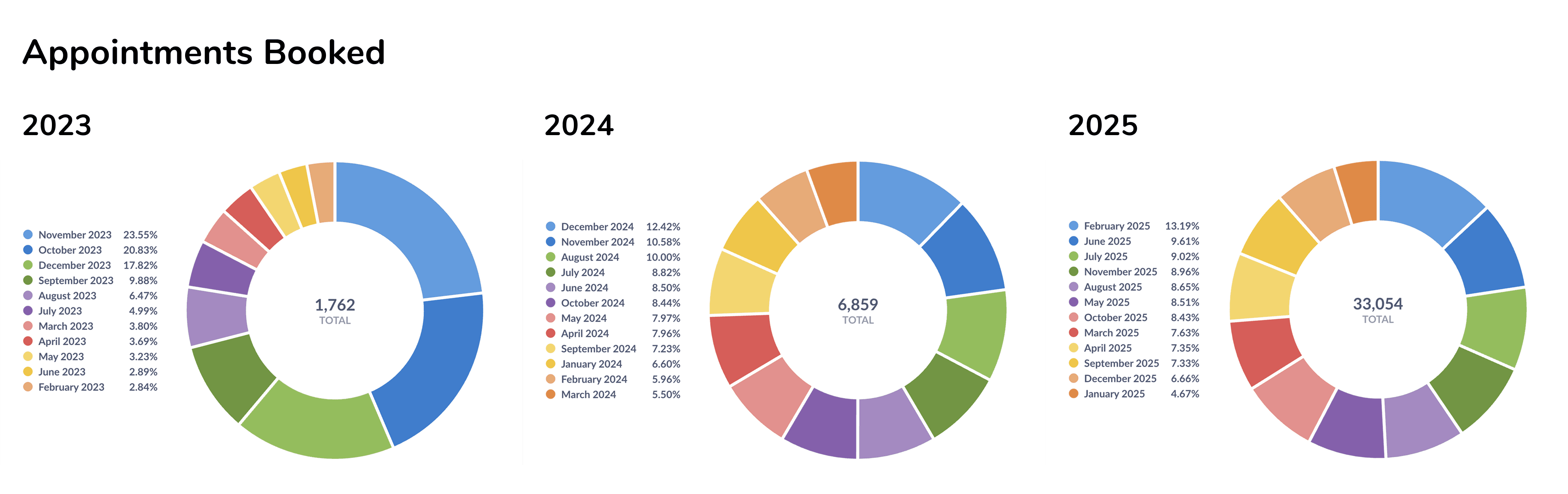
YOY APPOINTMENTS GROWTH
> 300%
The growth in appointments booked corresponds to usage by newly added practices.
Meeting customers and getting feedback
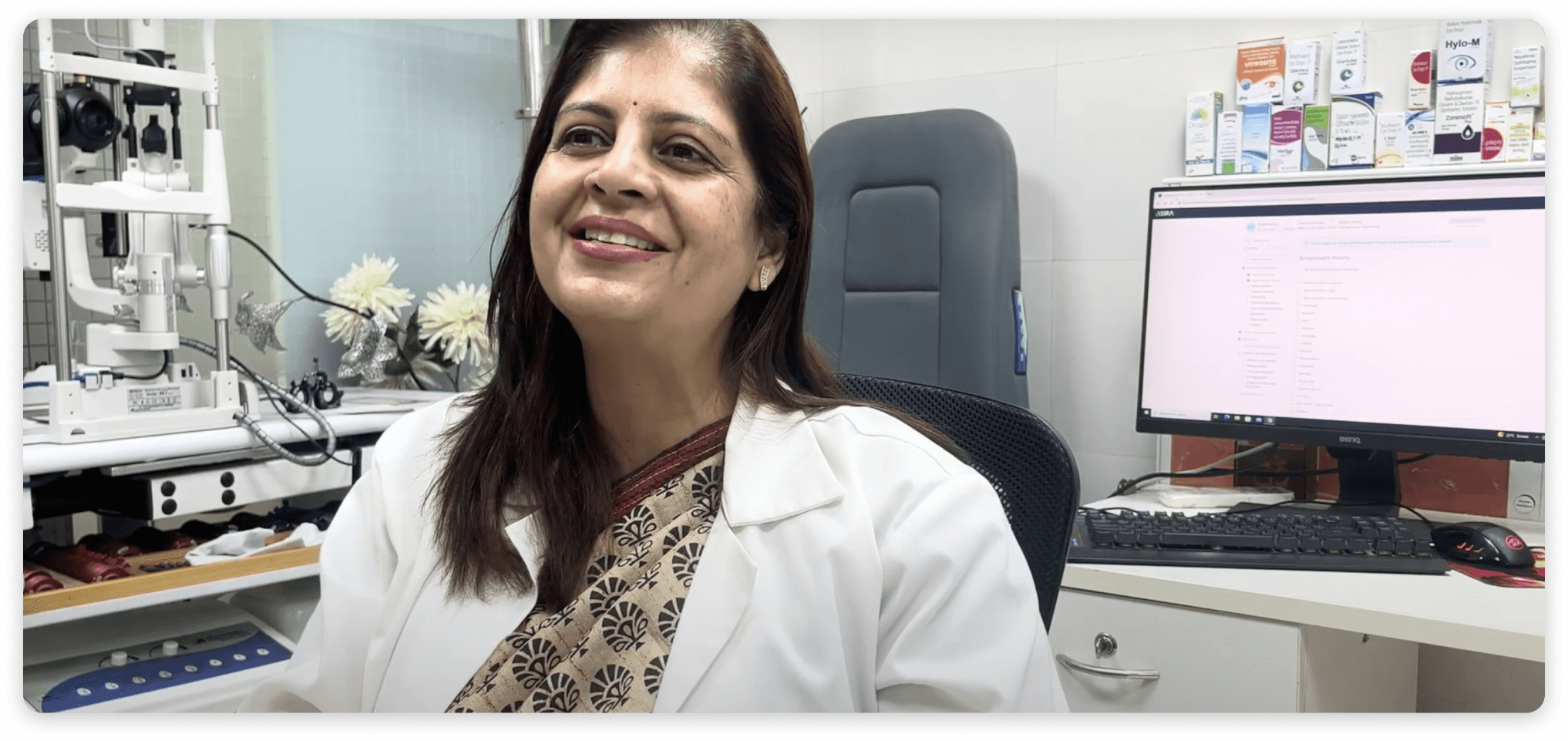
" ASIRA has allowed me to increase my consultation charges as I can now show patients a full mark up of the work done. "
Monica Chaudhry
Director of MCVI, Gurugram

in-depth version
Understanding the eye care industry

In most of the world, taking an eye test and purchasing corresponding frames or lenses happens in the same store or practice. However, in emerging markets such as India, these roles are often performed separately by different practices or stores in different locations.
This case study focuses only on the Indian market.
Eye care professionals are broadly divided into three main categories - opticians, optometrists and ophthalmologists.
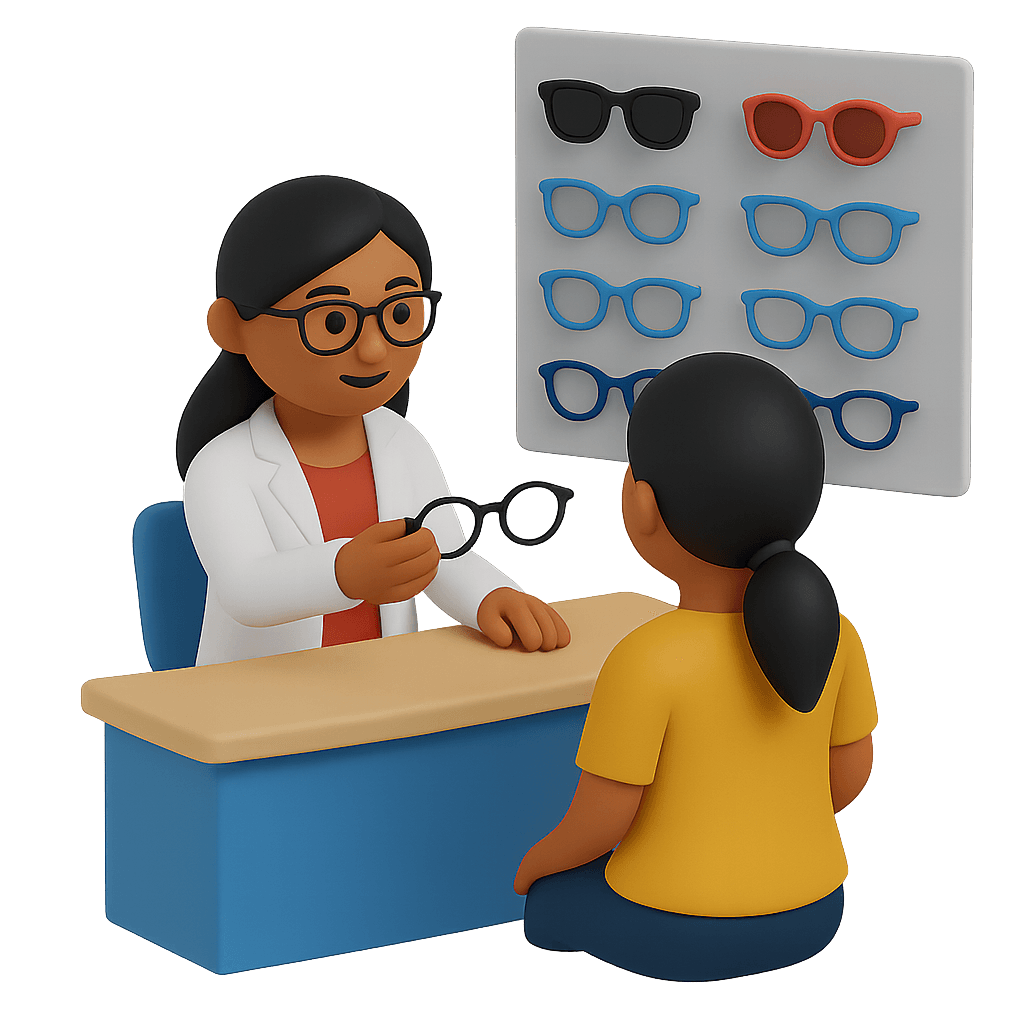
Opticians
Opticians run optical stores to sell spectacles, frames, sunglasses, contact lenses and more. In India, an optician may or may not be an optometrist.
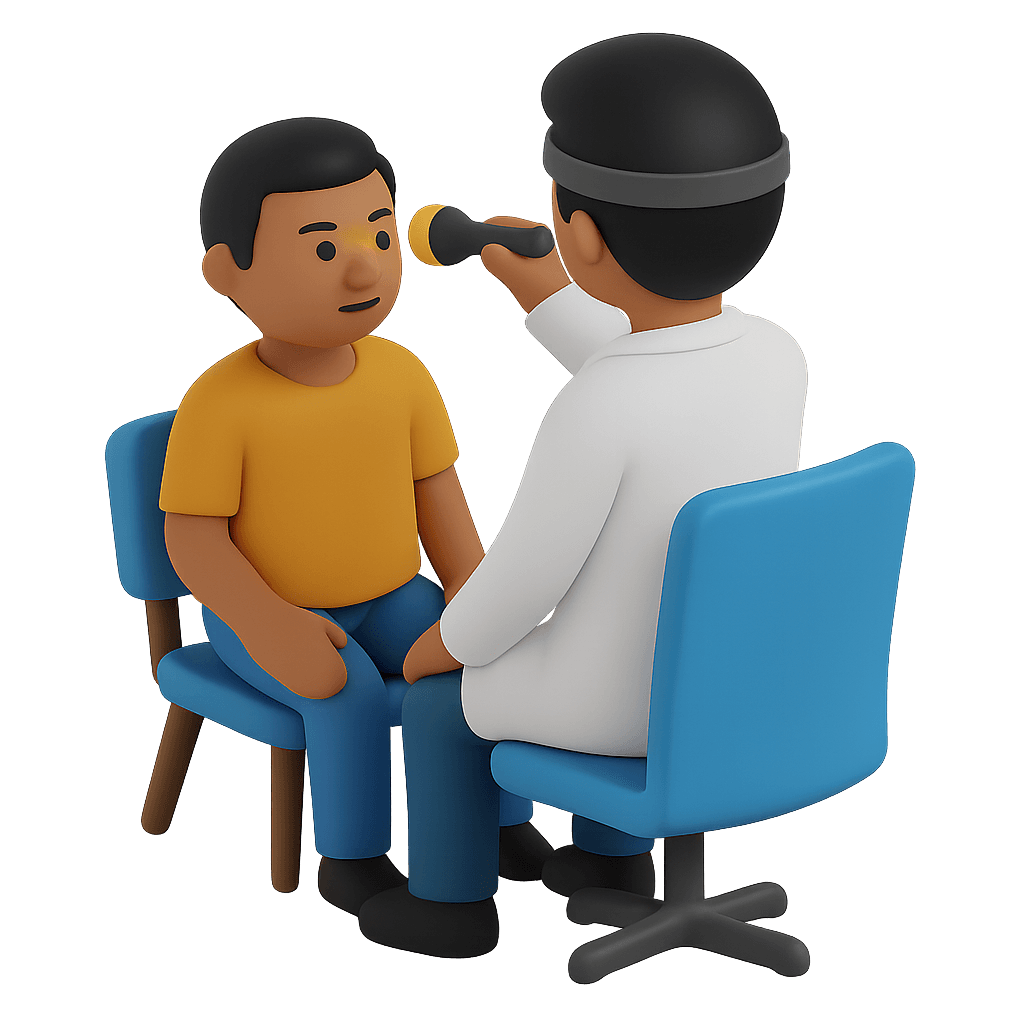
Optometrists
Practitioners that perform eye examinations, provide the prescription, and recommend if surgery or further evaluation if requried.
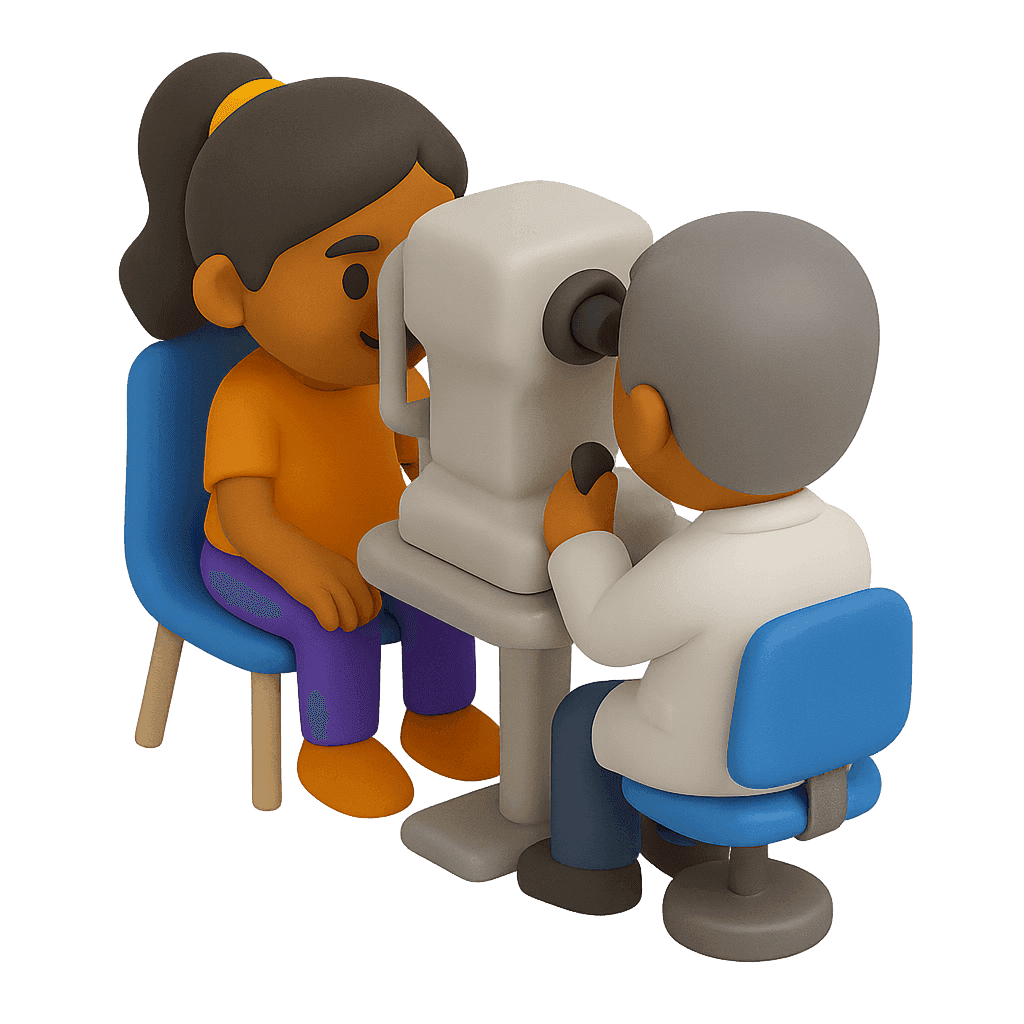
Ophthalmologists
The doctor or surgeon who will perform the surgery recommended by the optometrist, if required.
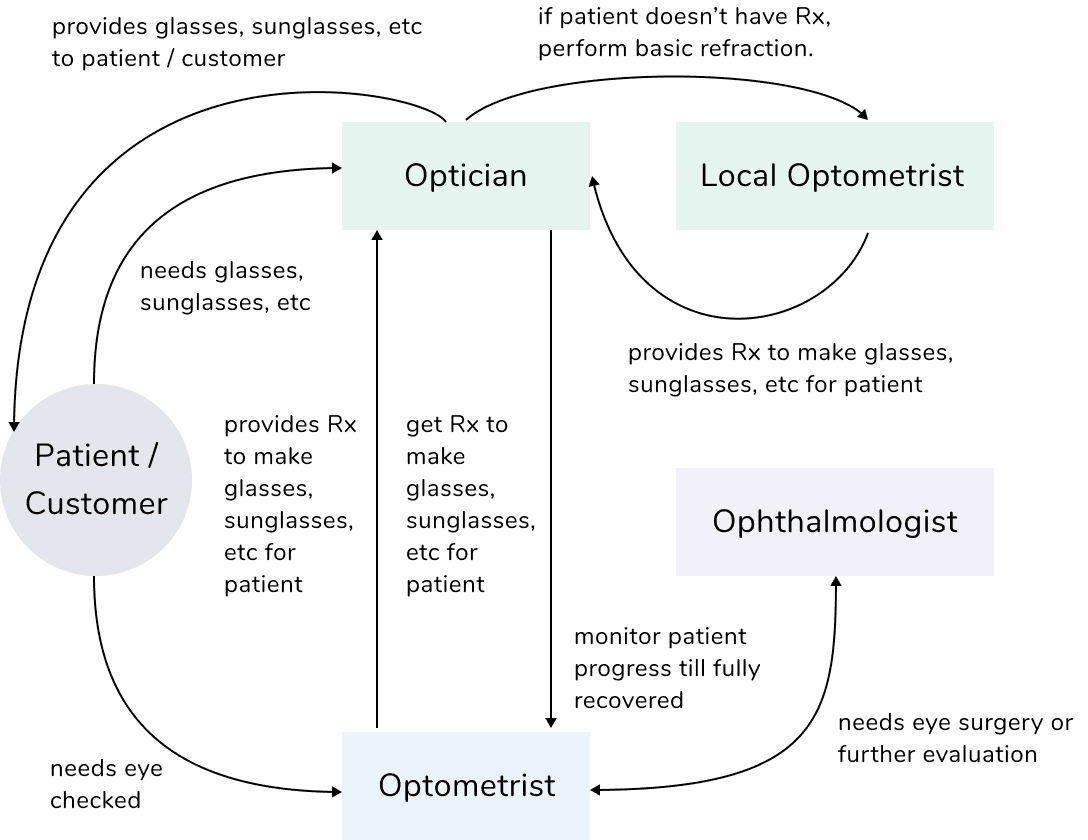
Relationship between the different eye care professionals and patients/customers.

While speaking to users, I realised that opticians had a different audience and smaller set of requirements. Hence I designed, developed and launched the
ASIRA Optician App specifically for optical stores. You can read about the whole process in the case study.
Read the case study
Understanding our users
After weeks of interviews with practitioners, clinic staff, admin staff, locums and optical store owners, I was able to create user personas that we refer to whenever we build new features.
As the product evolves, so do our personas, based on our new learnings about our users.

user concerns
In the summer of 2022, my co-founder, Isha Dave - a practicing optometrist of 15 years who graduated from the London School of Optometry and who runs her own practice in addition to being a lecturer at the Lotus School of Optometry, Mumbai - shared the concerns she and other practice owners face daily because of their paper based systems. They also shared their concerns and fears about moving from paper to digital.

Paper records create Poor Patient experience
Lost REVENUE due to poor tracking of orders and bills
available software is unreliable and expensive

Cant find patient PAPER records when needed
HavE to call patients to confirm bookings
current software does not provide full set of tests

EX-employee can take patient data to new practice
front office can access patient health records
loss of all data in a fire or other natural calamity

does not see the value of using software
Never considered using software for their practice
Sections and features
I first identified the primary entites of the system
Patients
Appointments
Tests
Orders
Invoices
Practices
Opportunities and market gaps
After identifying the primary sections, we reviewed the concerns that users had shared with us and used the MoSCoW method to determine the priority of the tasks.
As the only designer and engineer, I was responsible for choosing which features to release and when based on user demand and effort.
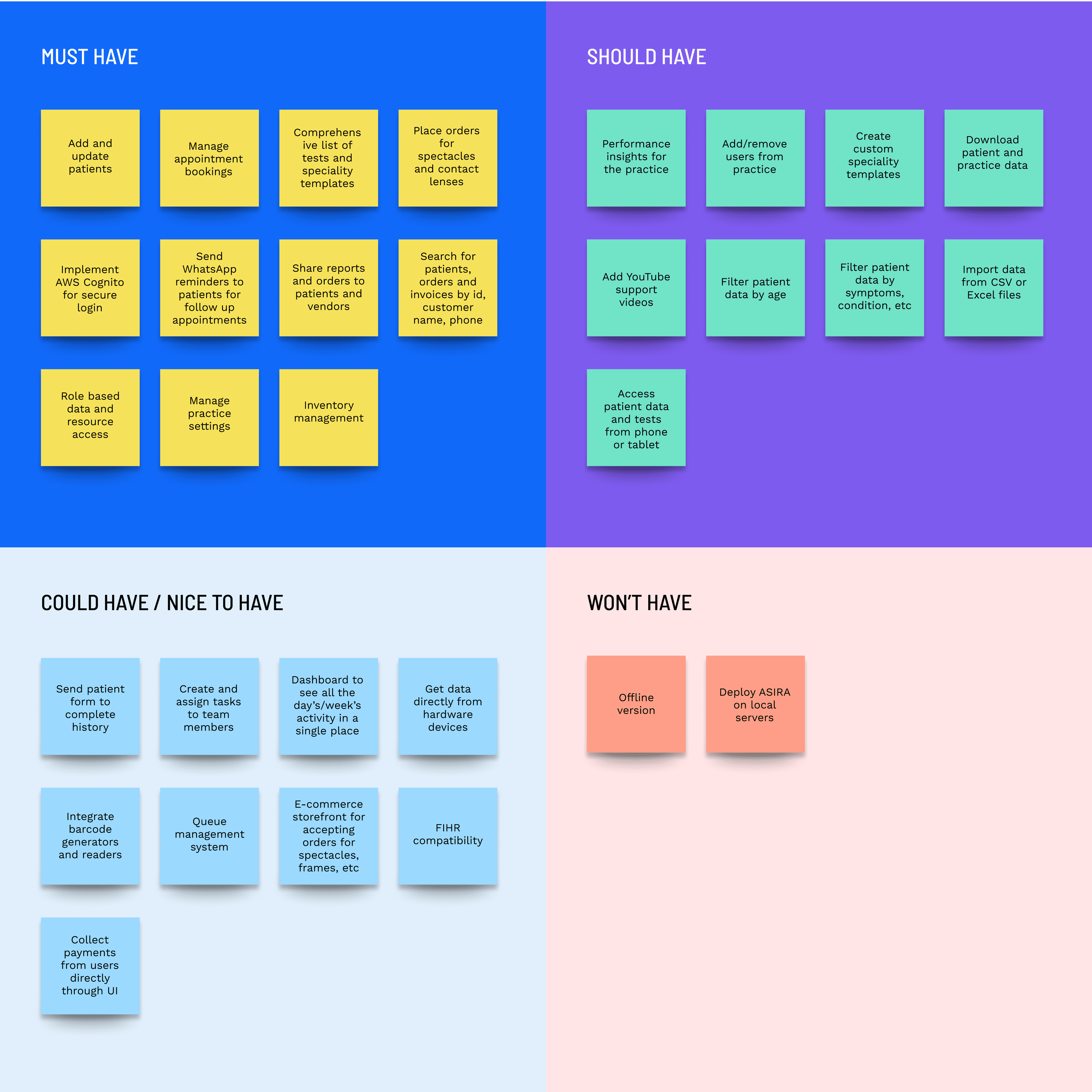
Patient Management
Practitioners need to be able to access patient records anytime, anywhere. The name and phone number of a patient are often the most important pieces of identifying data used.
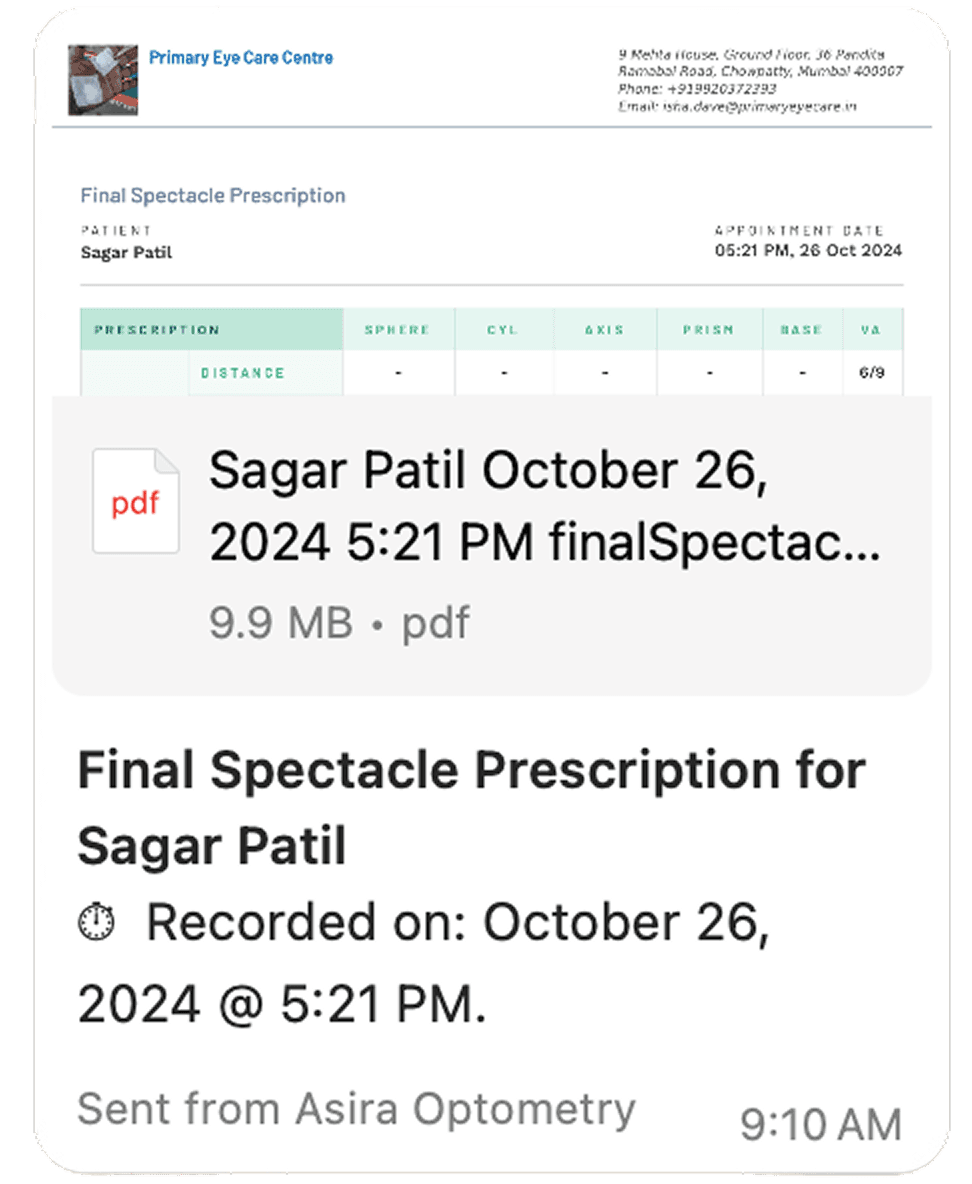
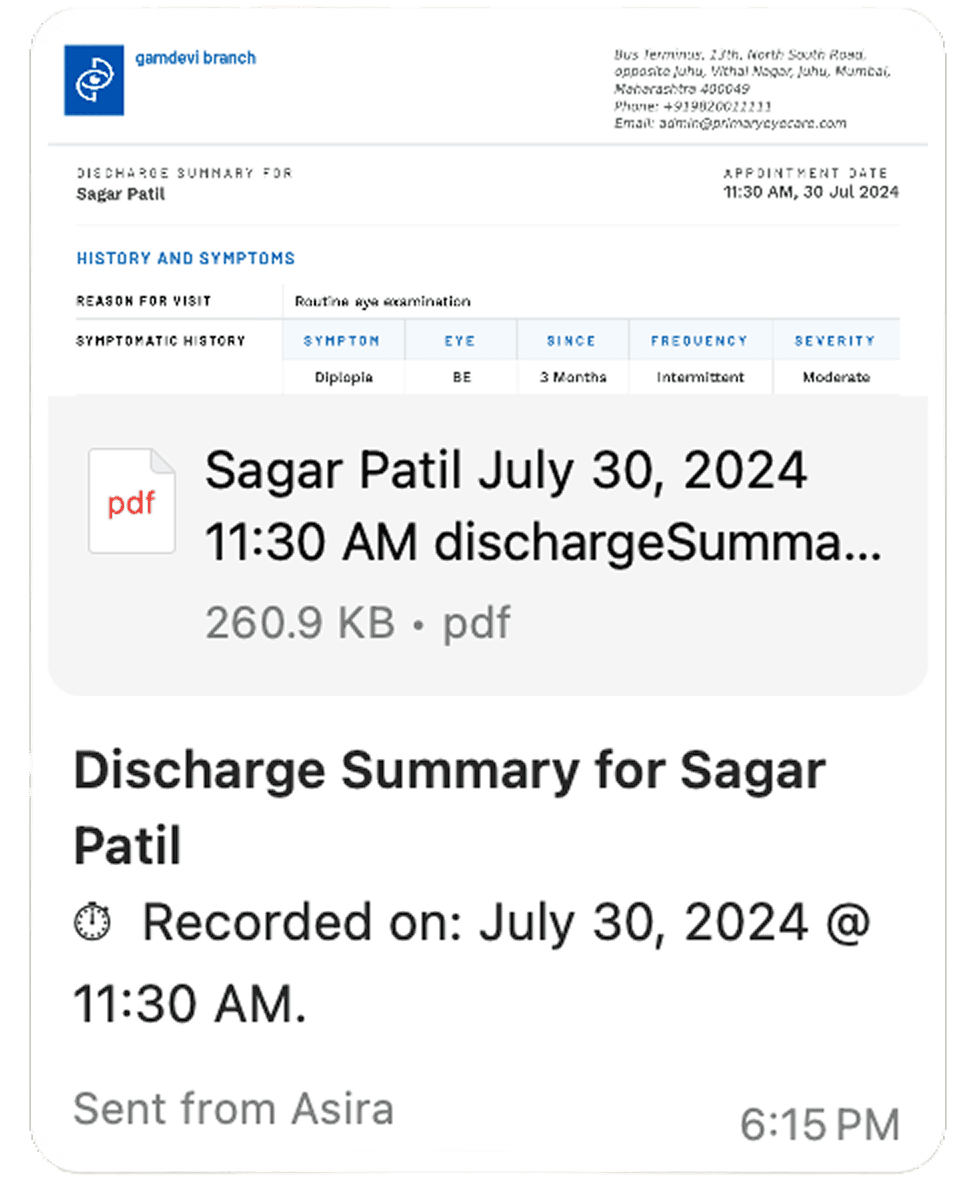
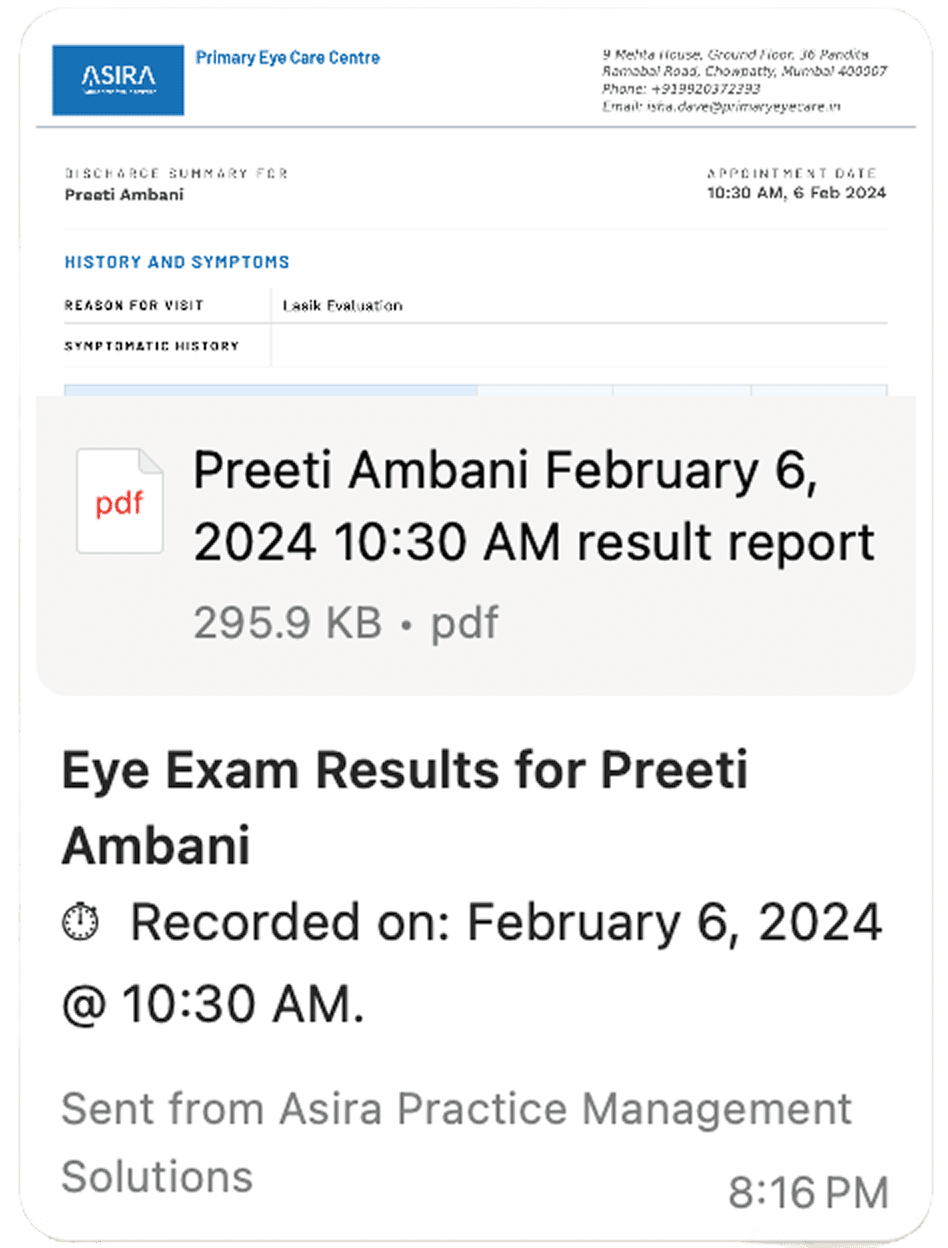
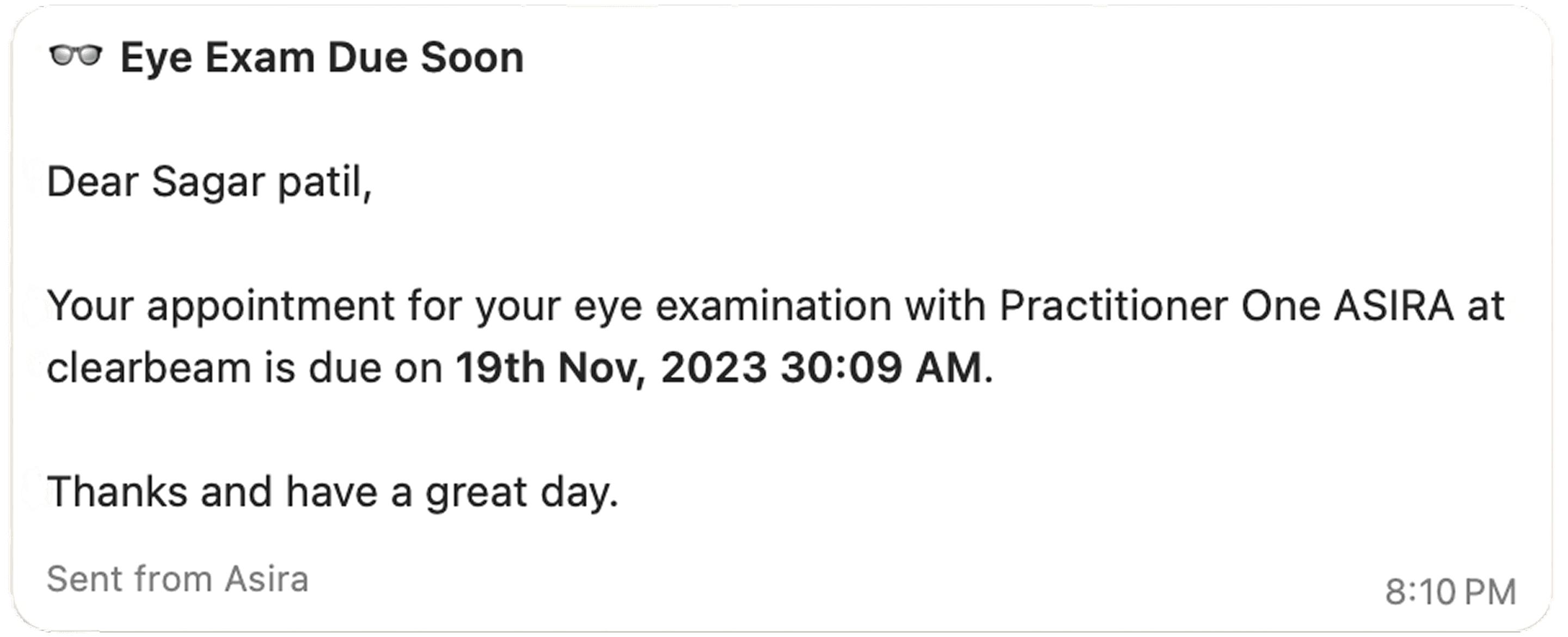
Improve patient communication with WhatsApp
WhatsApp is by far the most popular messaging app for both individual and group chats, used by 80% of Indian internet users. Users also spend 14 hours and 48 minutes per month on WhatsApp, marking its position as India’s leading messaging platform*.
We used the WhatsApp API to automate report deliveries to patients, sending reminders for upcoming appointments, replying to basic patient queries and automating the scheduling and booking of appointments.
*
https://www.meltwater.com/en/blog/social-media-statistics-india

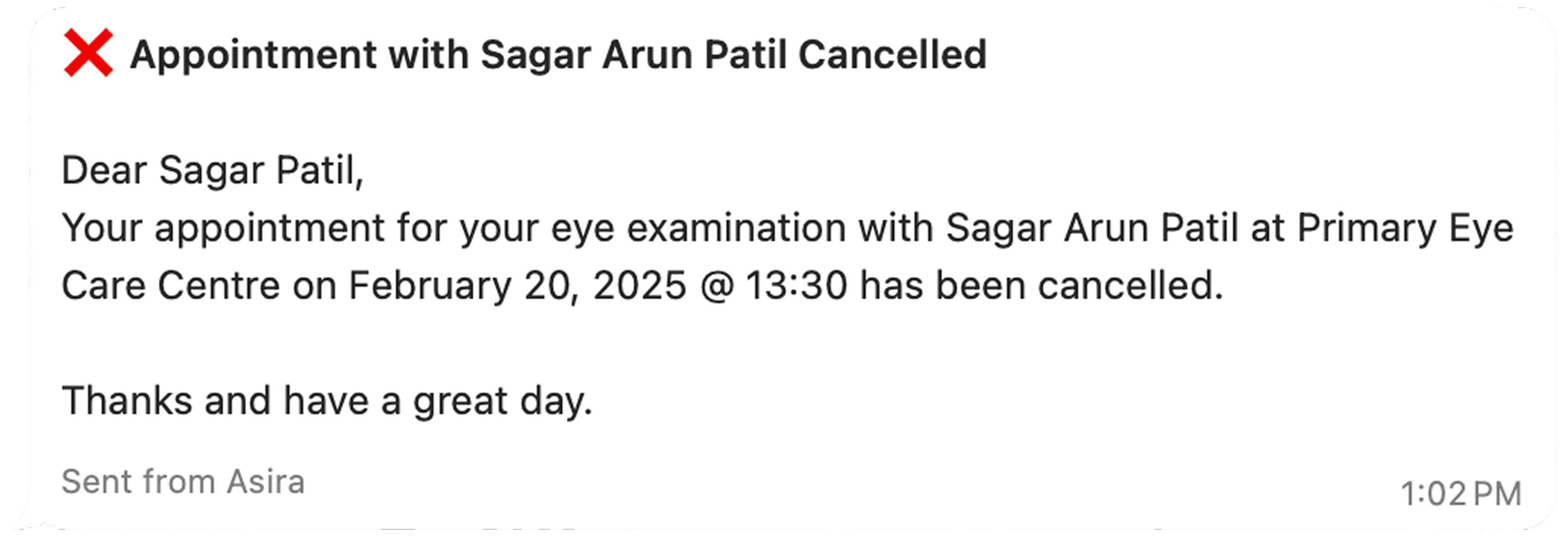
Manage appointment bookings and tasks for the practice
Designing the User experience
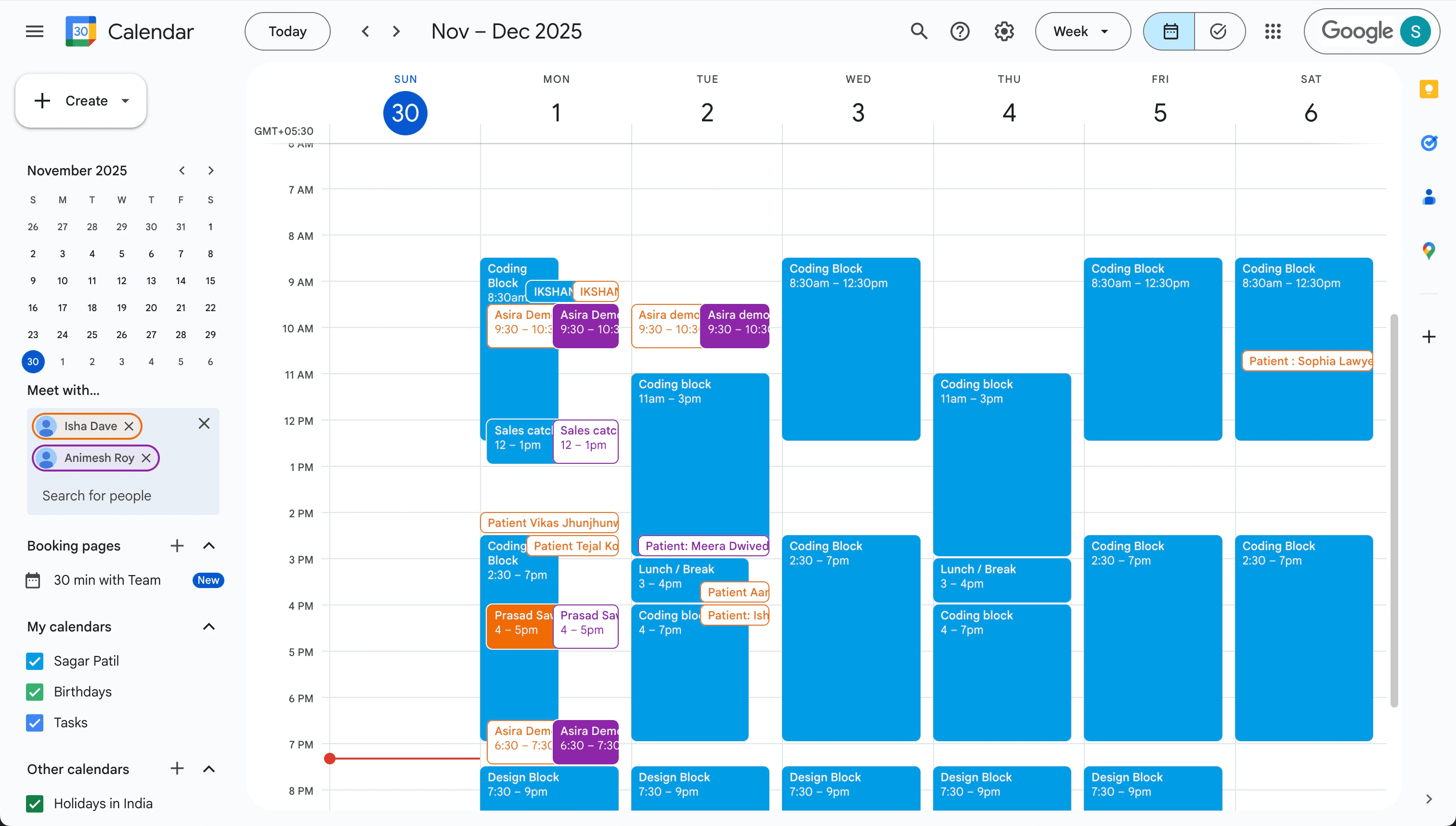
Since most interviewees use Google Calendar or an equivalent software to manage their day, I created an Appointments page that allows users to book and manage appointments, view the schedule for other team members and create and monitor tasks for the team.
I used FullCalendar.js to get a Google Calendar style UI along with client-side functionality out of the box.
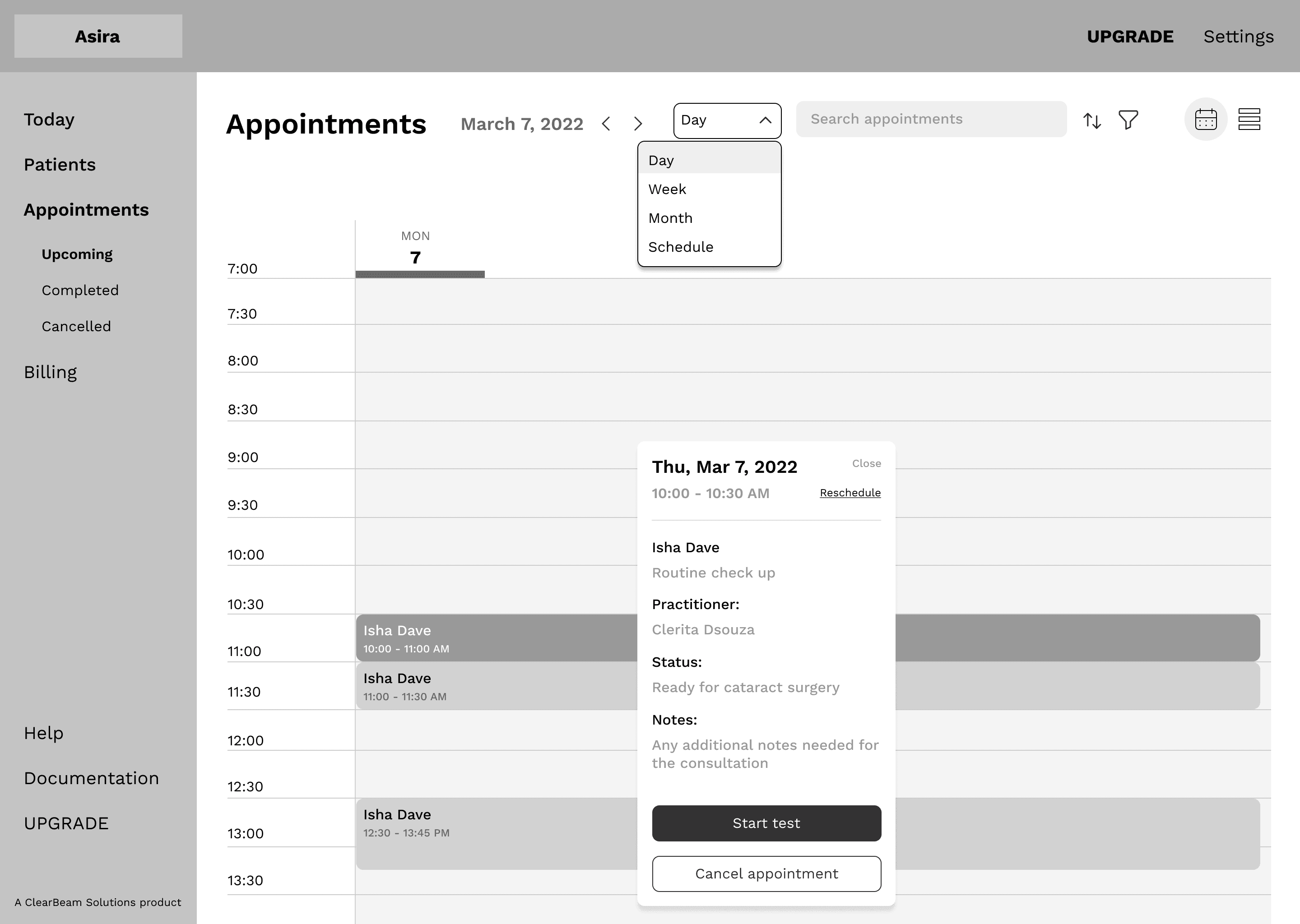
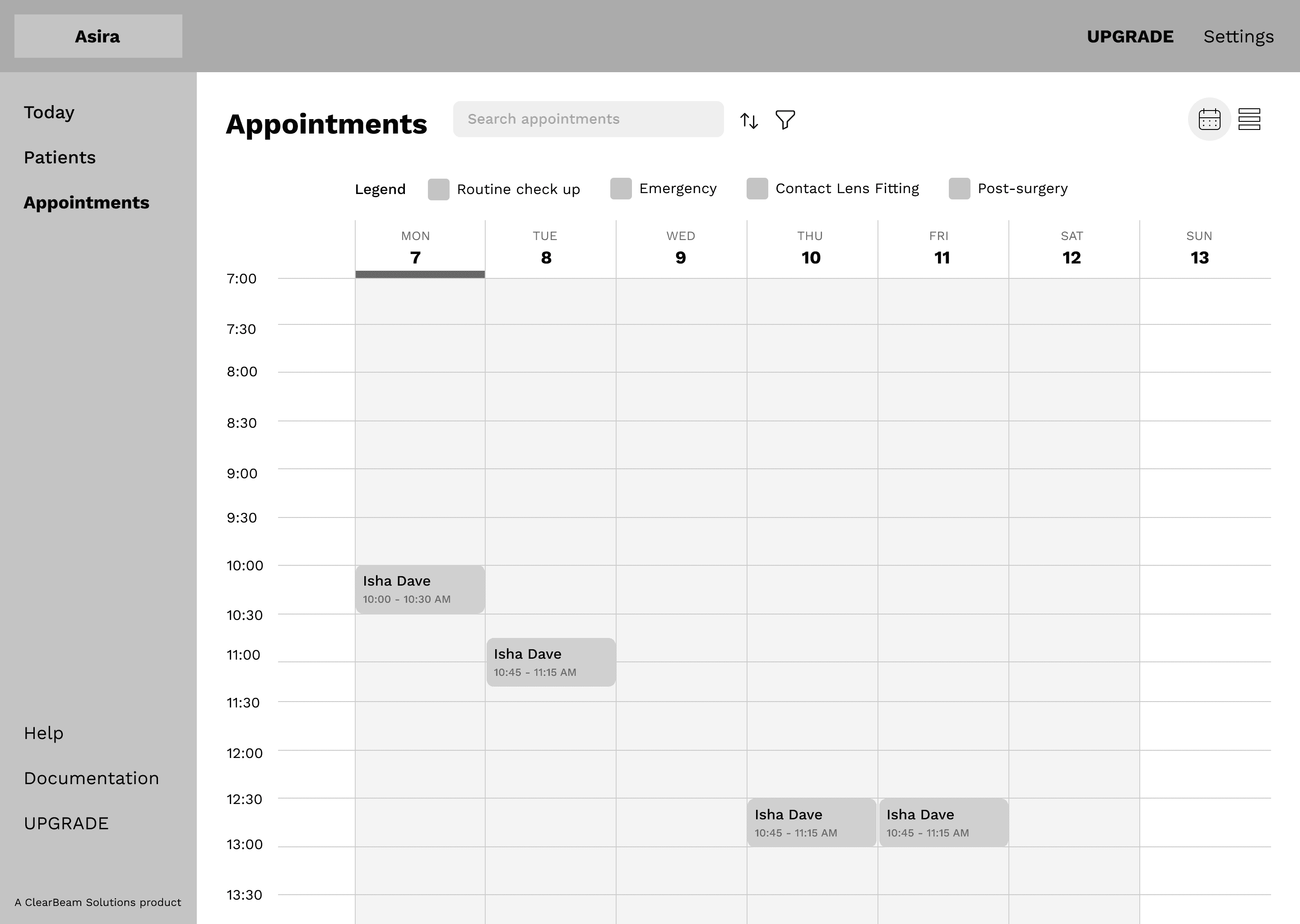
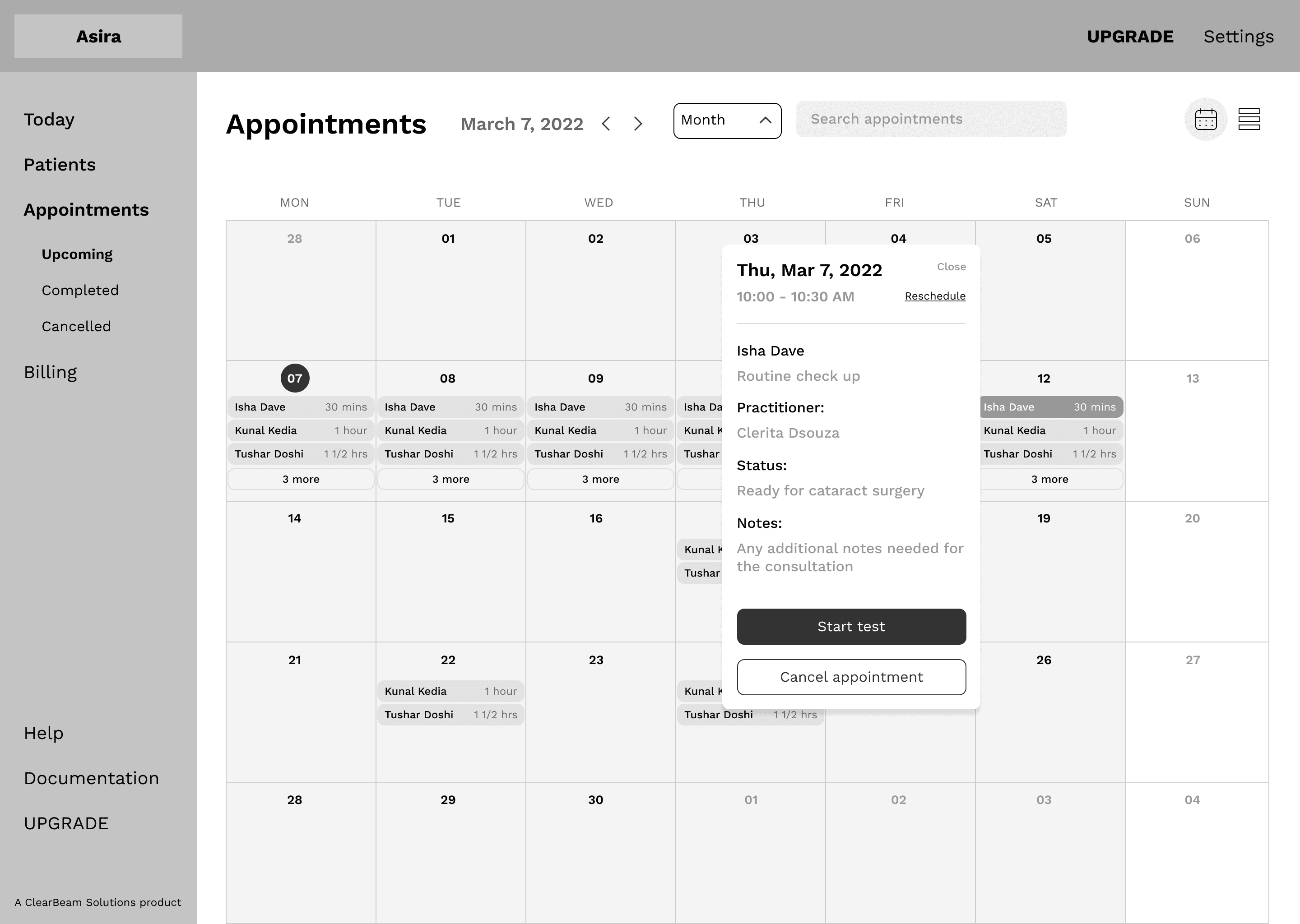
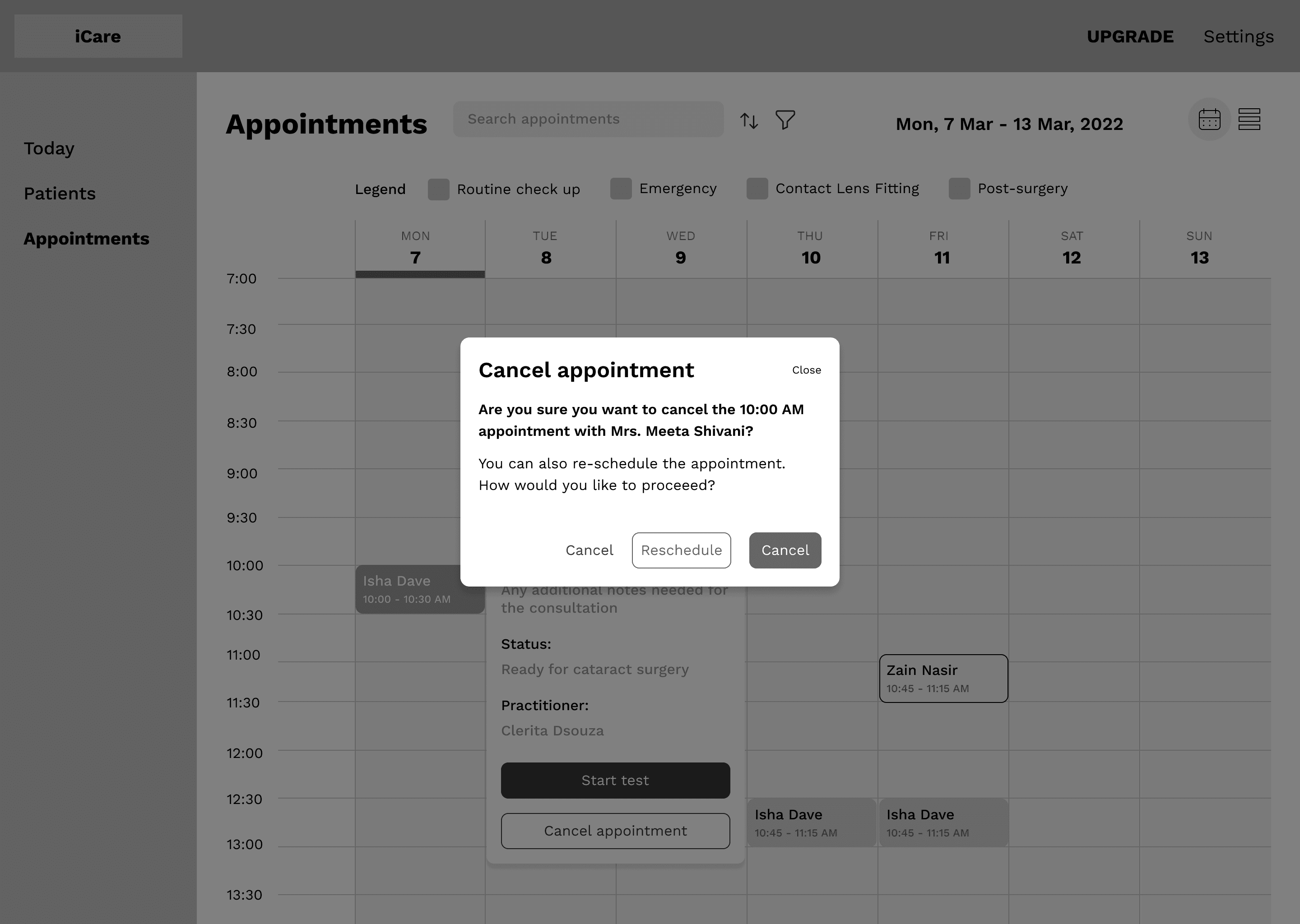
Wireframes for the Google Calendar style UI for appointments
View calendars of the entire team
In practices with more than a single practitioner, the front office staff or receptionist is often responsible for booking and rescheduling appointments for different practitioners.
Hence they need to be able to view the calendars for all practitioners to avoid booking conflicting appointments, over burdening practitioners and optimising chair time across the clinic.
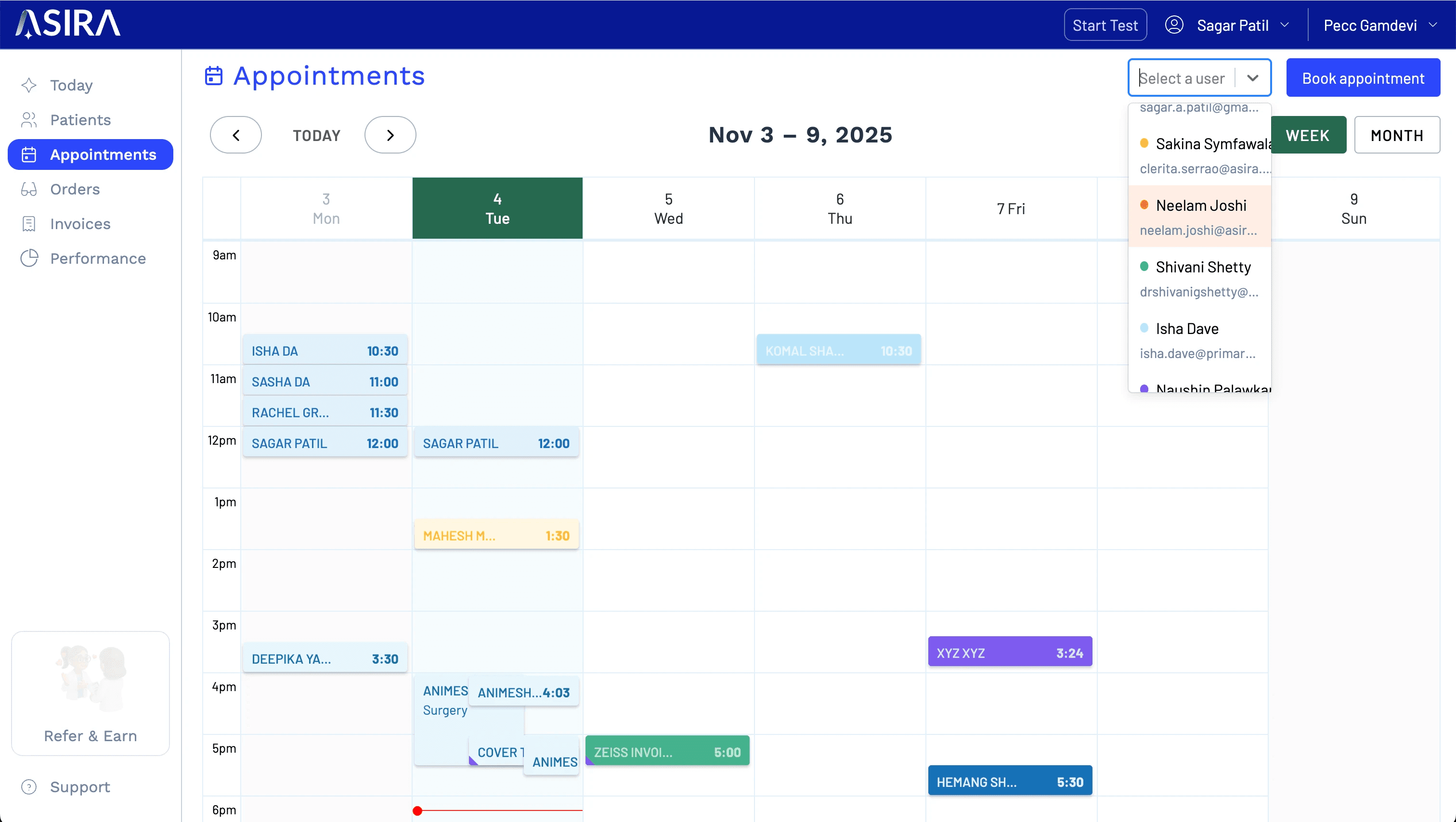
Booking Appointments

Advance bookings
80% of appointments are booked in advance, after a referral or consultation.

Walk-in's
The remaining 15-20% are patients who walk in with an urgent condition.
creating and managing tasks
When planning their day, users can book appointments or create tasks for the team from the same interface.
Starting an eye exam
An eye exam takes place in four steps:
1
record eye tests
Tests performed during an eye exam depending on the speciality template selected. Tests can only be edited for 24 hours after the test has ended.
2
Create Reports
Prescriptions and discharge summaries that are given to patients. Like tests, reports can only be edited for 24 hours.
3
Place Order (optional)
Place orders for the recommended spectacles or contact lenses.
4
Settle Invoice
Collect any pending payments, clear the final bill and deliver order to the patient.
Recording eye tests and maintaining patient EMR
The USP of ASIRA Clinical is our comprehensive optometry and ophthalmology test taking and record keeping tools along with speciality templates that take the guesswork out of any eye examination.

For the sake of brevity (and sanity), this case study only covers tests that were challenging to design. In total there are over sixty tests and twenty default templates.
Recording patient history
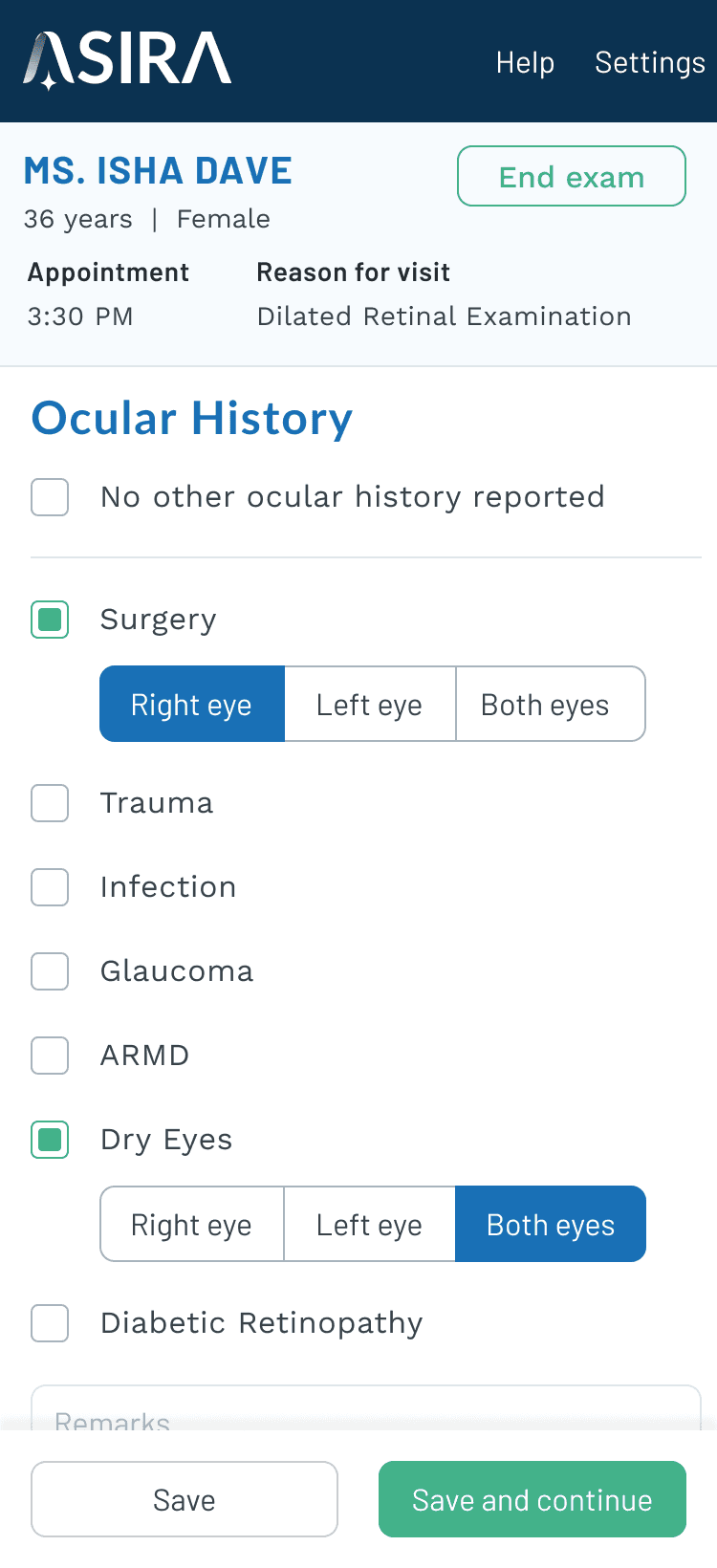
Taking a patient history is the fundamental first step to starting an eye examination. An accurate patient history is required for an optometrist to decide the set of tests that need to be performed during the exam.
Family history, ocular history, history of surgery or symptoms and lifestyle are a few factors that need to be captured accurately for an accurate diagnosis.
Recording a prescription (Rx)
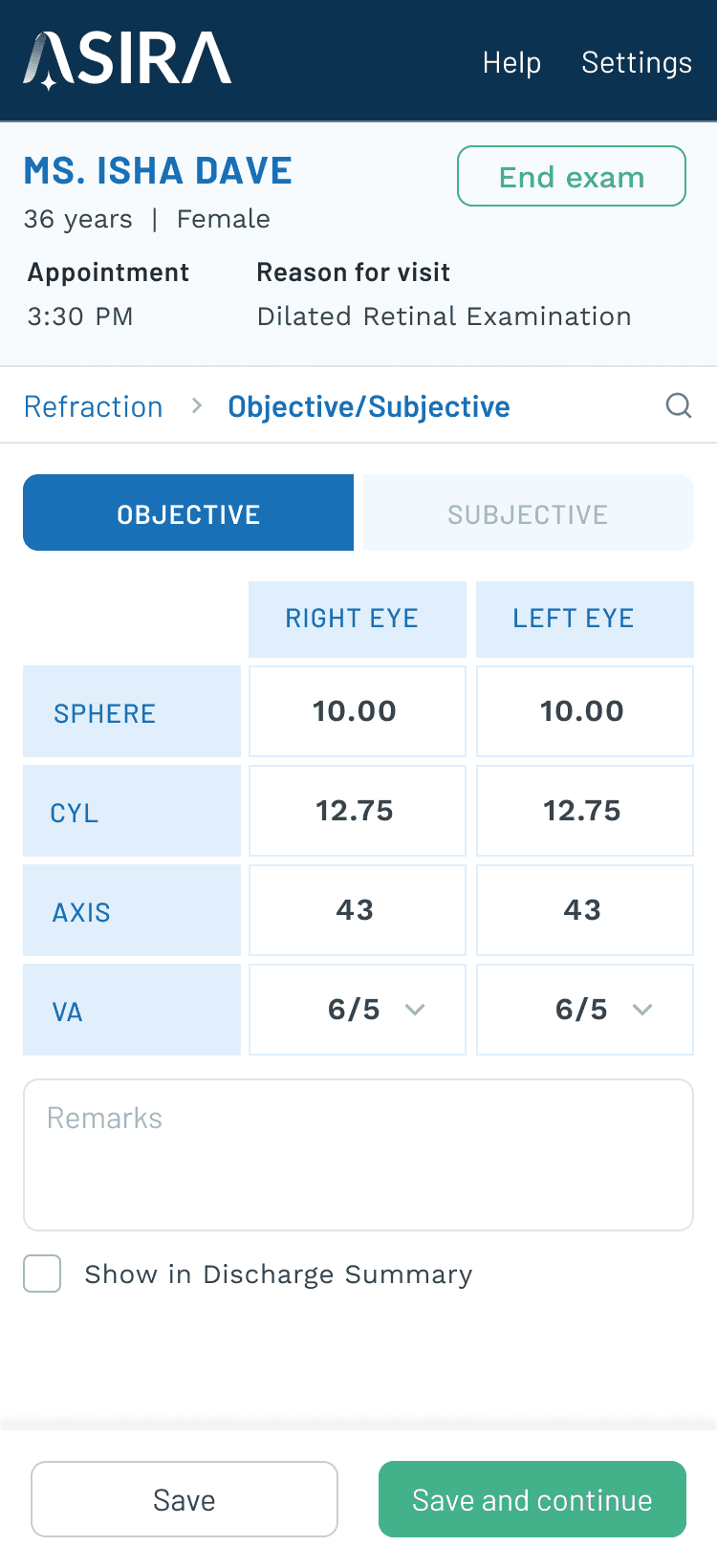
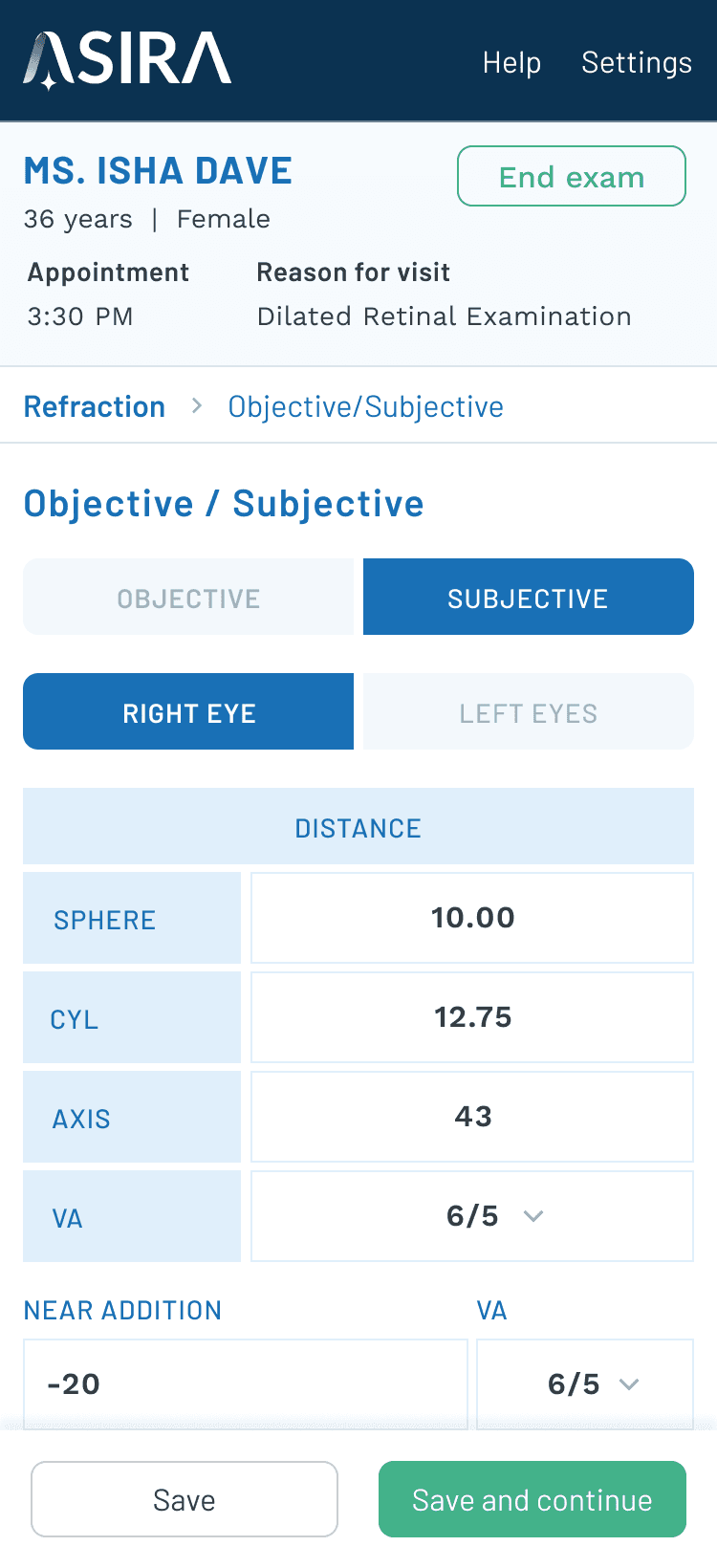
To create a spectacle or contact lens Rx that a patient can use, an optometrist has to perform an Objective and Subjective Refraction to obtain the patient's eye power which is a combination of four values:
Sphere (SPH)
the lens power needed to correct nearsightedness or farsightedness.
Cylinder (CYL)
indicates the amount of astigmatism, a vision condition caused by an irregular shape of the cornea or lens.
Axis
a number between 1 and 180 that specifies the orientation of the astigmatism correction on a lens.
Addition (ADD)
the lens power needed to correct nearsightedness or farsightedness. This value is optional.
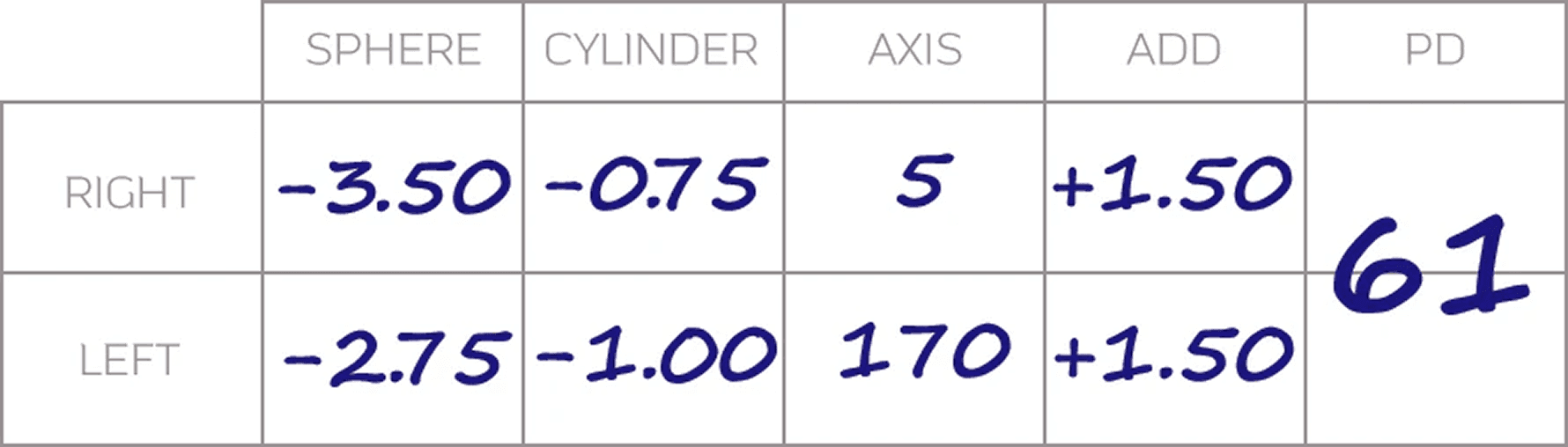
Sample Rx format used by optometrists to record a patient's eye power

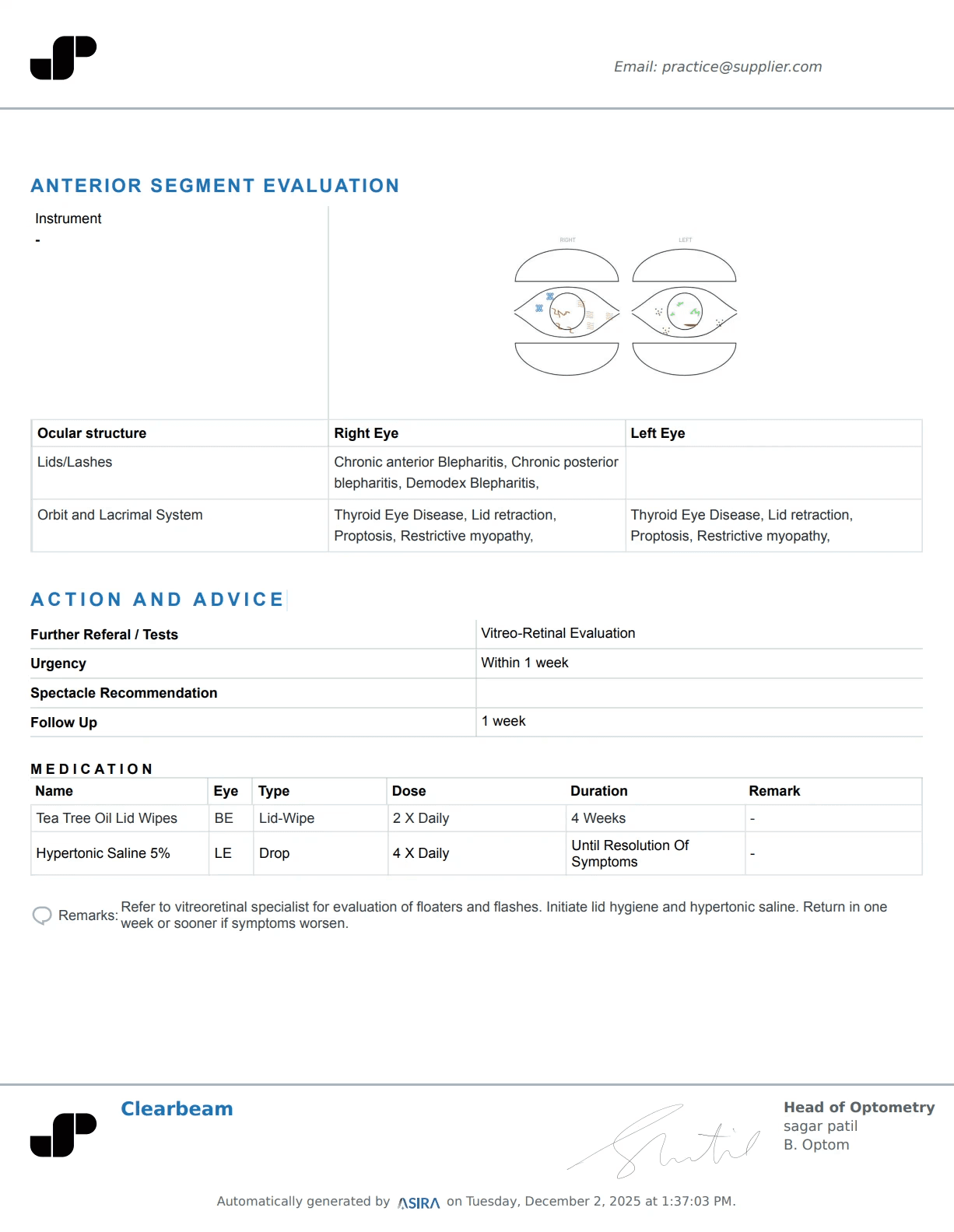
Final design of the Objective-Subjective Refraction test.
Drawing Tools
Optometrists ❤️ drawing tools!
Drawings allow practitioners to accurately communicate to the patient and referred practitioners, the ocular defects that are affecting the patient.
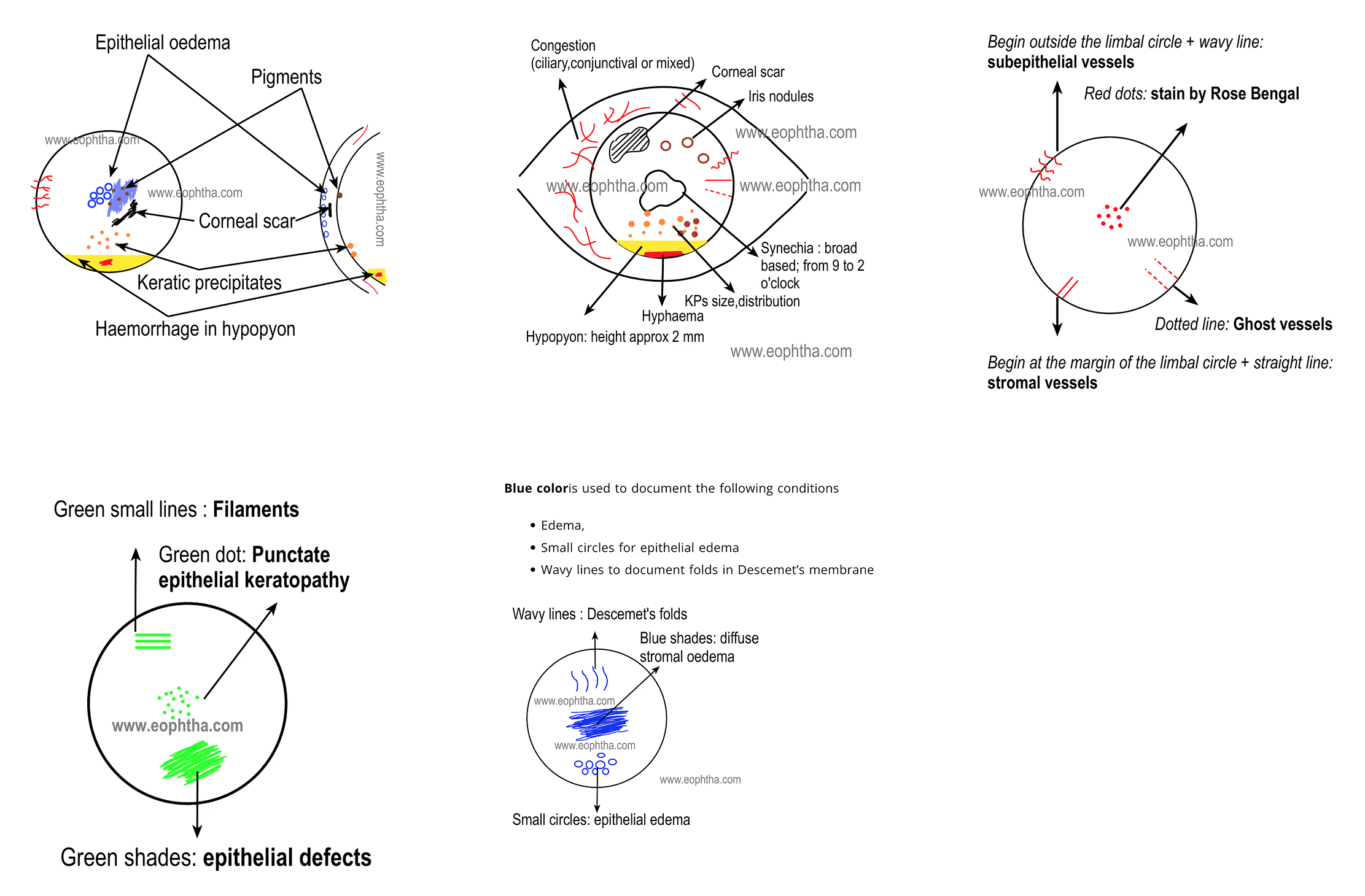
Examples of ocular diagrams recorded by eye care practitioners during an eye exam.
The diagrams above are examples of Anterior and Posterior Segment Evaluation diagrams.
I created a set of icons for various ocular conditions that users can add to the diagram. This is one of the most loved features!

Drawing tools in action! The code uses Konvajs to draw on the canvas element and saves the image to an S3 bucket.
GRADING SCALES

Grading scales are standardized systems used by practitioners to grade the severity of age-related cataracts based on the appearance of the lens. It uses a decimalized scale to grade four types of cataracts: nuclear opalescence (NO), nuclear color (NC), cortical (C), and posterior subcapsular (P).
Typically, practitioners compare a patient's cataracts to a set of photographic standards under a slit lamp to find the nearest match on the grading scale.
In ASIRA, users can upload images of the patient's cataracts and compare them with the corresponding scale on the left.

We are currently in the process of testing AI and tools like OpenCV and PyTorch to study the uploaded image and automatically recommend the appropriate nuclear, cortical or posterior grade along with reasoning.
Action and advice
An eye examination is only complete once the practitioner fills out the action and advice - the next steps that need to be taken by the patient. Providing accurate next steps could mean the difference between retaining or losing a patient.
As a result, in most practices, the action and advice is completed by the lead or primary practitioner, even though a junior may have performed the entire exam.
Junior optometrists initially struggle to deliver an accurate action and advice and either need help from a senior faculty, or have to refer to old class notes. ASIRA solves this by using the OpenAI API to study patient test data and history and complete the action and advice accordingly.
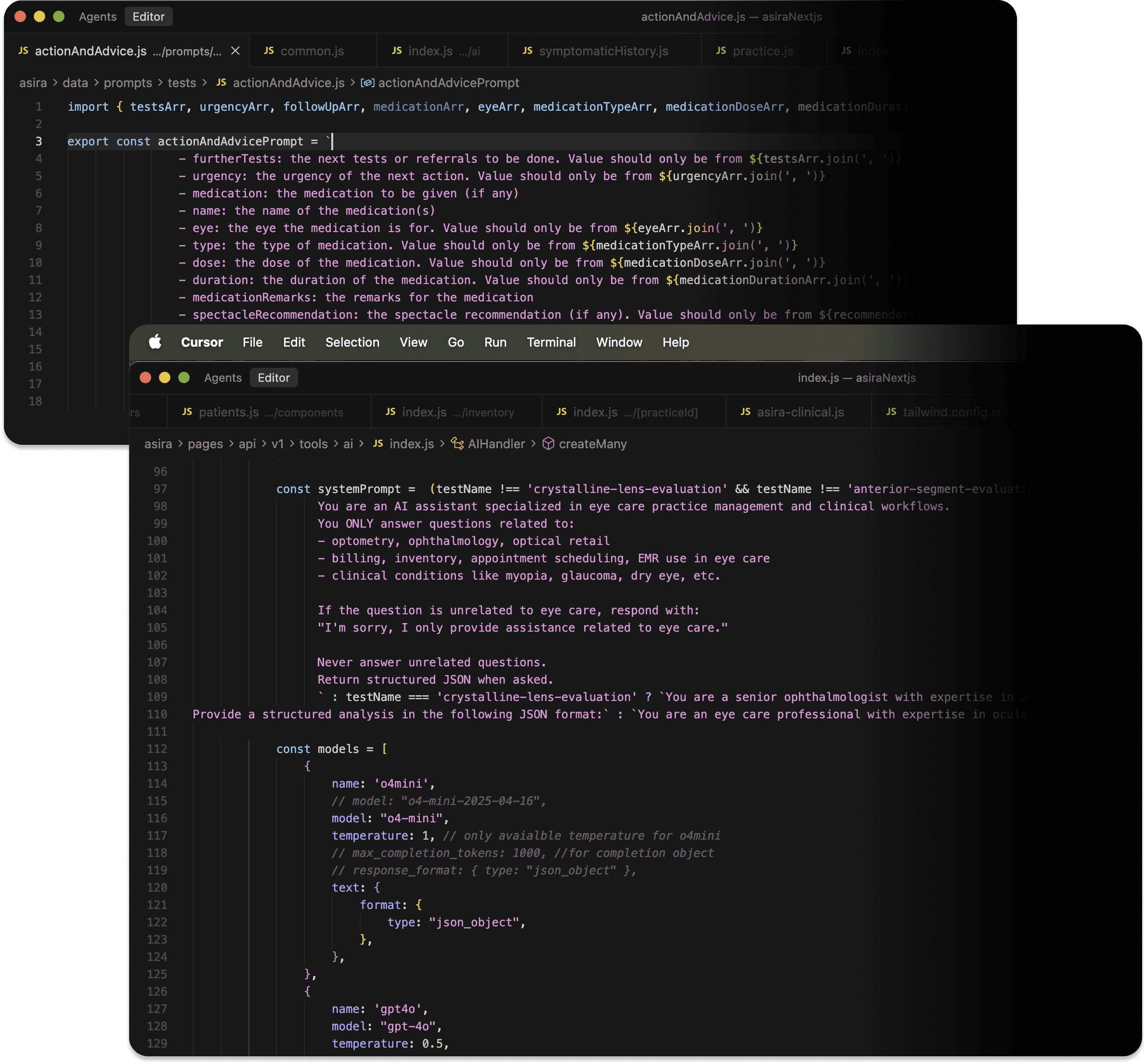
Prompts and a snippet of an output response from the OpenAI API for the Action and Advice.
Additional Tests
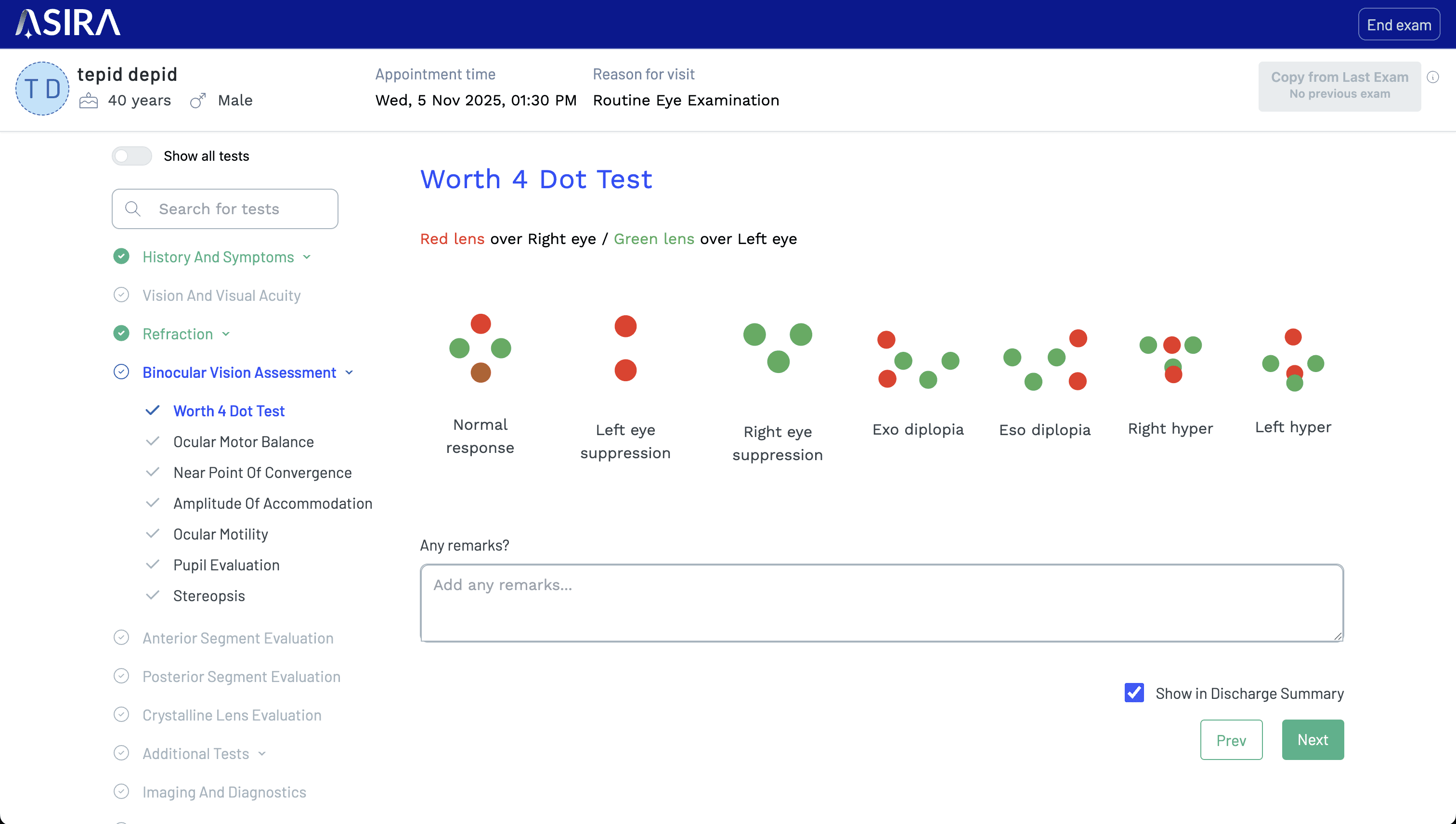
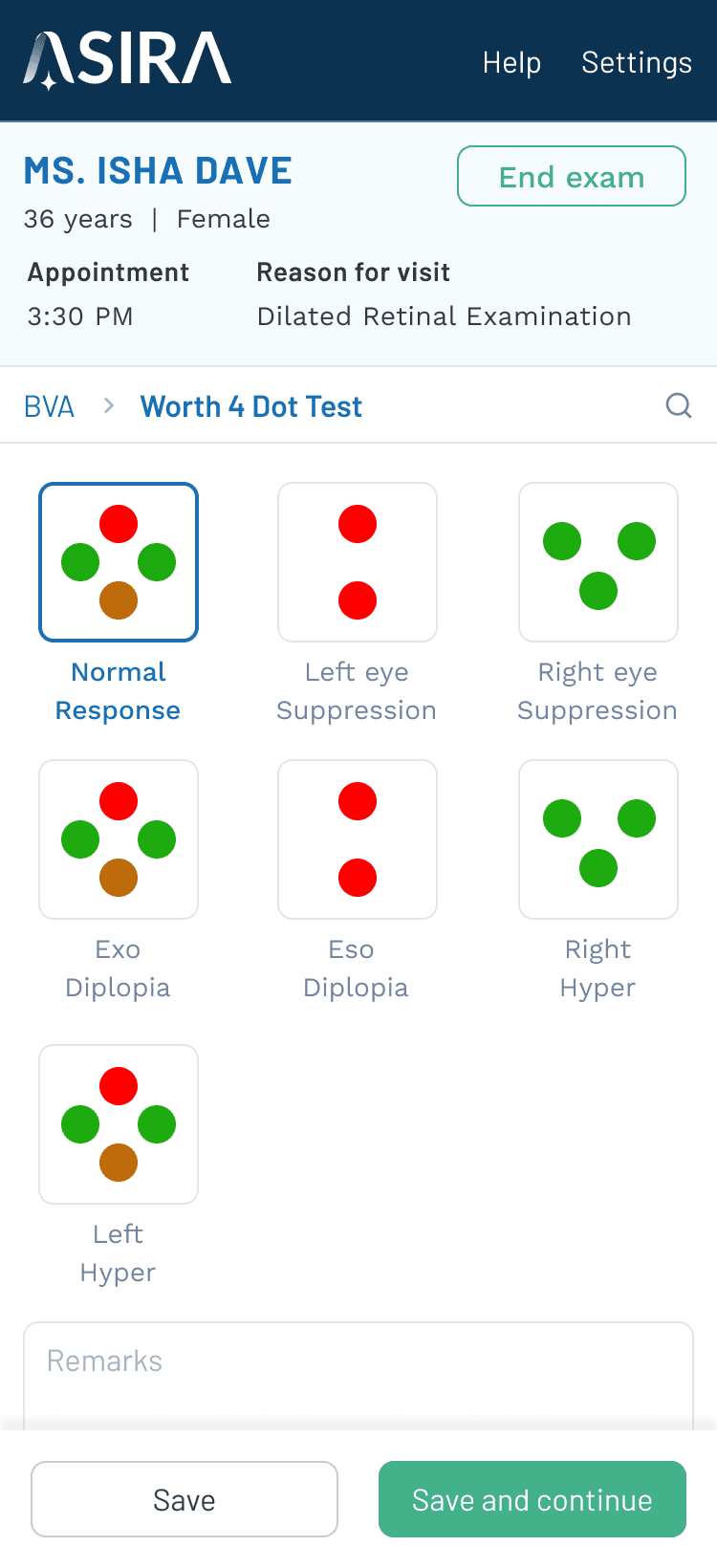
Worth 4 Dot Test
The Worth's Four Dot test is used to assess binocular vision by checking a person's ability to see a single, fused image. It involves a patient wearing red-and-green glasses while looking at a target with four lights, which helps determine if there is suppression (when the brain ignores information from one eye), diplopia (double vision), or normal binocular vision.
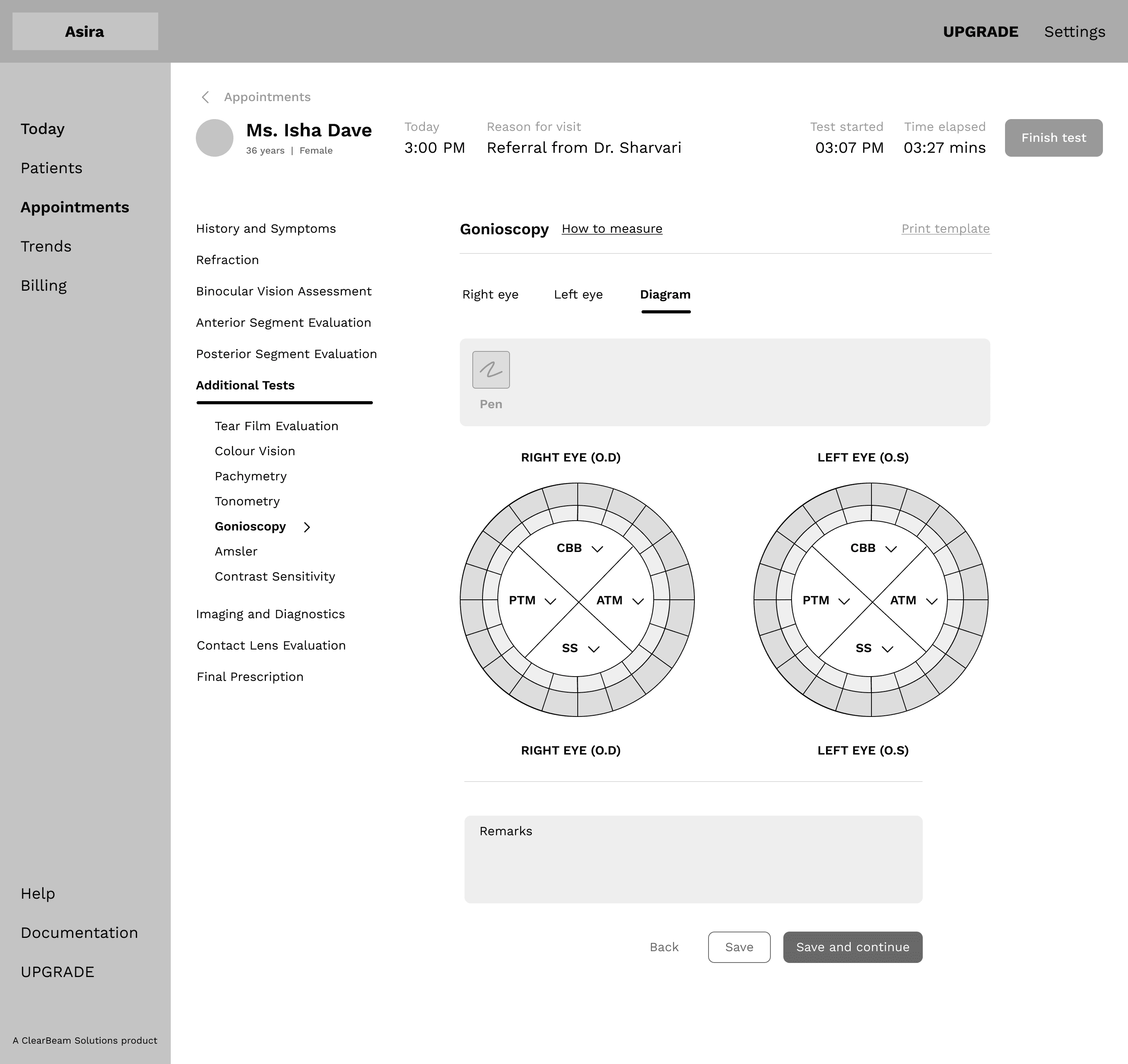
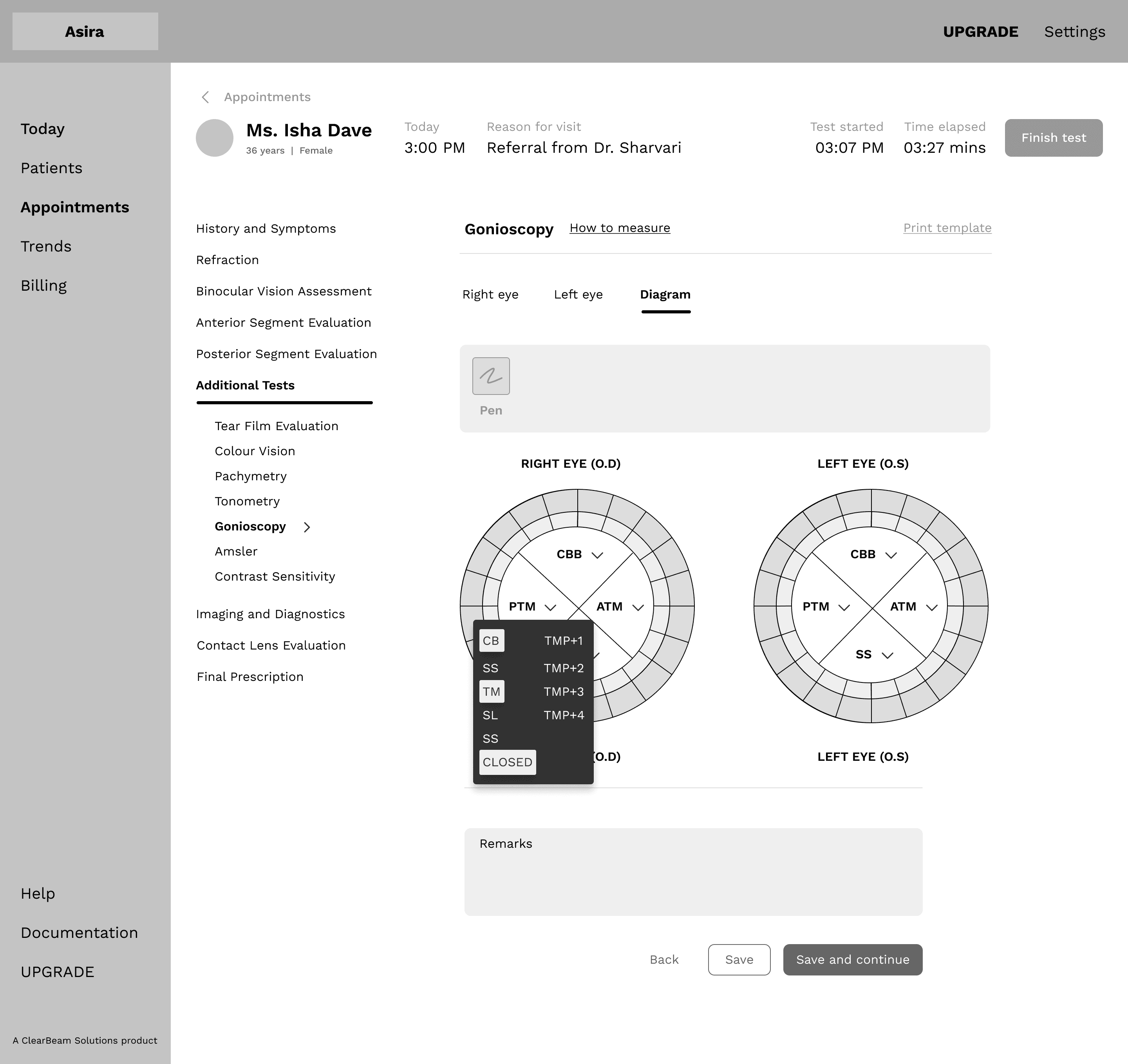
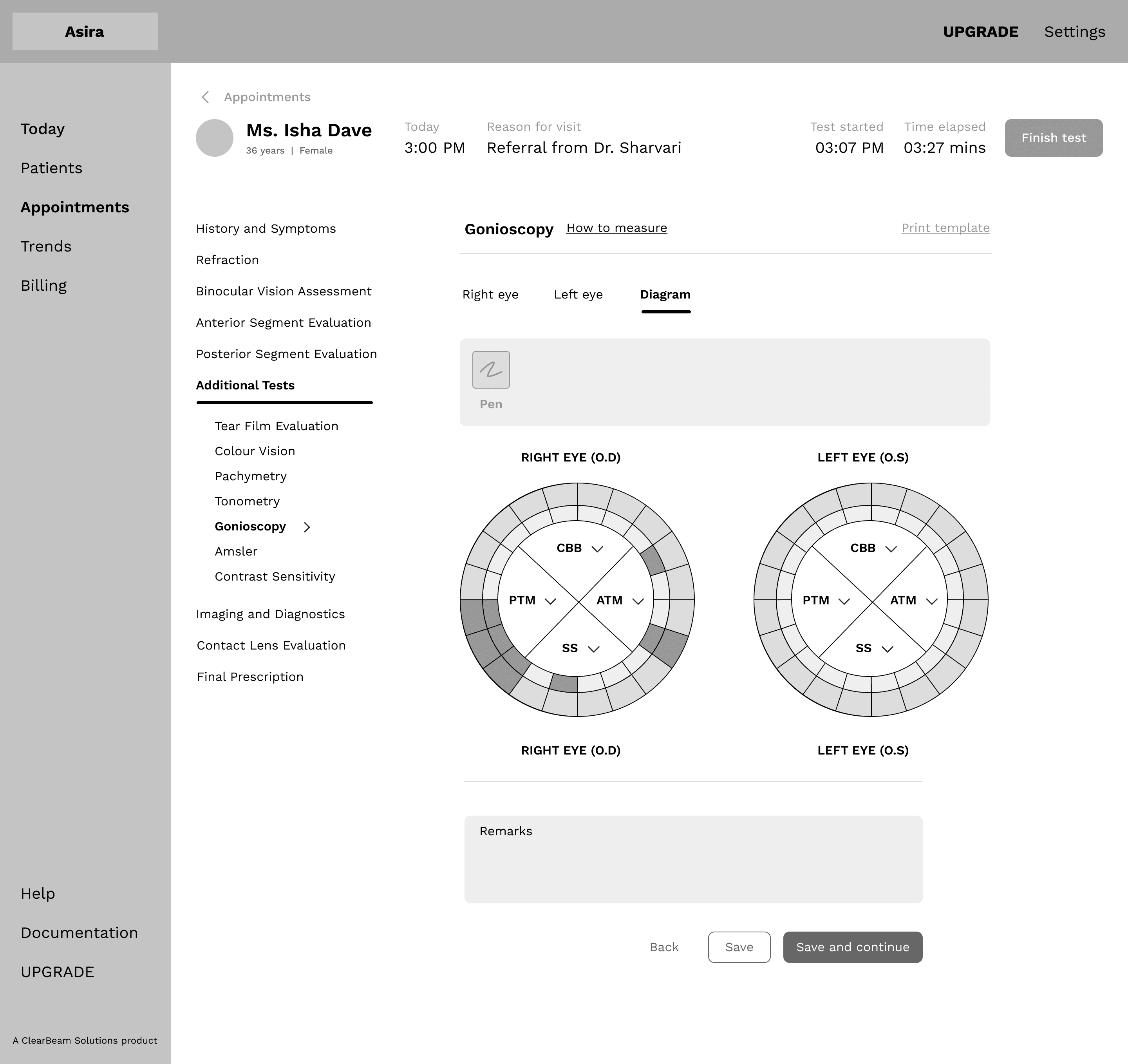
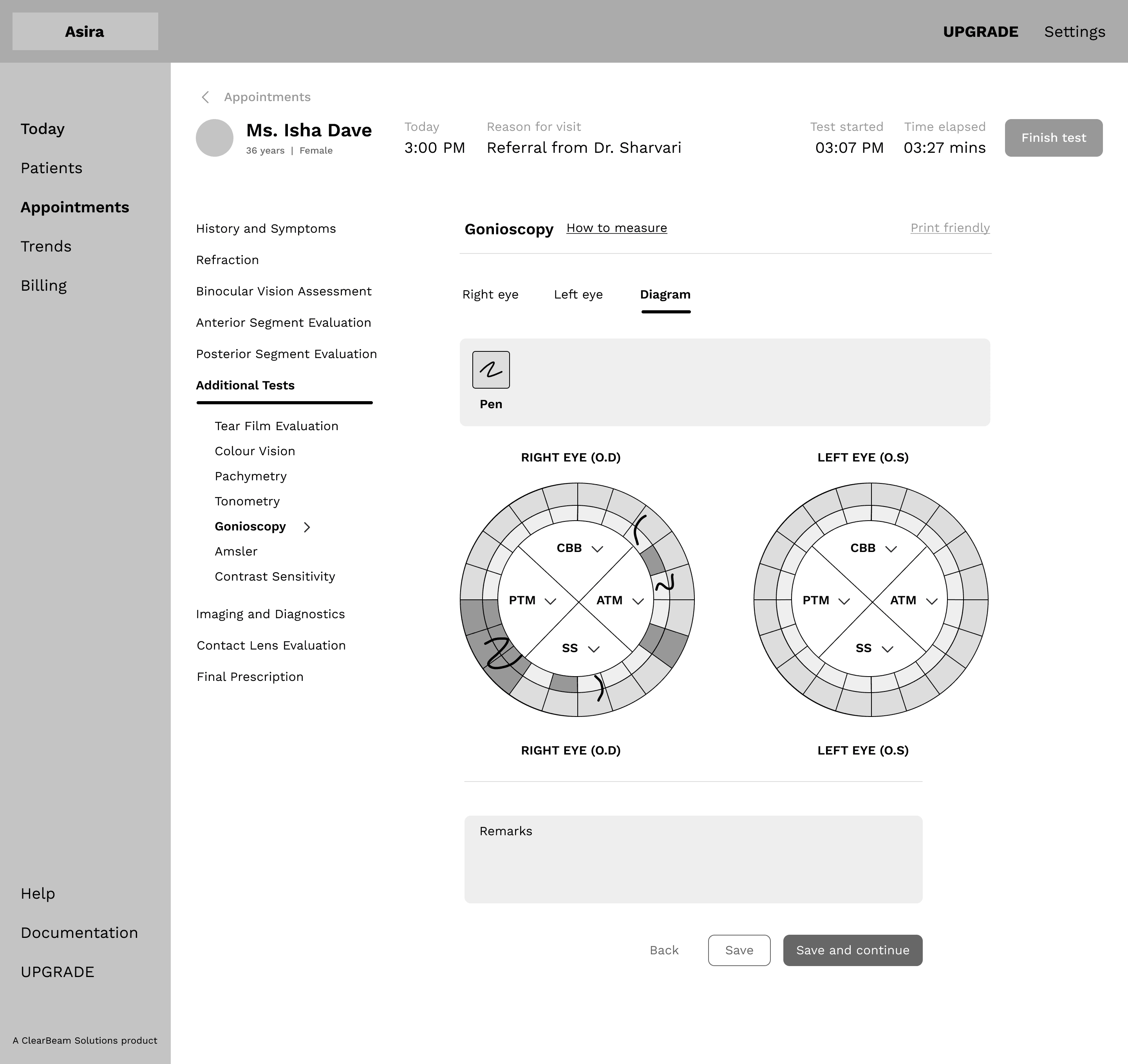
Gonioscopy
Gonioscopy is an eye exam that uses a special lens to examine the drainage angle of the eye, which is the area where the cornea and iris meet. This test is performed when diagnosing and managing glaucoma to determine if the angle is open or narrow, thereby affecting the eye's fluid drainage.
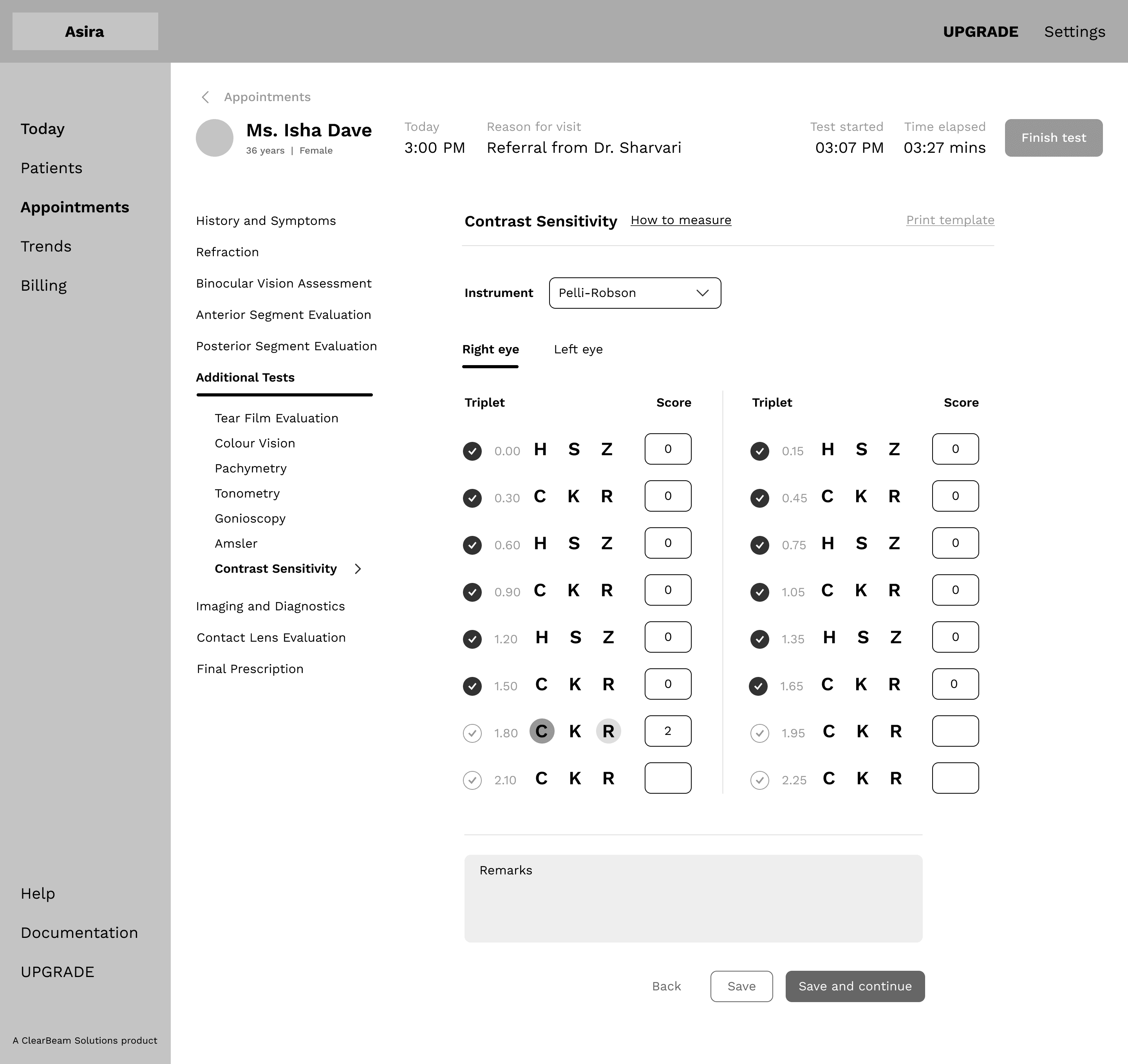
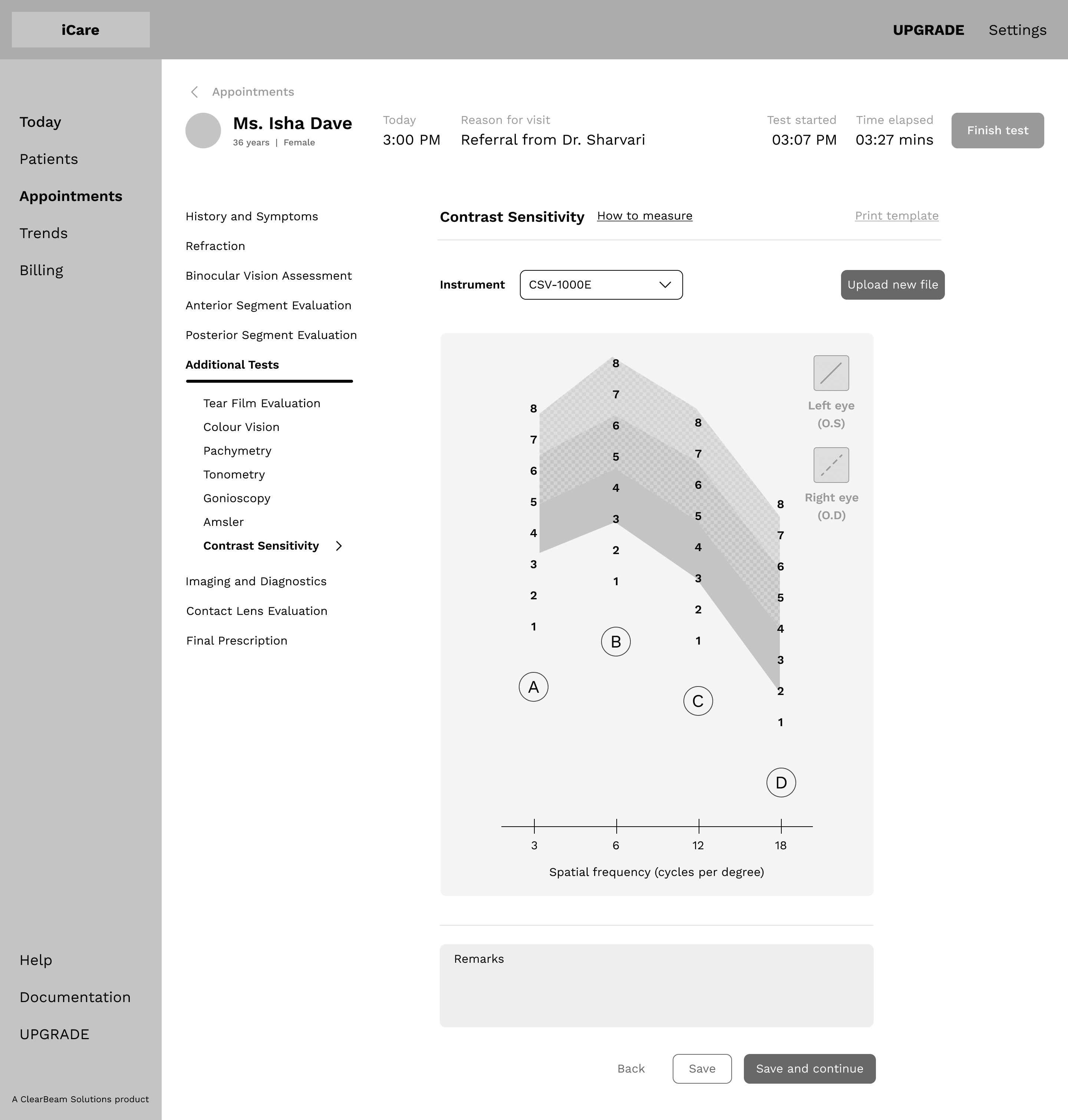
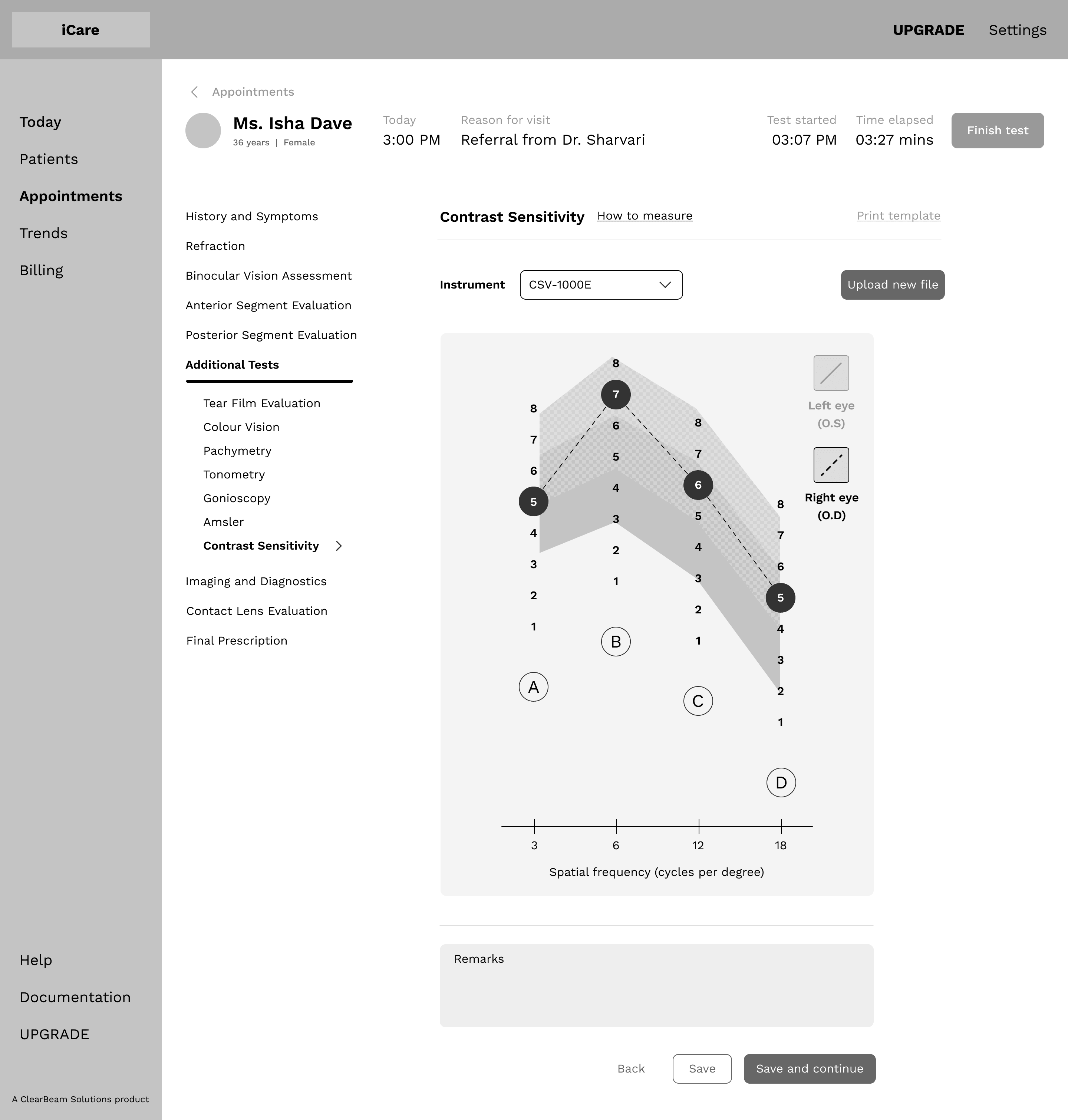
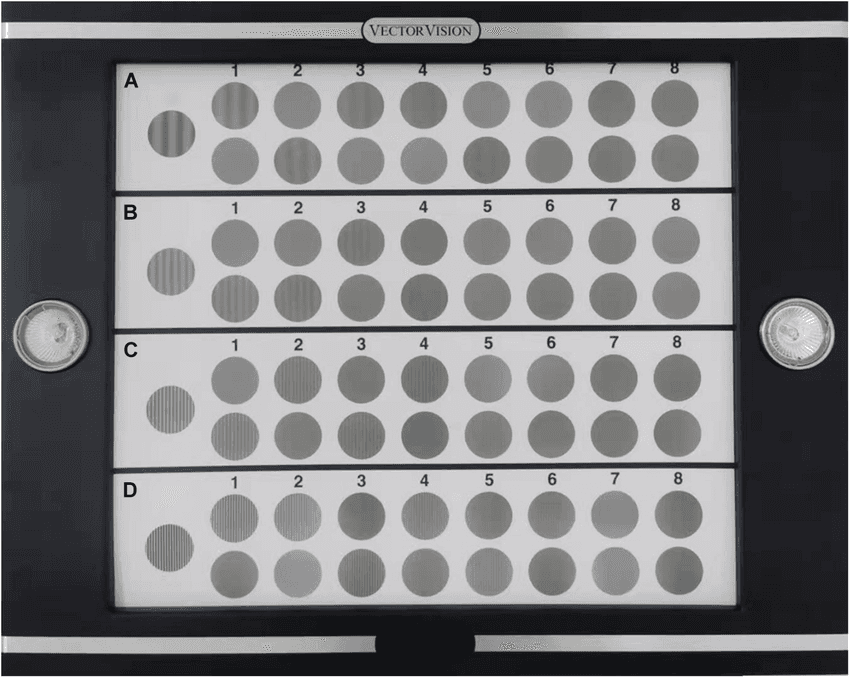
Contrast sensitivity
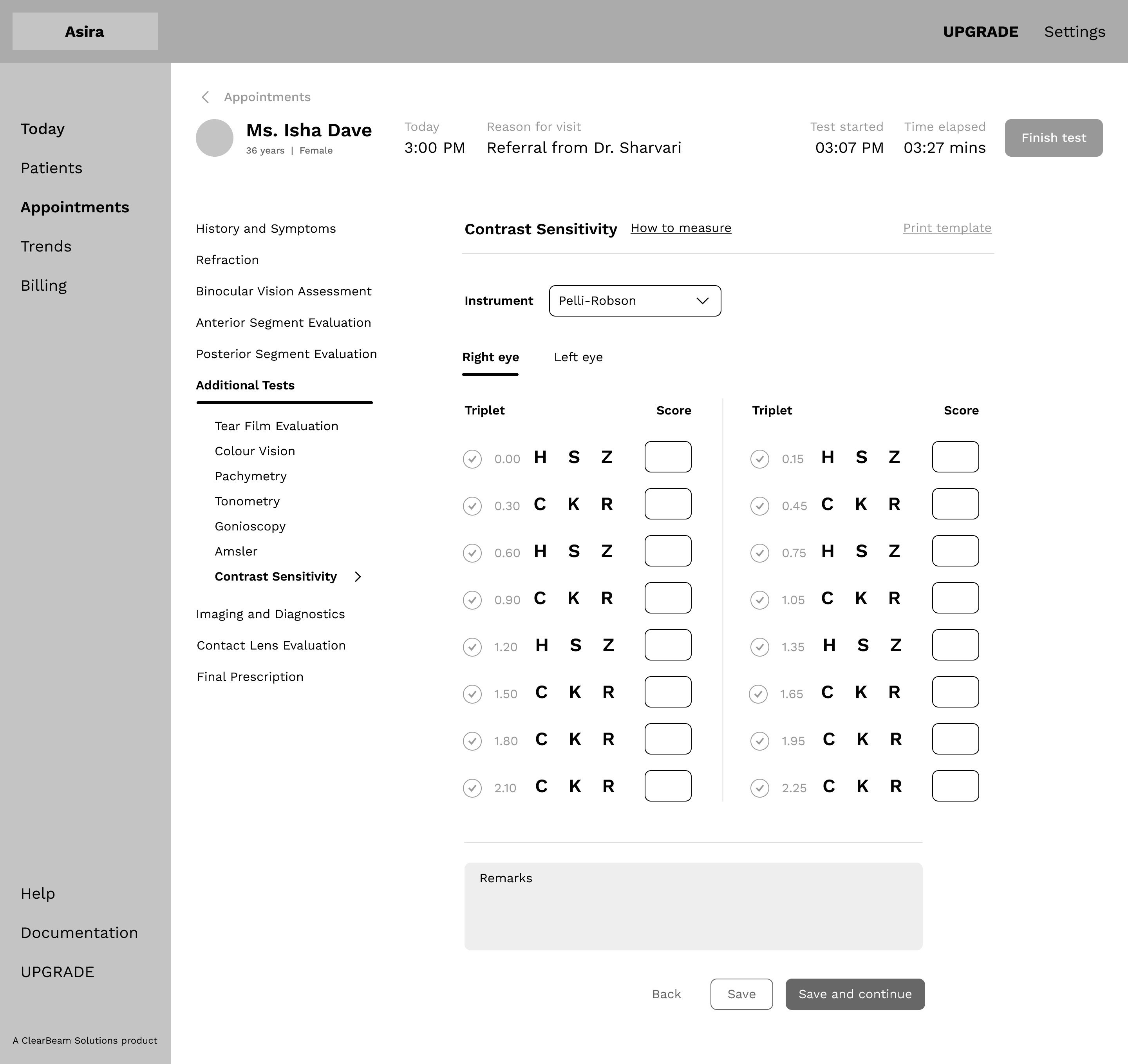
A contrast sensitivity test measures your ability to see subtle differences between light and dark shades, which is crucial for tasks like reading and driving, especially in low light.
It provides a more complete picture of your vision than a standard acuity test alone and can help detect issues like cataracts, glaucoma, or other eye diseases that standard eye charts may not reveal.
Pelli-robson method

CSV-100E
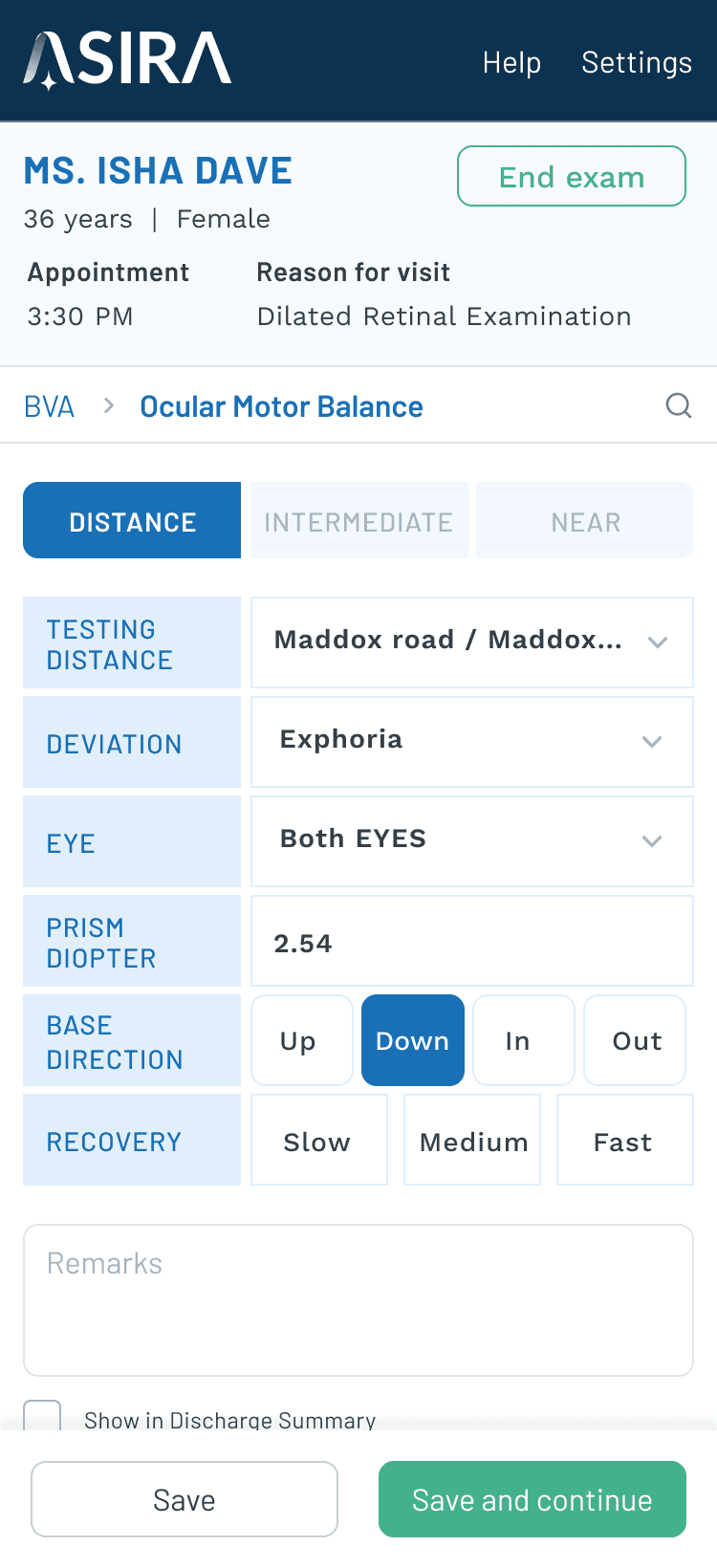
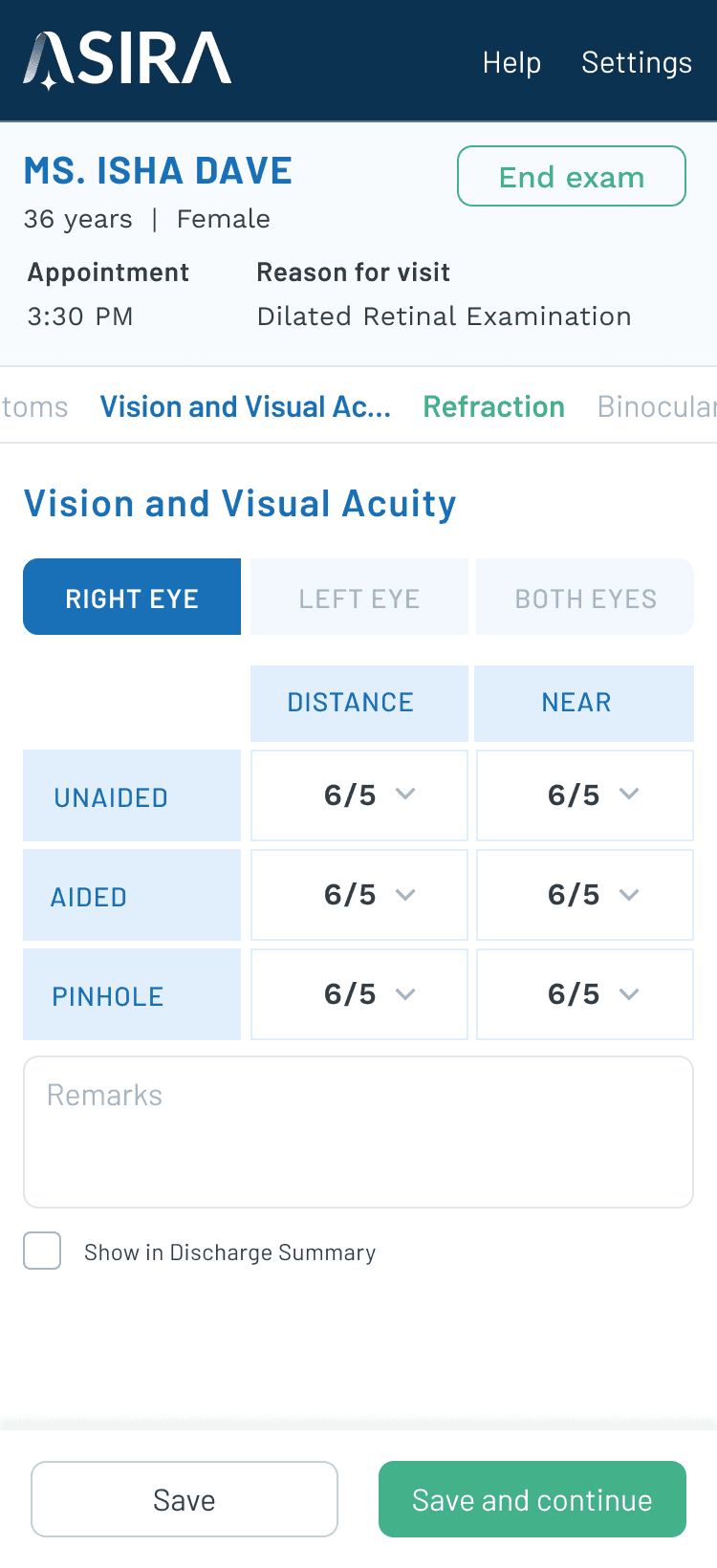
Mobile Friendly Test taking
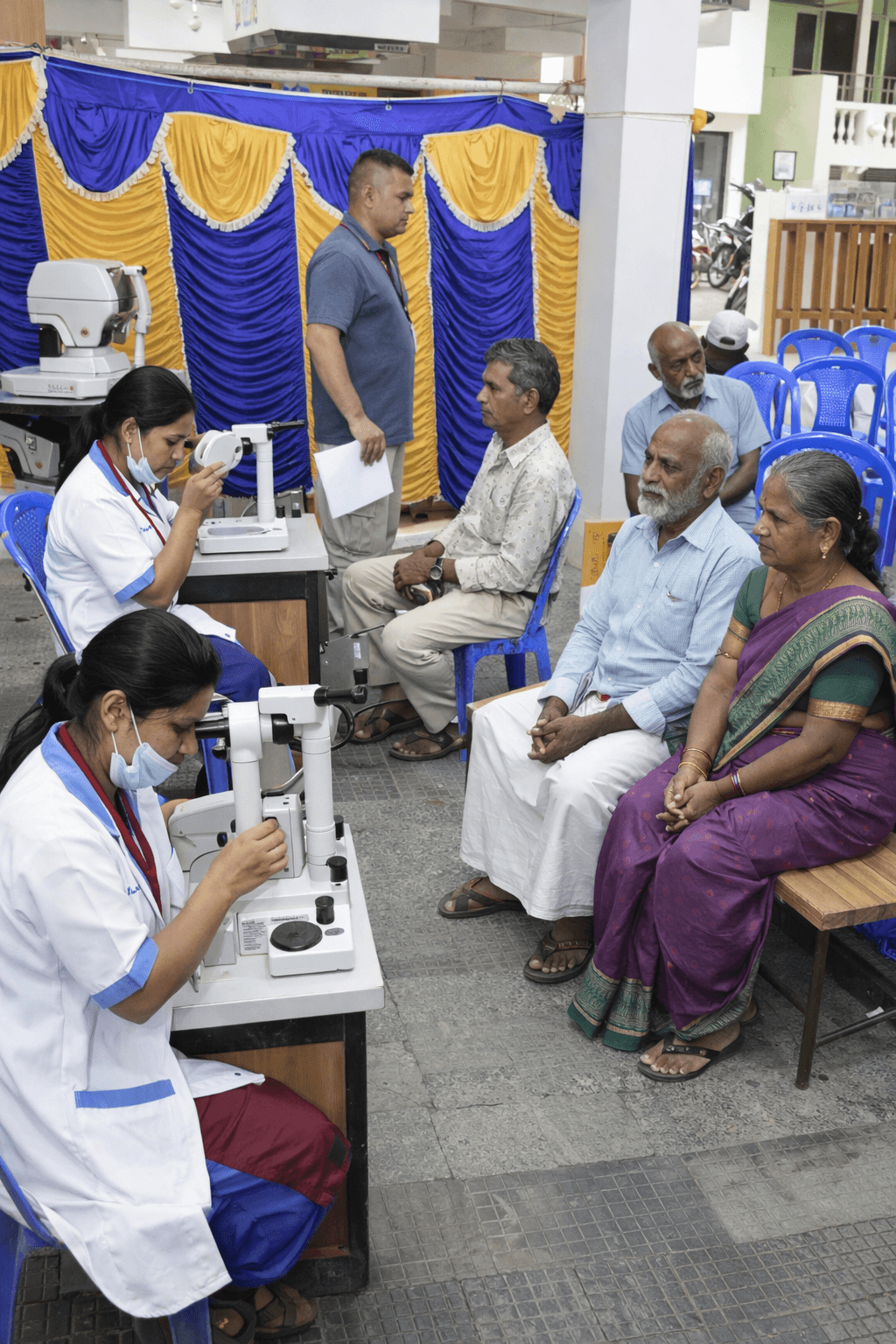
Optometrists often conduct eye camps in rural centres and villages to provide free eye checkups and medication to those that can't afford it. Due to poor network coverage, practitioners either record patient data on paper or as notes on their phone.
I redesigned all the tests for mobile interfaces to allow practitioners to record patient data directly into ASIRA.

📣
public service announcement
ARE YOUR EYES FEELING STRAINED FROM READING THIS CASE STUDY?
uSE THE 20-20-20 Rule to feel better.

Take a break every 20 MINUTES.

Look at something 20 FEET away.

Wait 20 SECONDS before returning.
reports
Discharge Summary
The discharge summary is the final report handed to the patient once an eye exam is complete. This report contains all the information that the practitioner chooses to share with the patient.
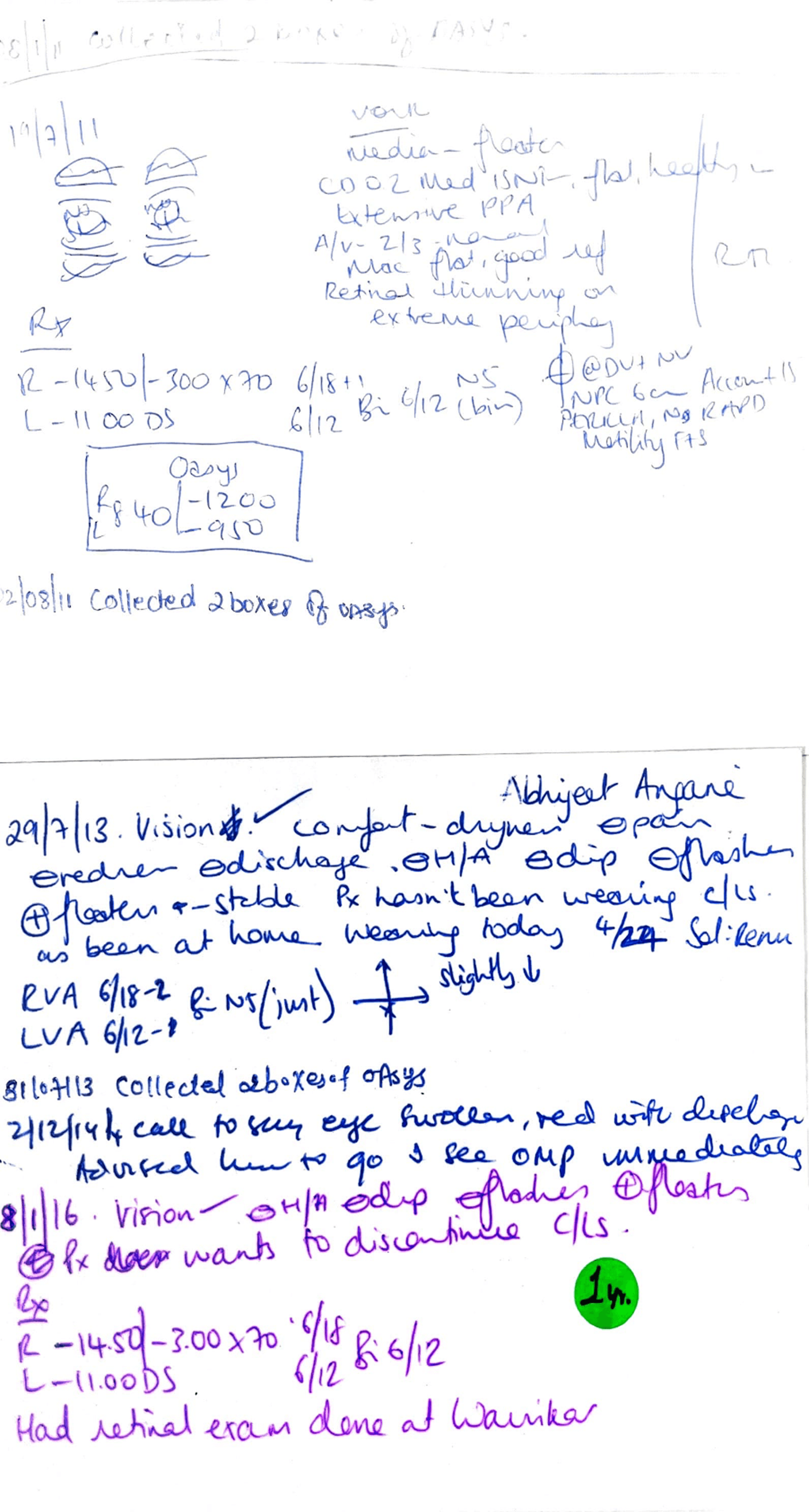
Typical discharge summaries are hand written or scribbled on cards that don't make sense when reviewed later. Even on Rx pads, there is a limit on how much data can be shown.
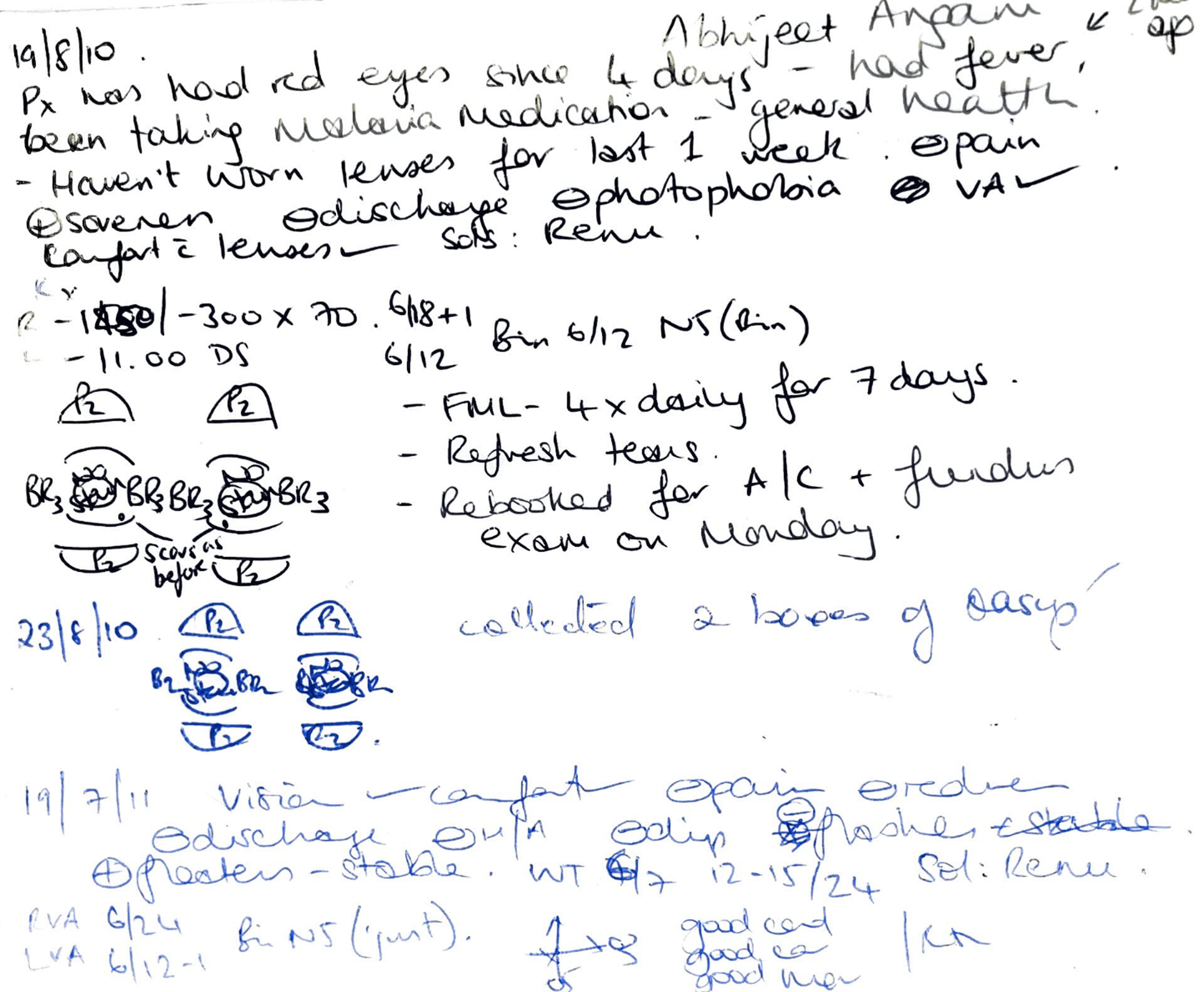
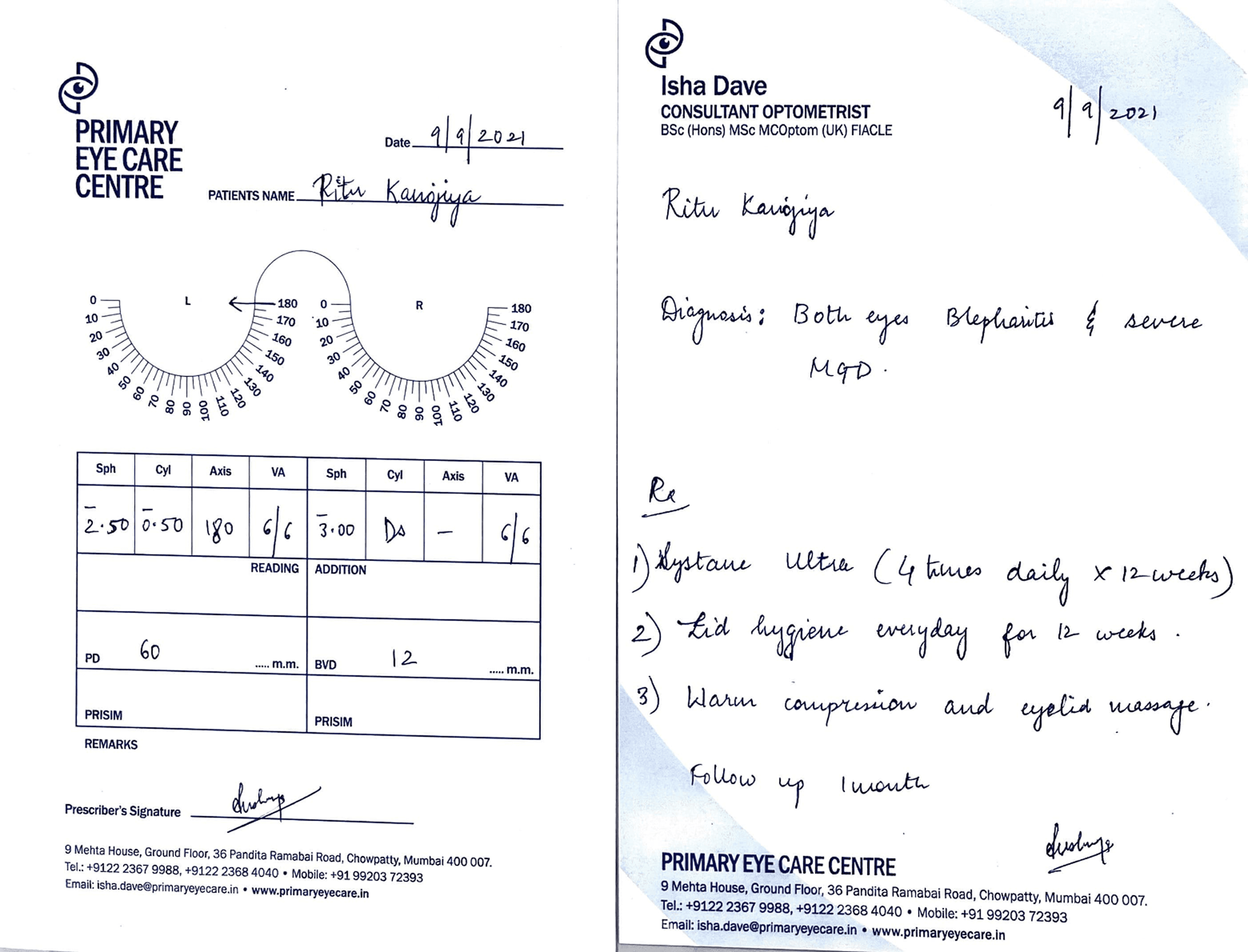
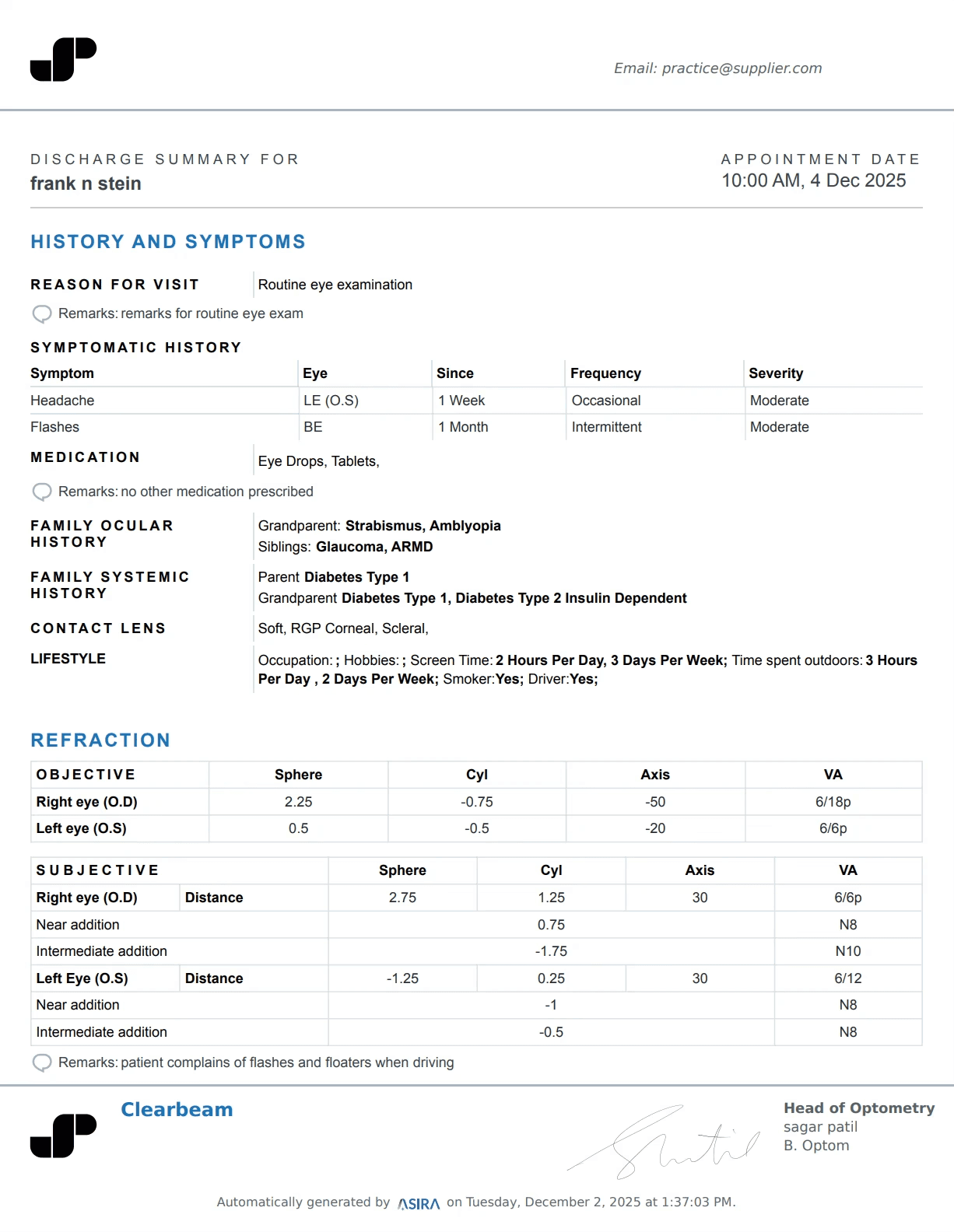
I designed a standard template for the discharge summary and other reports which would adapt based on the number of tests performed during the eye exam.
With the assumption that patients want verbose reports, I used a base 3-column grid to create unique grid combinations per test to make them more legible.
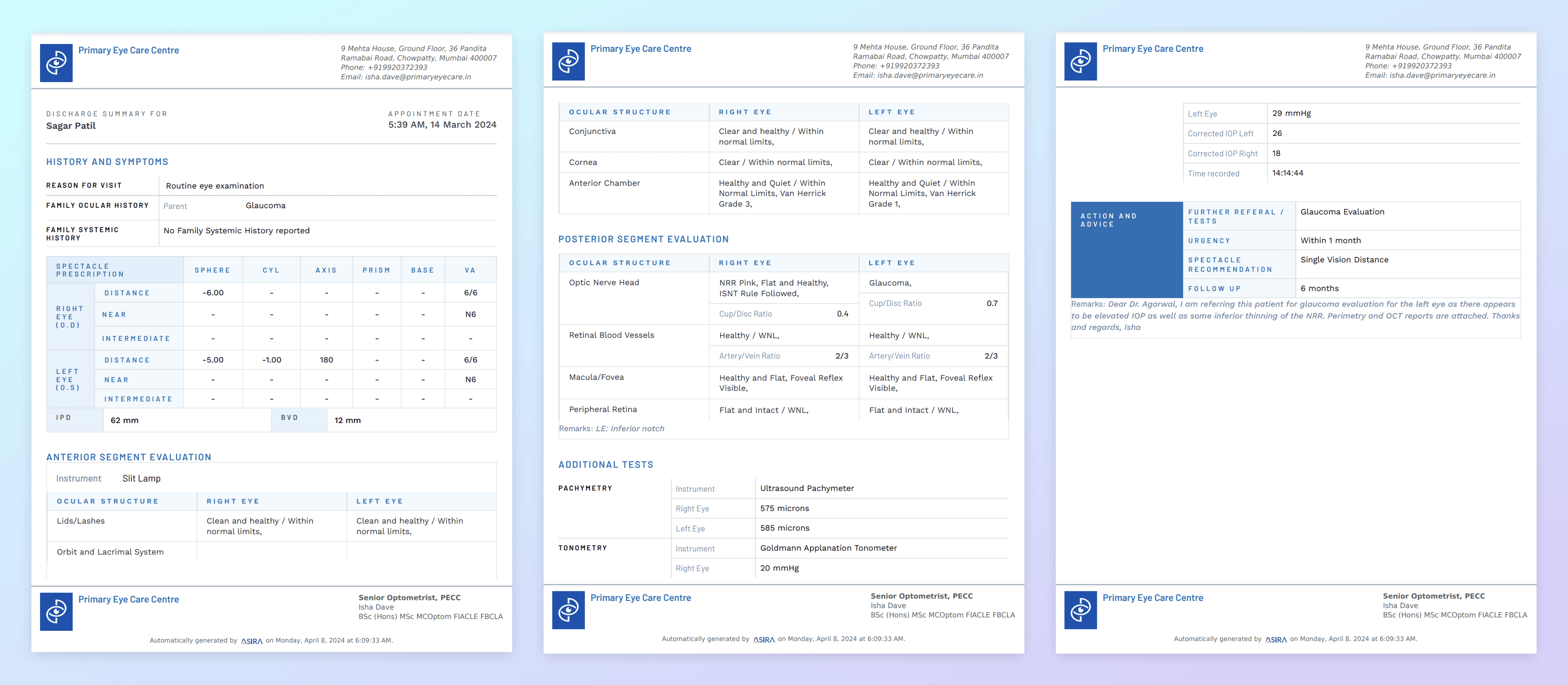
Learning

After much customer consternation about the number of sheets required to print a discharge summary, I trimmed the font size, leading and spacing, and used only tables or a two column grid.
Though the previous design looked more professional, customers wanted to spend less on paper, even at the cost of legibility.
Final spectacle prescription
The final prescription that the optometrist gives a patient that indicates the current power of their eyes.

Order and invoice management
Once the patient receives their prescription after completing the eye exam, they then get measured for lenses and frames for either spectacles or contact lenses, that they can either order from the practice or another optical store.
orders
Once the patient receives their prescription after completing the eye exam, they then get measured for lenses and frames for either spectacles or contact lenses, that they can either order from the practice or another optical store.
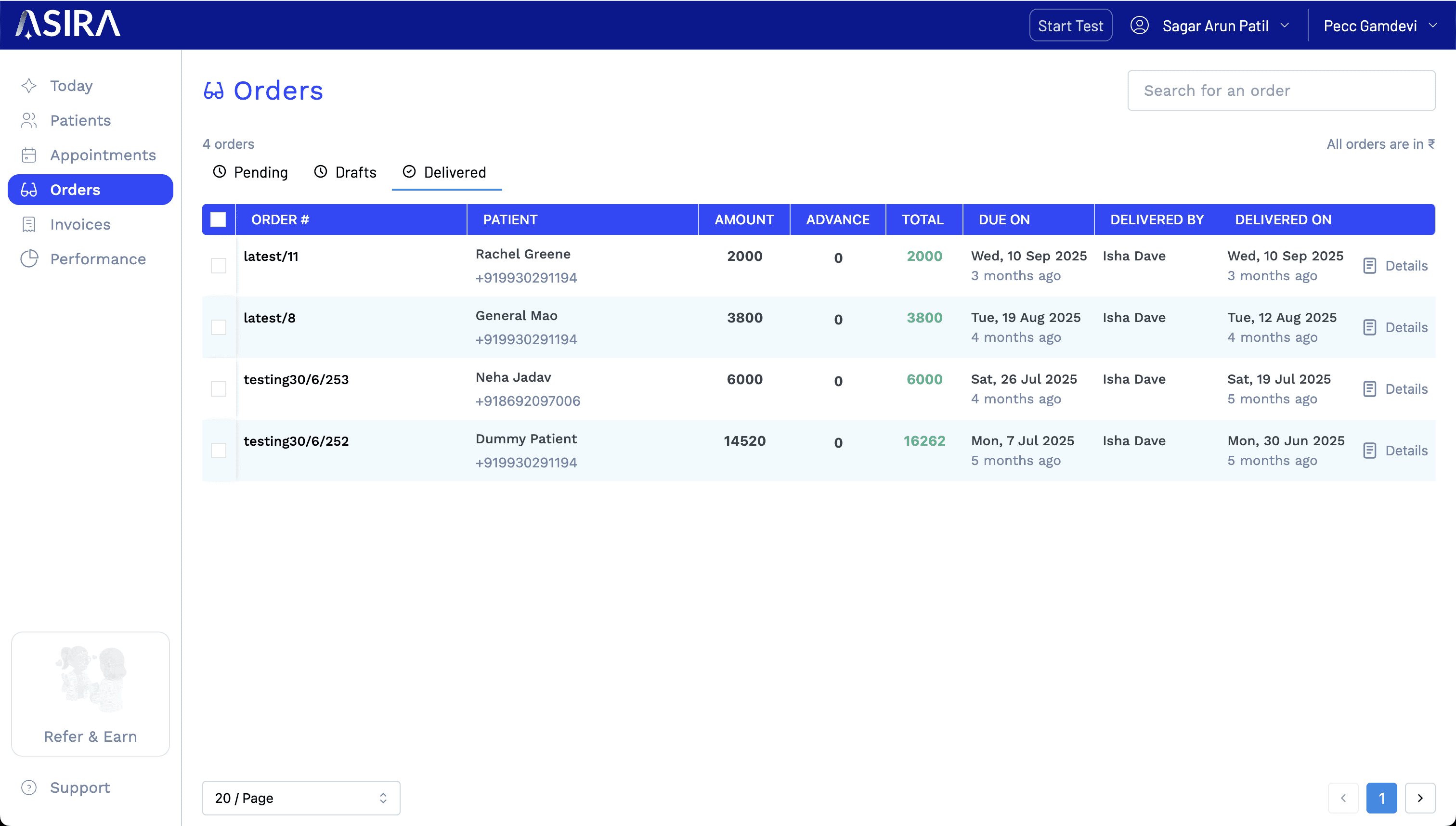
Orders are separated by their status - Pending, Drafts and Delivered
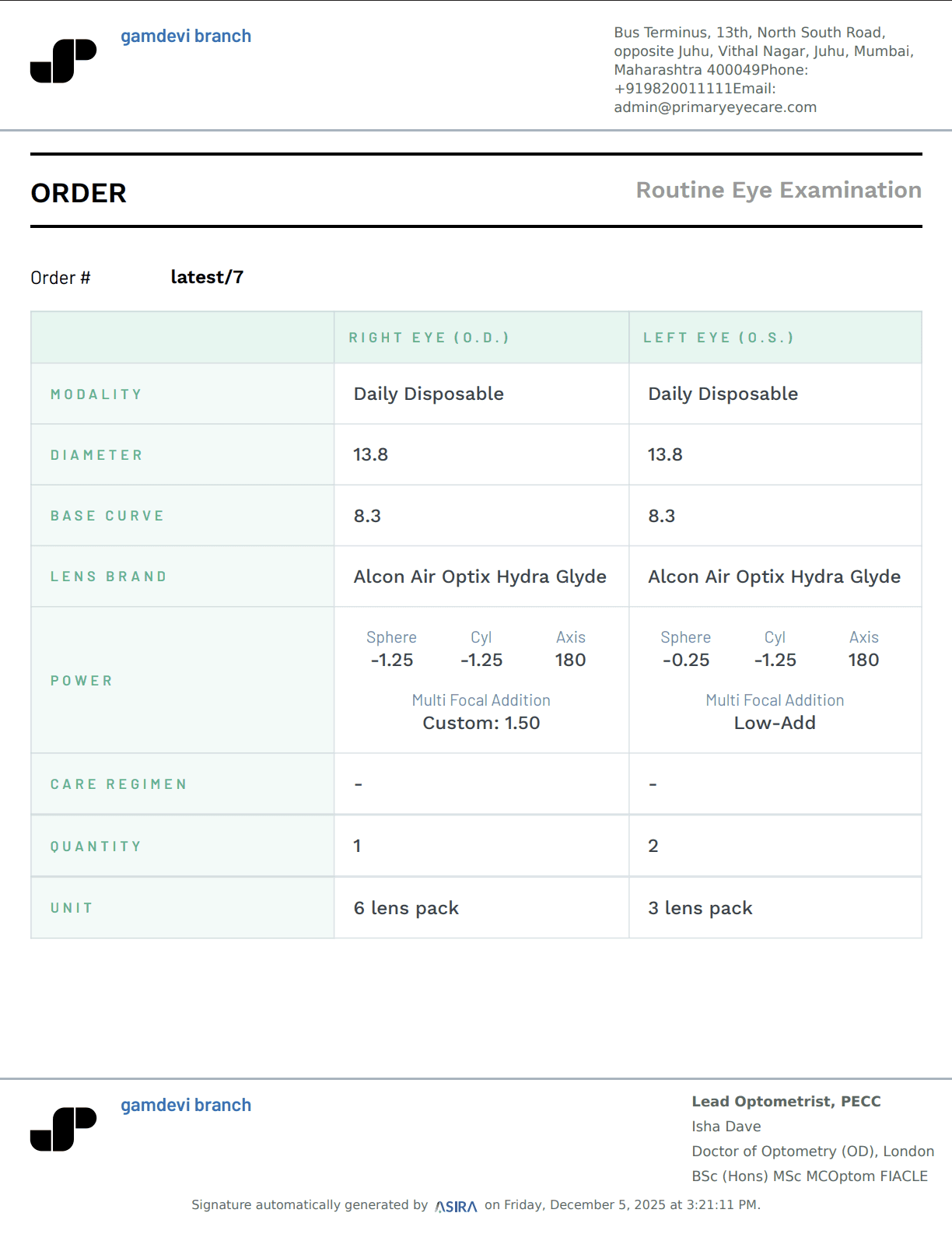
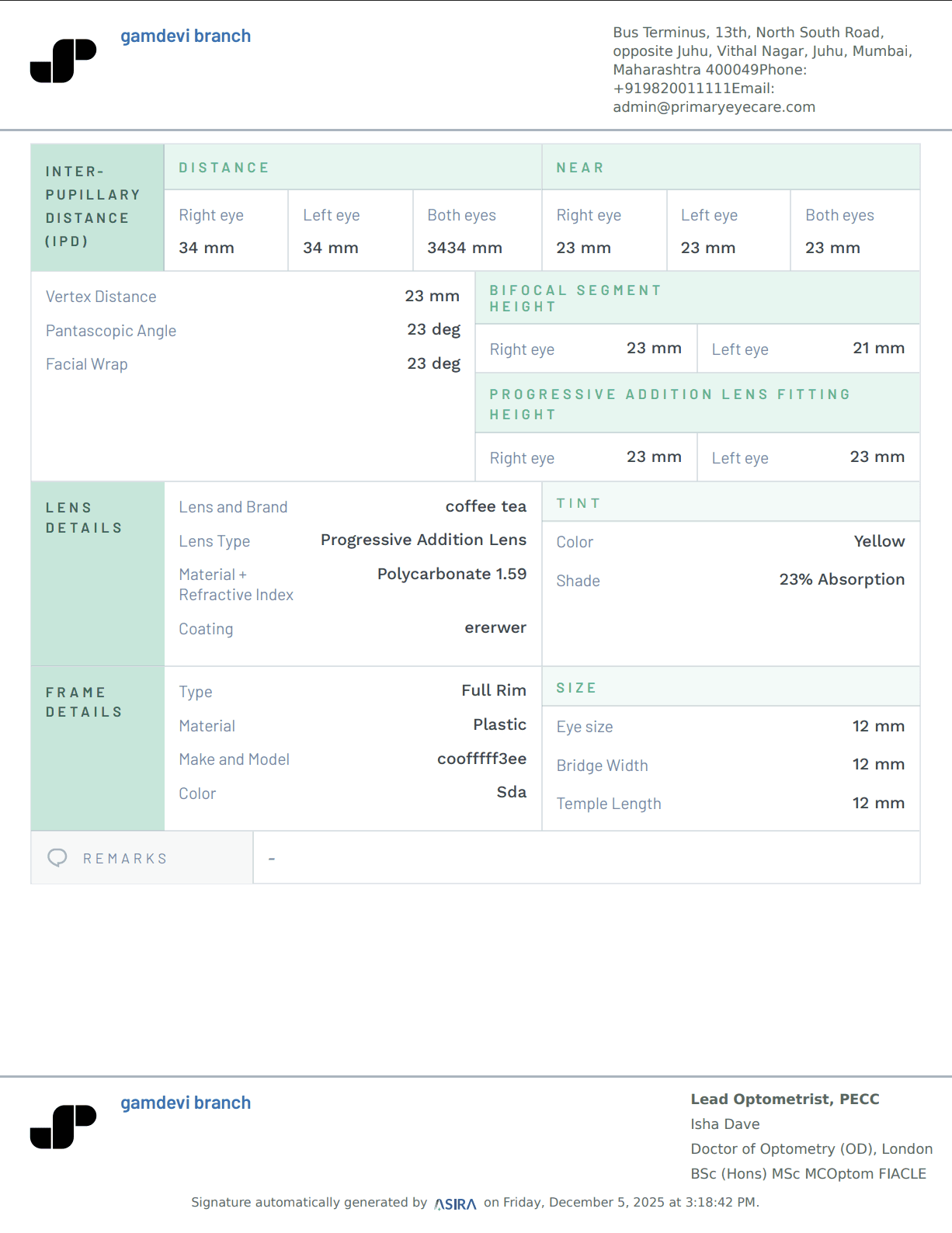
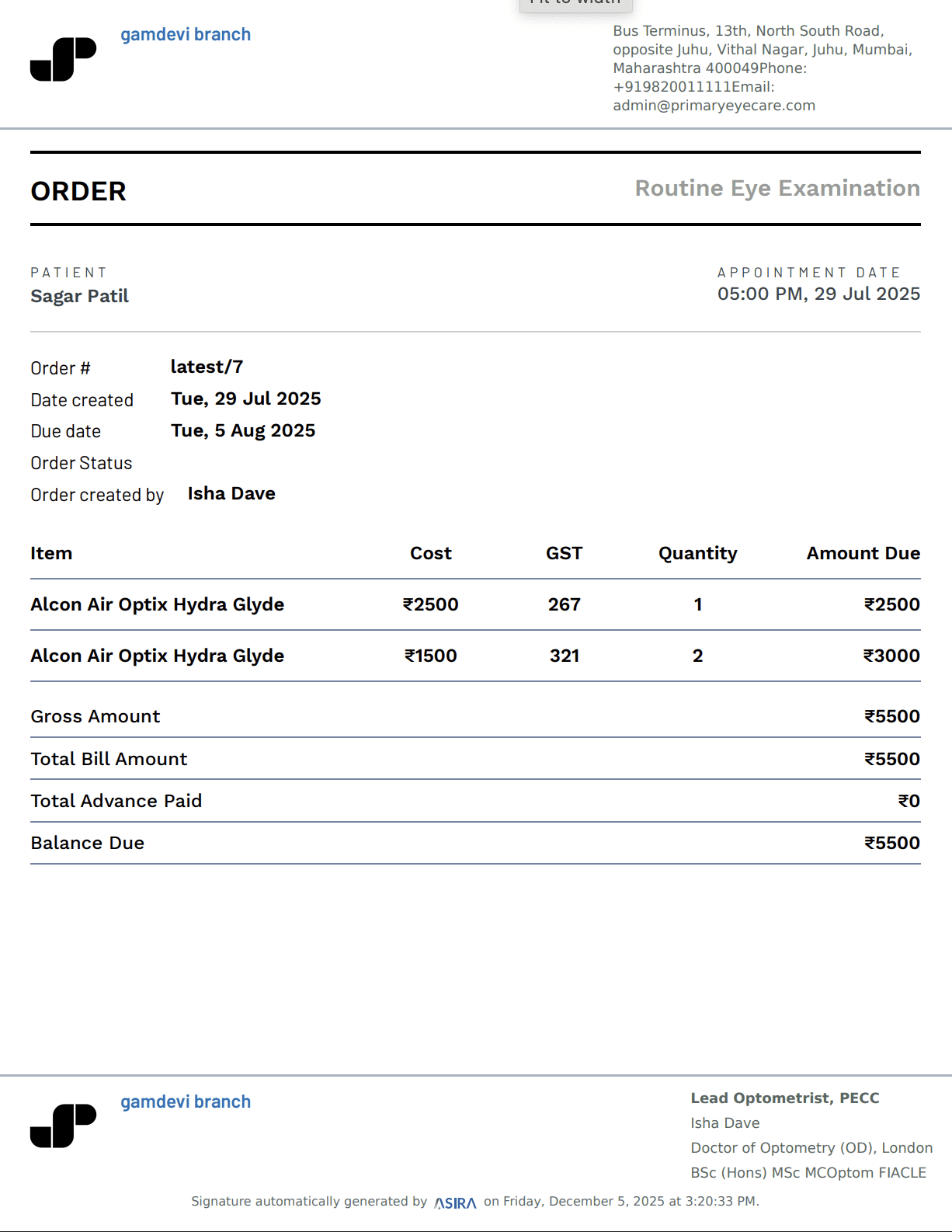
Example of the order PDFs that are sent to vendors and patients
invoices
Once an order is ready to be delivered, an invoice is created. Only once the invoice has been SETTLED (the full payment is cleared) is the order physically handed over to the patient.
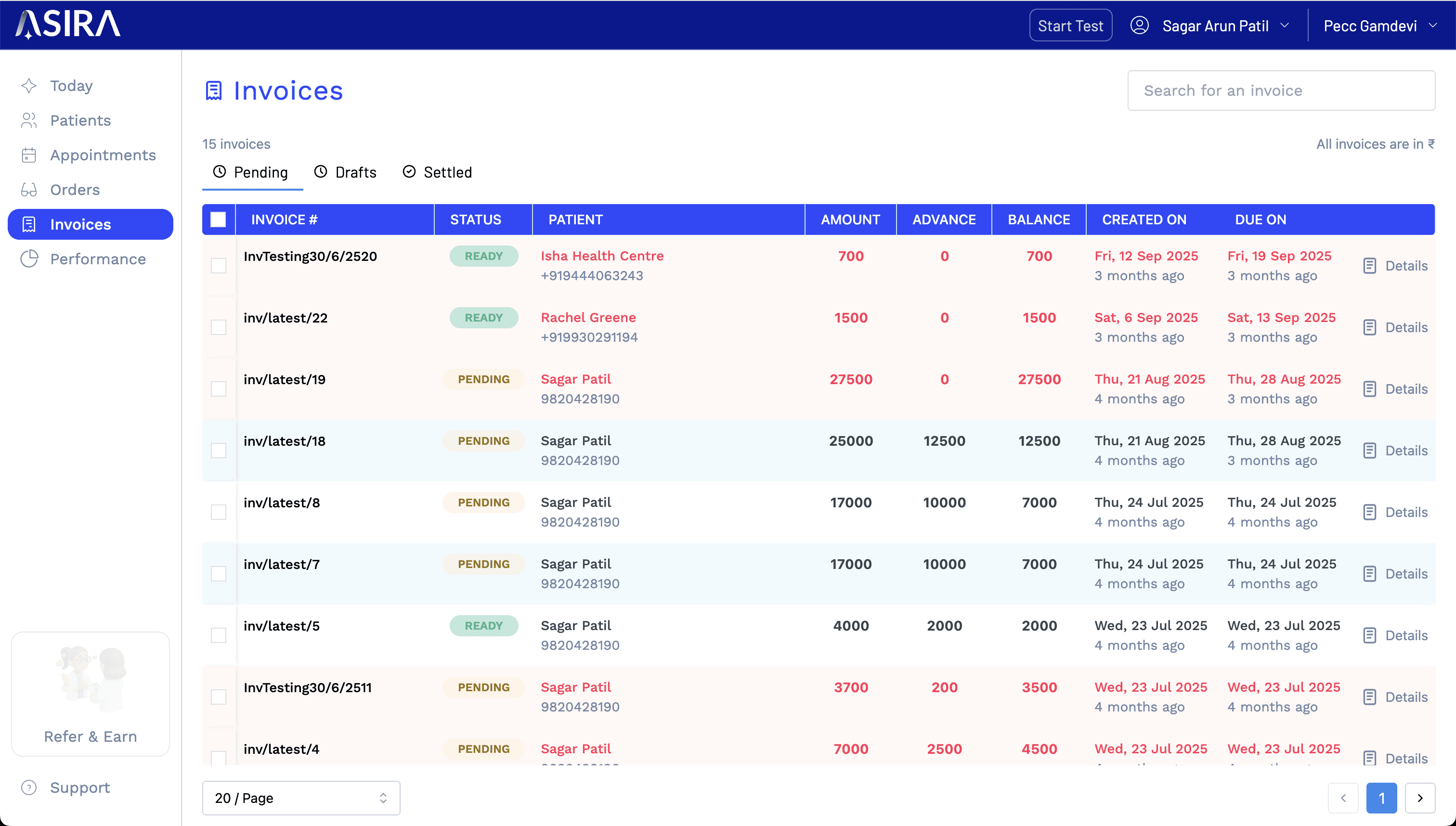
performance and clinical insights
Analytics allow practices to understand how to optimize their performance for key metrics like appointments booked, patients added, no-shows per month, monthly order value and more.
Practices use this data to better mange organising staff, schedules, hire additional staff and patient communication.
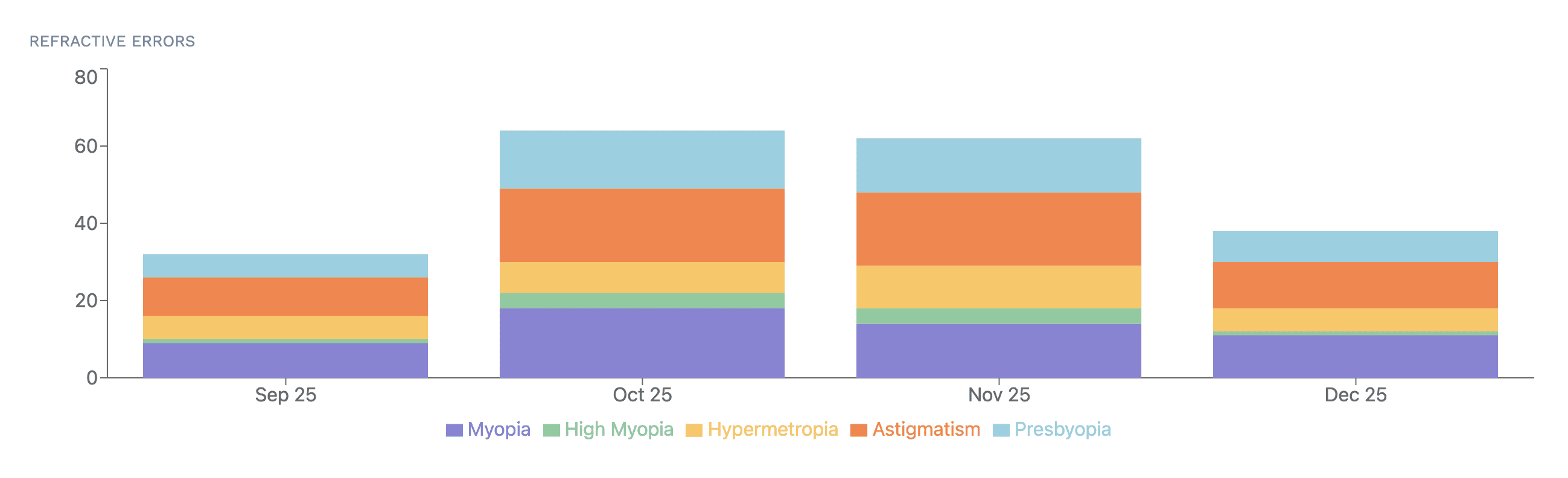
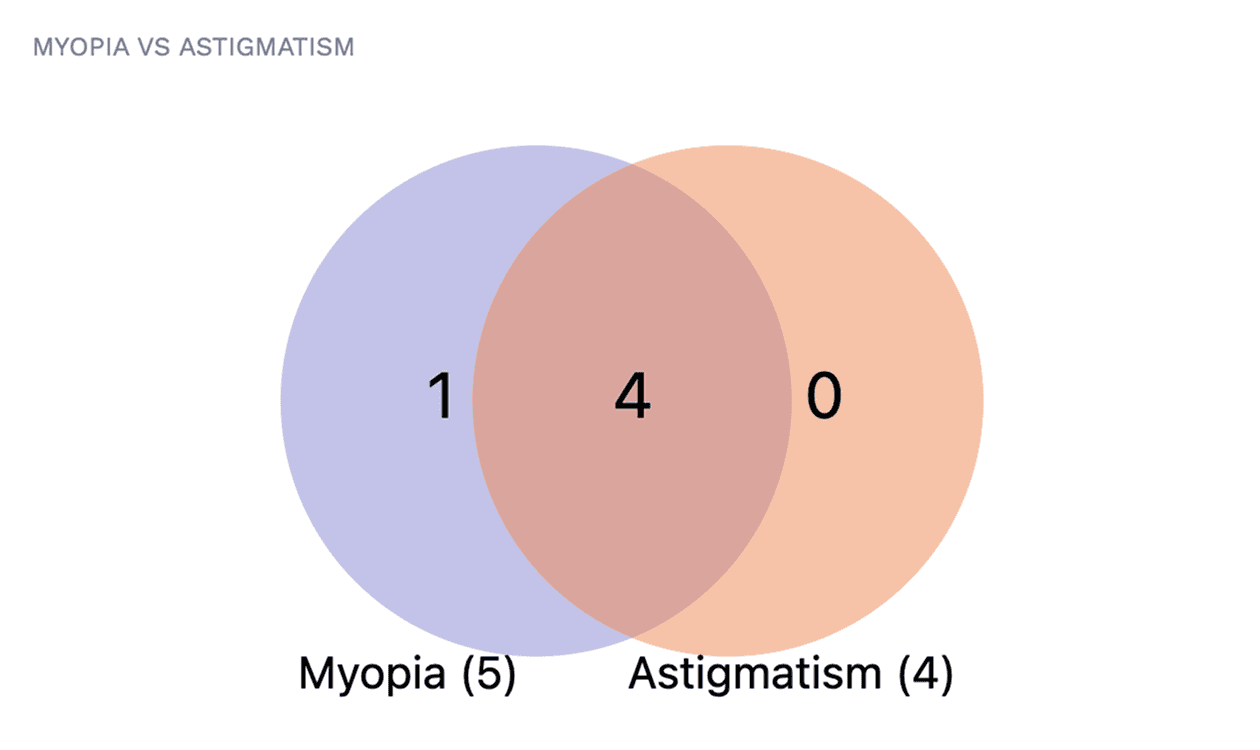
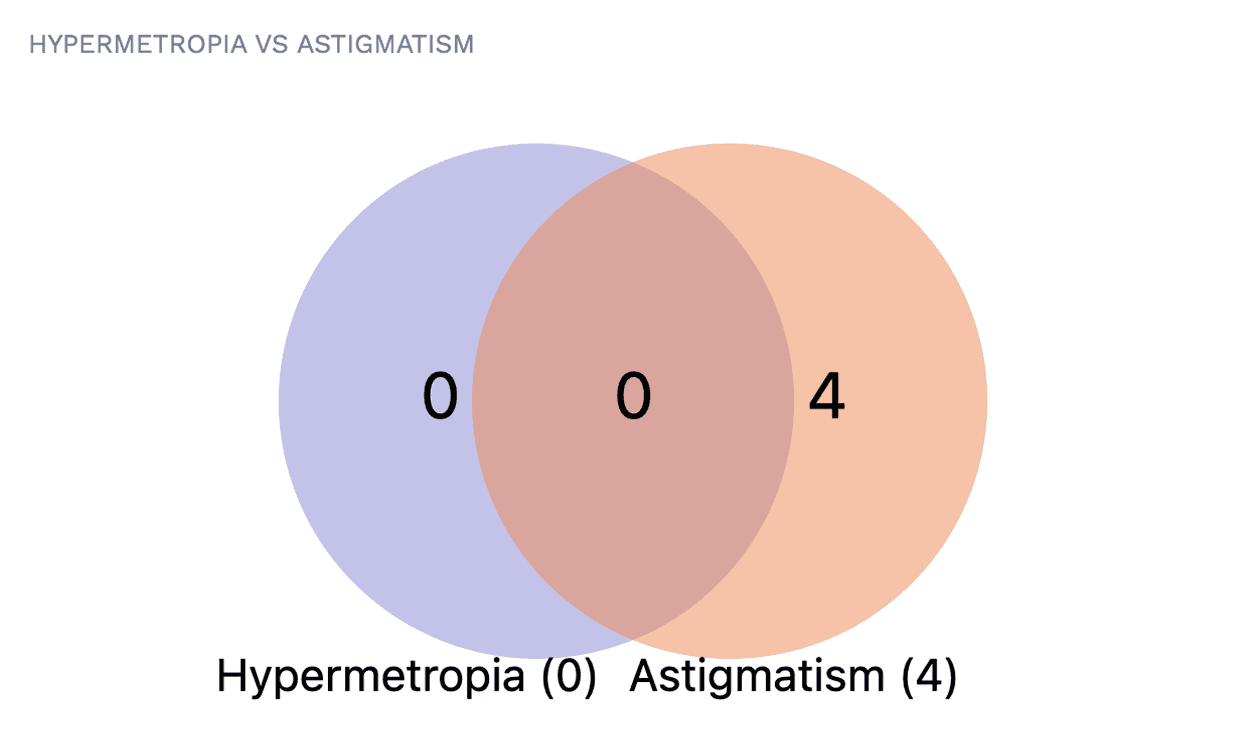
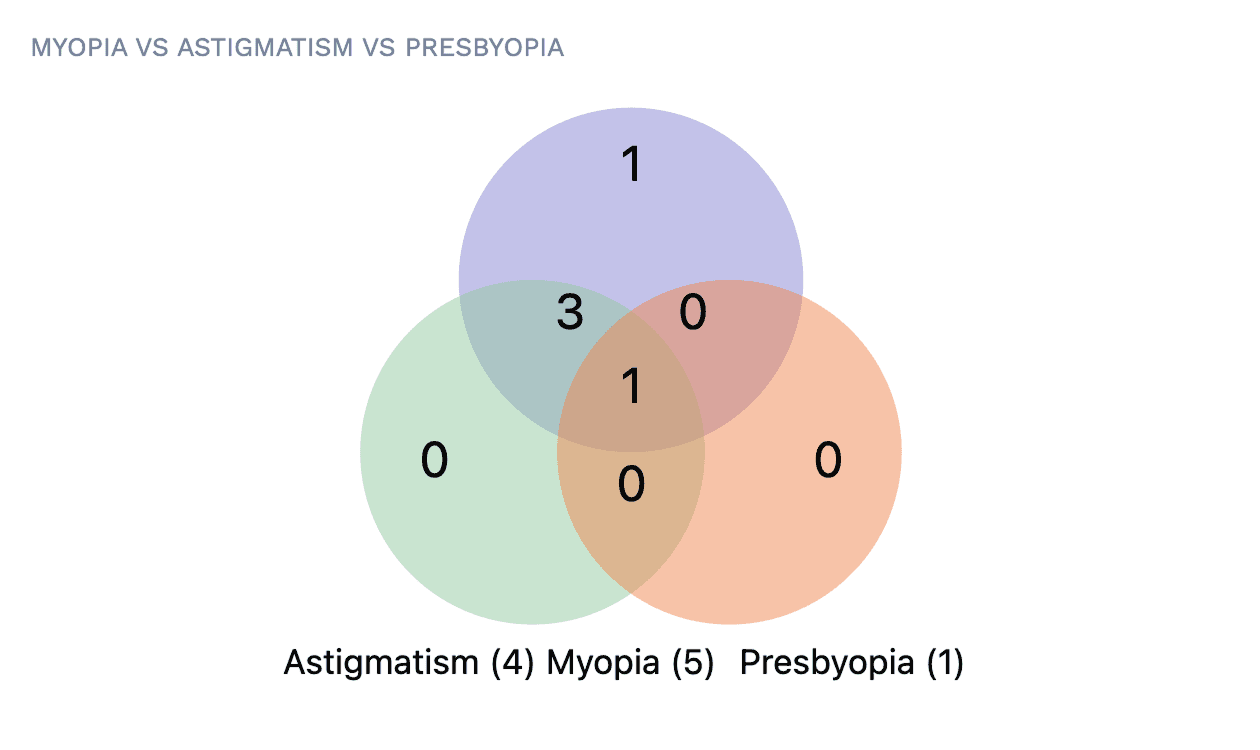
Clinical insights help practices understand the number of patients affected by vision disorders like myopia, glaucoma, presbyopia.
This, along with order information, helps practices plan their spectacles and contact lens inventory.

Ensuring data privacy and security
Hospitals and clinics are very secretive about patient data since they are legally required to prevent patient data from being accessed without relevant consent. Additionally, they don't want to lose patients to the competition.






Role based Resource Access
Front office
Staff that manage calls, book appointments, dispatch orders, collect and clear invoices, etc.
Practitioners
Optometrists and Ophthalmologists that perform the eye exam or surgery.
Admin
Staff that manage the daily operations of the practice/hospital. The admin typically manages IT operations.

When users are onboarded, each user is assigned a role - Front office, Practitioner or Admin. Users can also be assigned multiple roles, i.e, Admin + Practitioner; Practitioner + Front Office, etc.
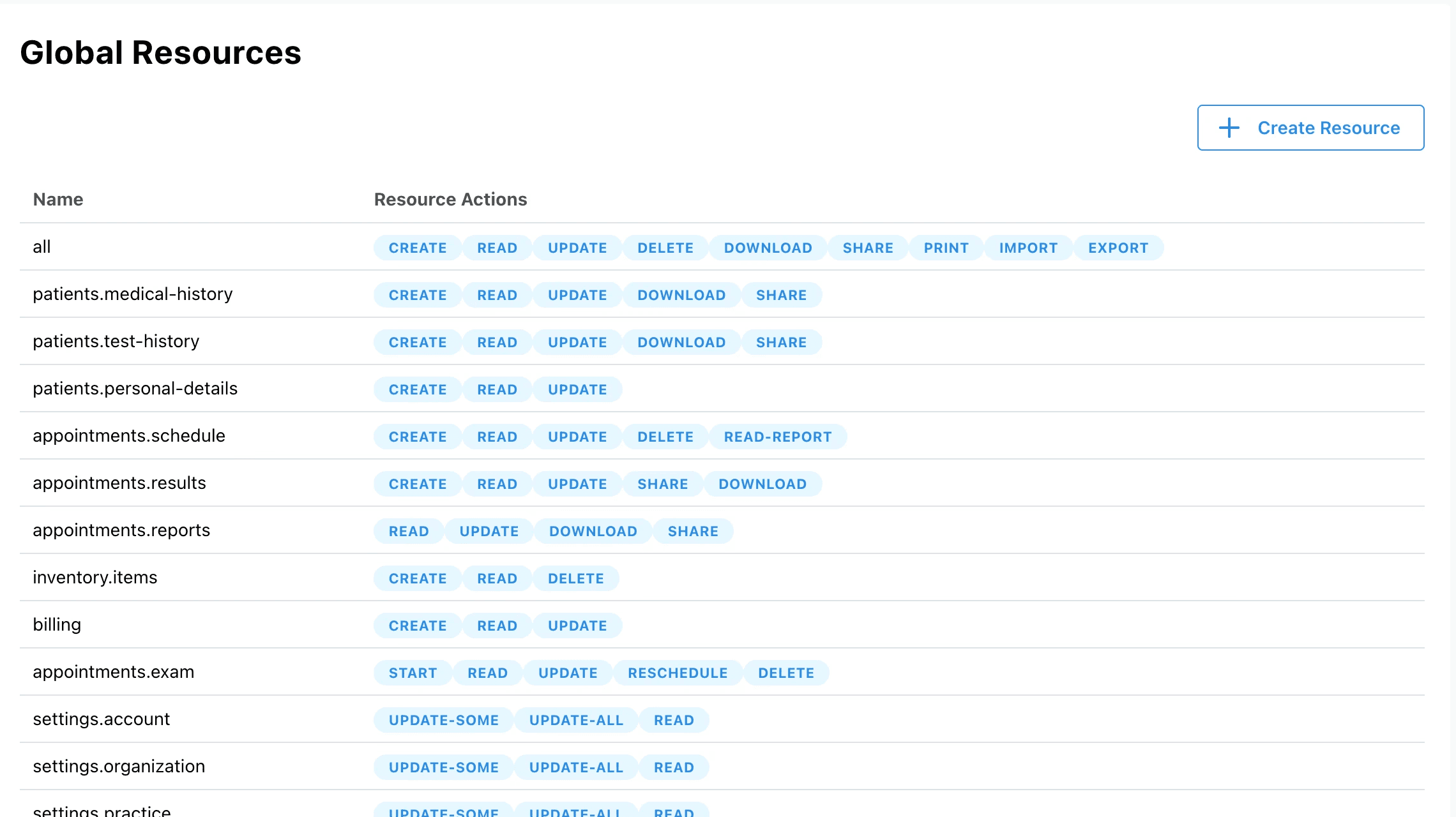

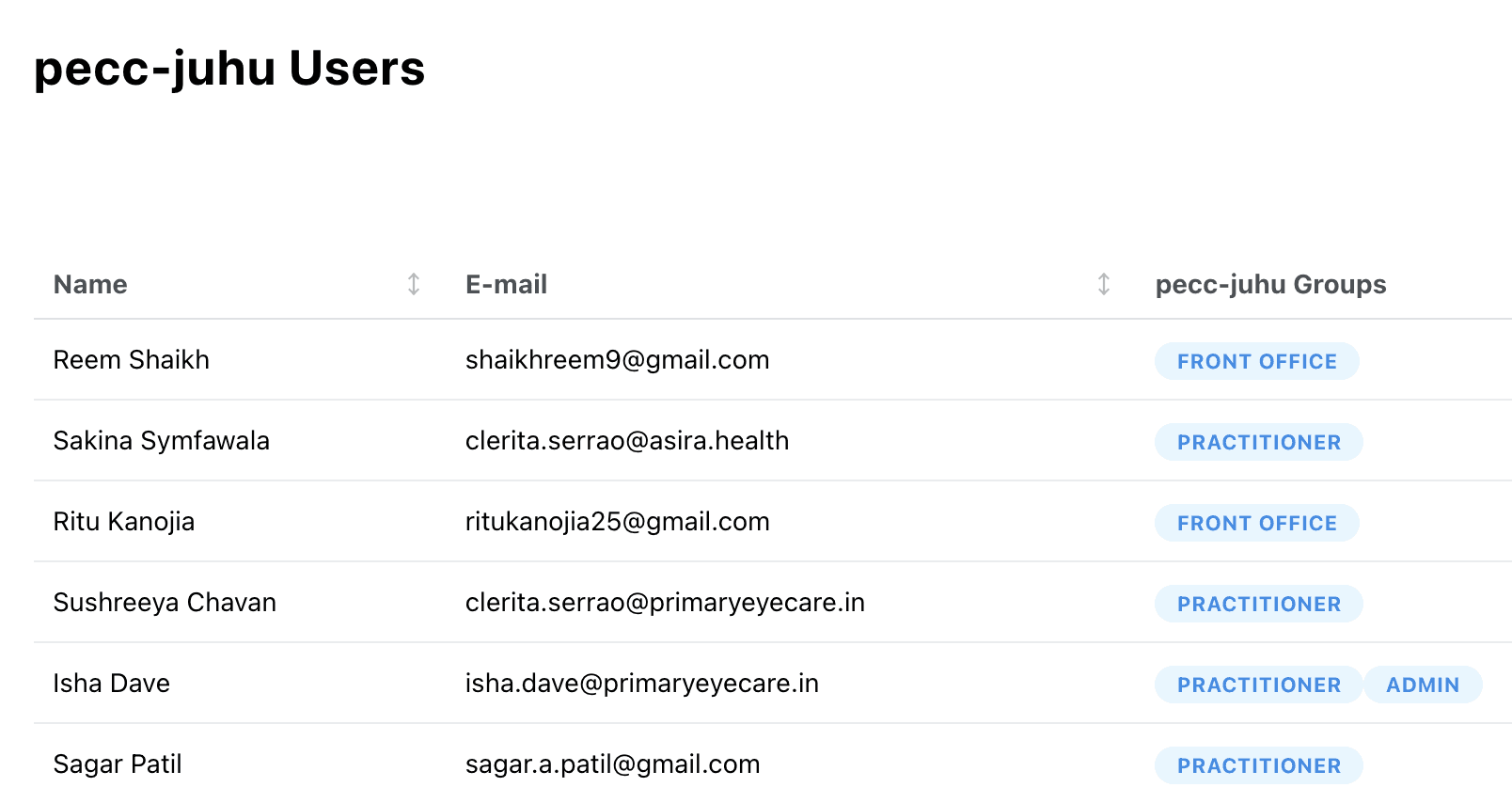
Top: Global list of actions available for different resources; Bottom Left: Resource access permissions defined for a Front Office User; Bottom Right: Roles defined for users define the resource and resource actions that each user has access to.
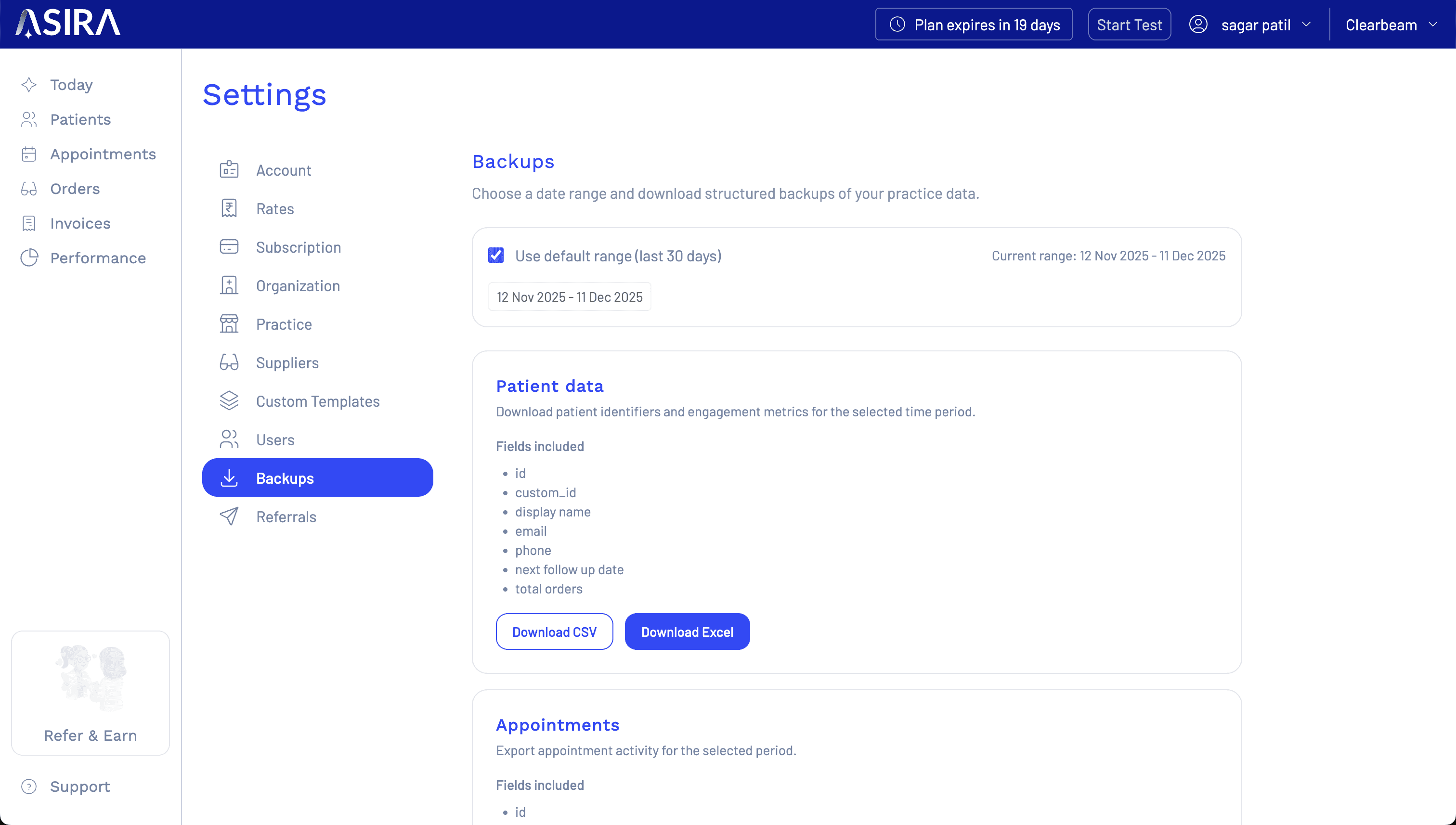
Download patient EMR and appointment data
A major worry for our users was having access to their patient data even after their subscription ended. Or perhaps they wanted to download their data to port to another provider.
To be more transparent with our users, we added a Backups section to Settings in order to allow users to download their patient data. By default, data for the last 90 days is downloaded though users can choose a date range for which they want to download data.
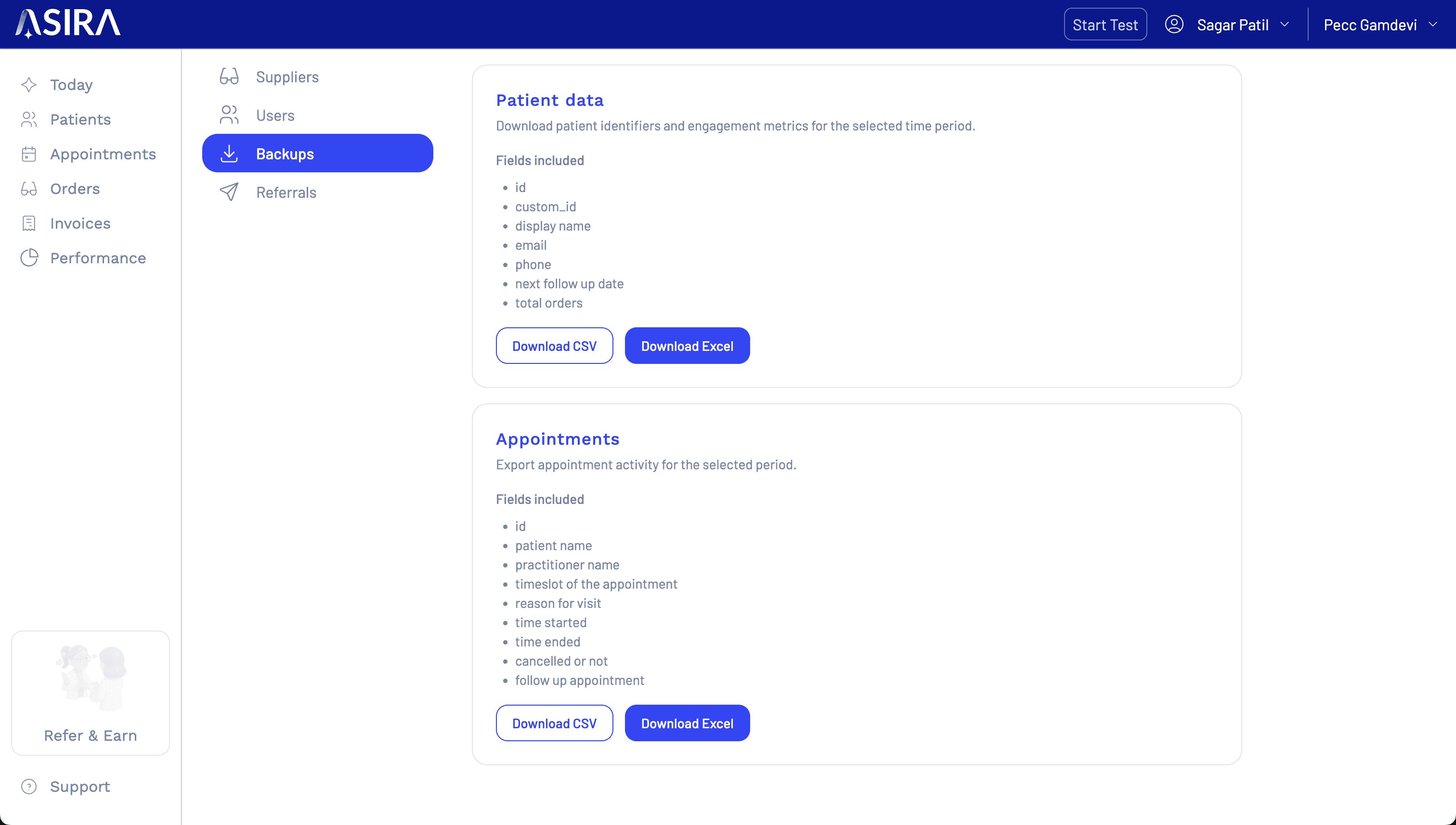
We added a Backups section in Settings that allows users to download their data in either CSV or Excel formats.
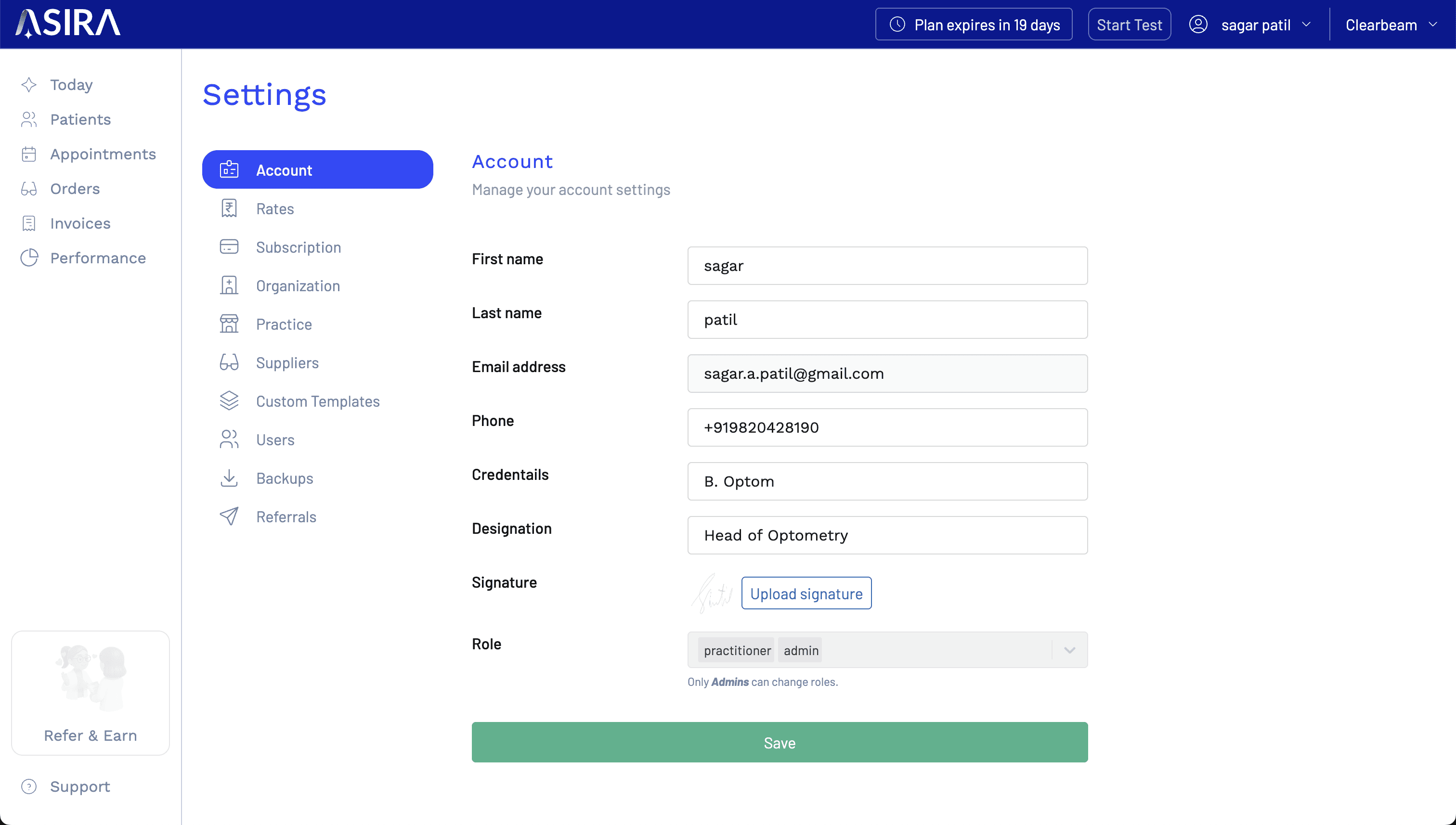
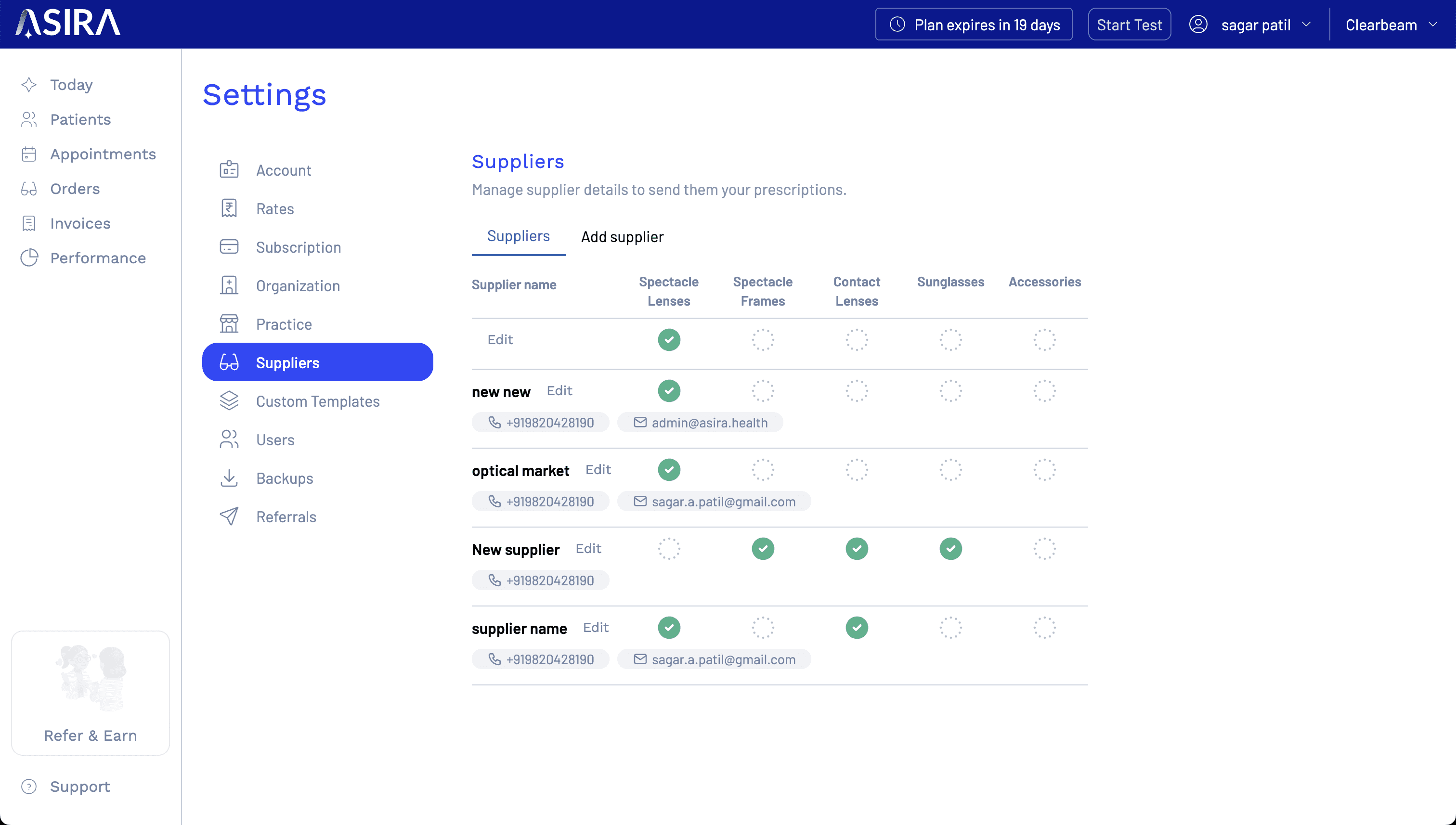
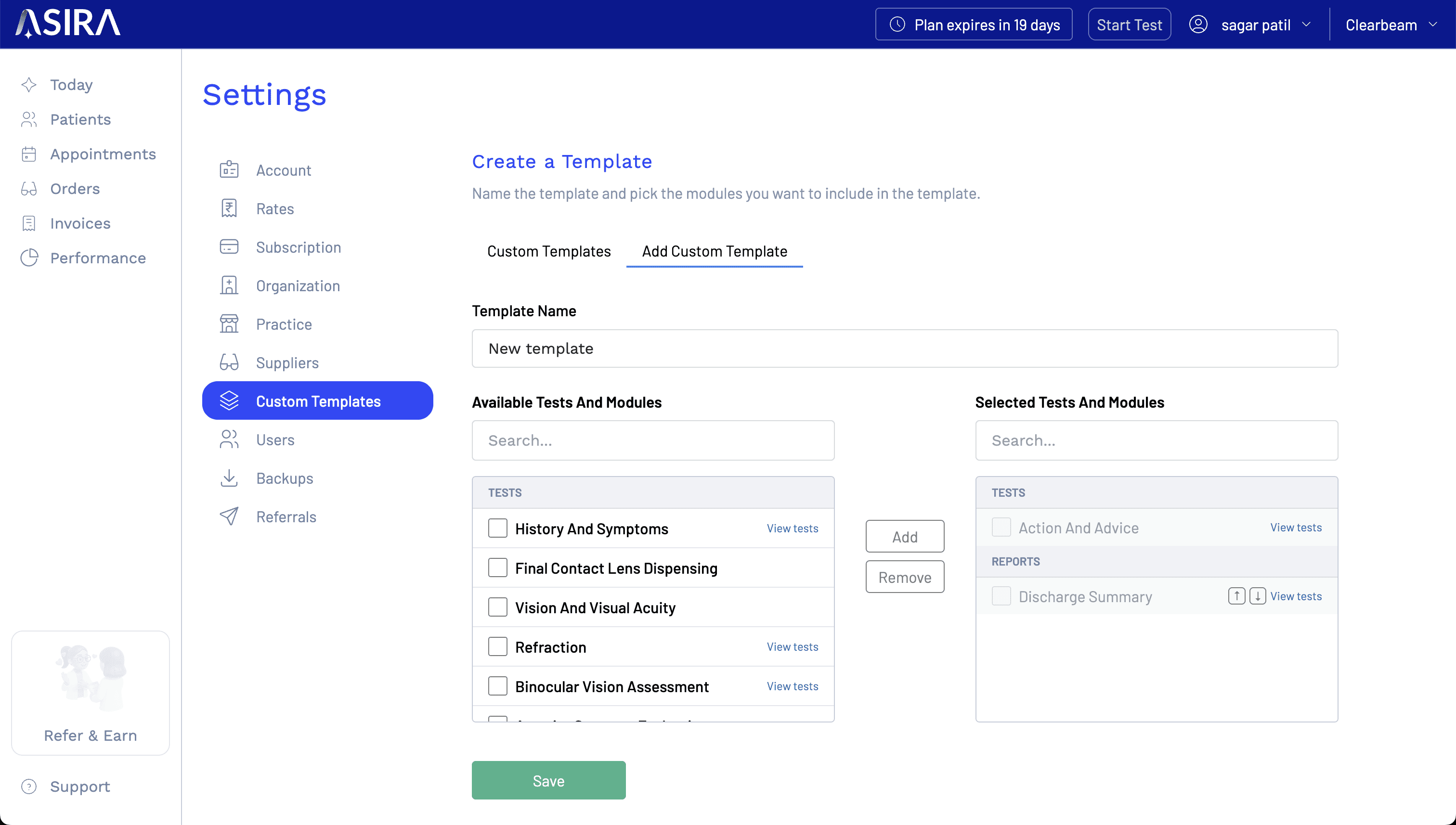
Managing practice Settings
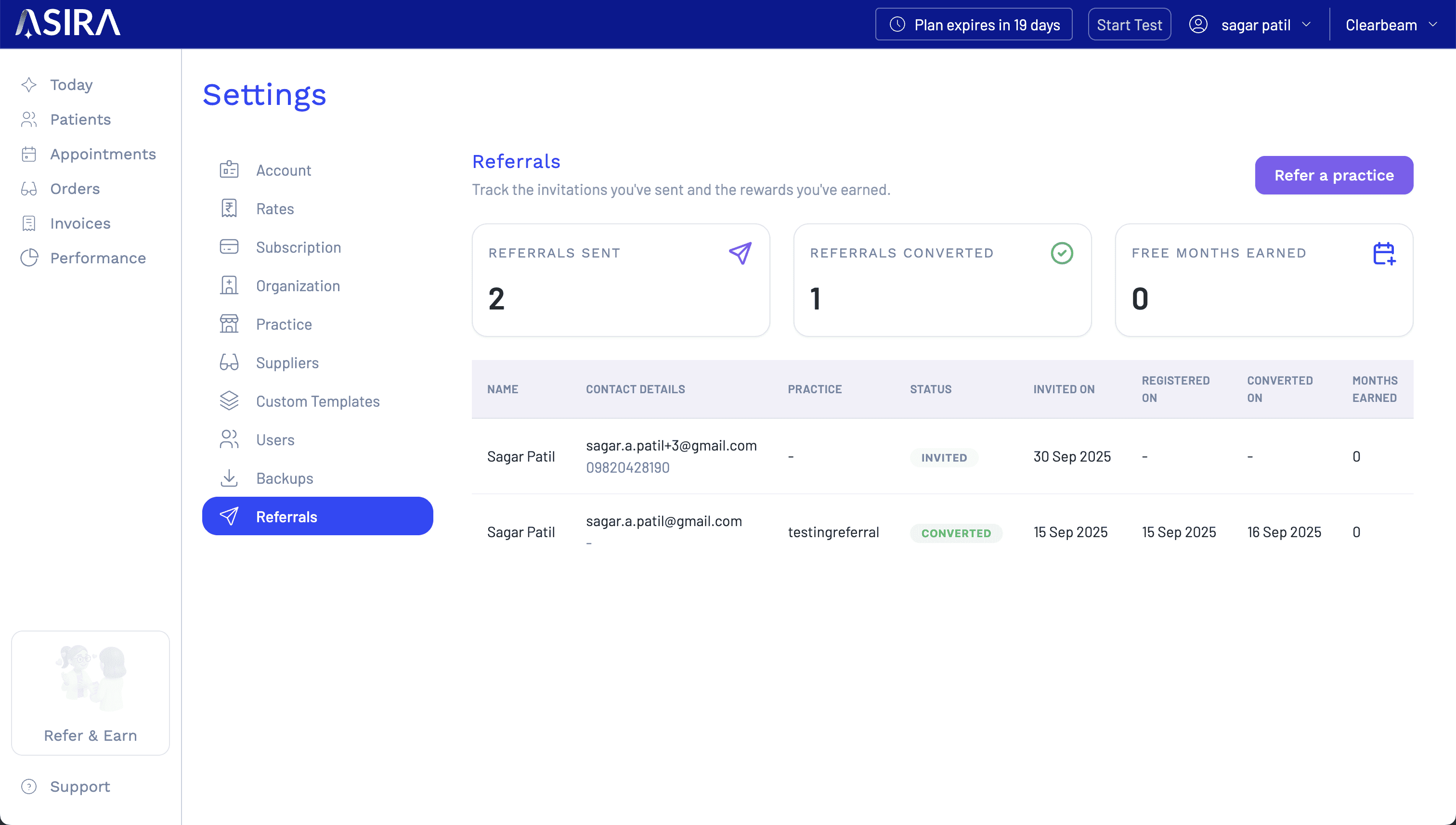
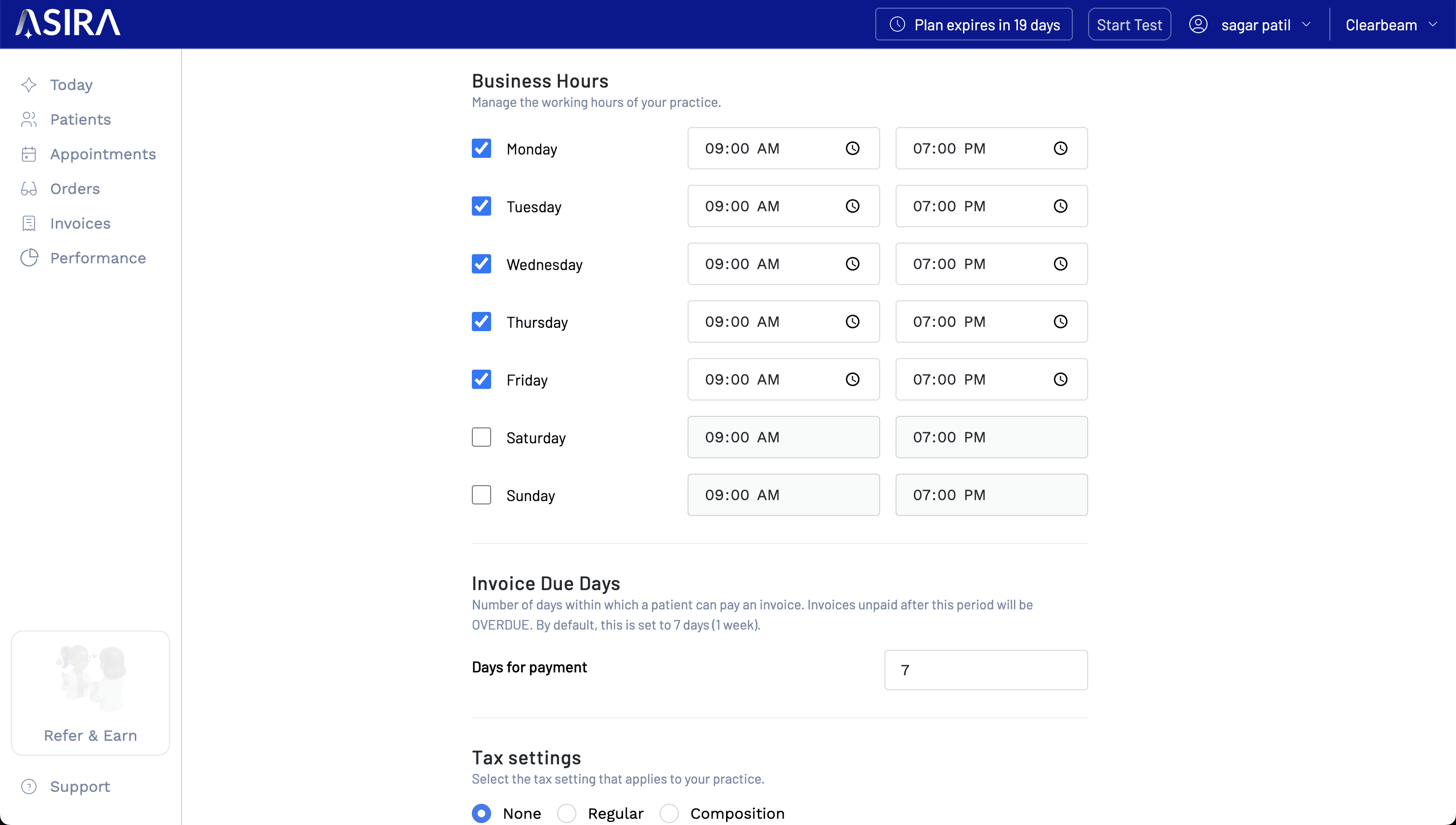
Practices can customize settings such as hours of operation, practice logo and contact details, rates for different services, suppliers and vendors, backups and more.
Results
Since acquiring our first customer in March 2023, ASIRA Clinical is now being used by over 200 practices and hospitals across India. So far we have booked over 35,000 appointments, recorded 300,000+ eye tests and manage ocular EMR data of more than 30,000 patients.

The Indian eye care market is very seasonal, with July - mid-November being slow months primarily attributed to the monsoon season, national holidays, religious festivals and children being back in school.
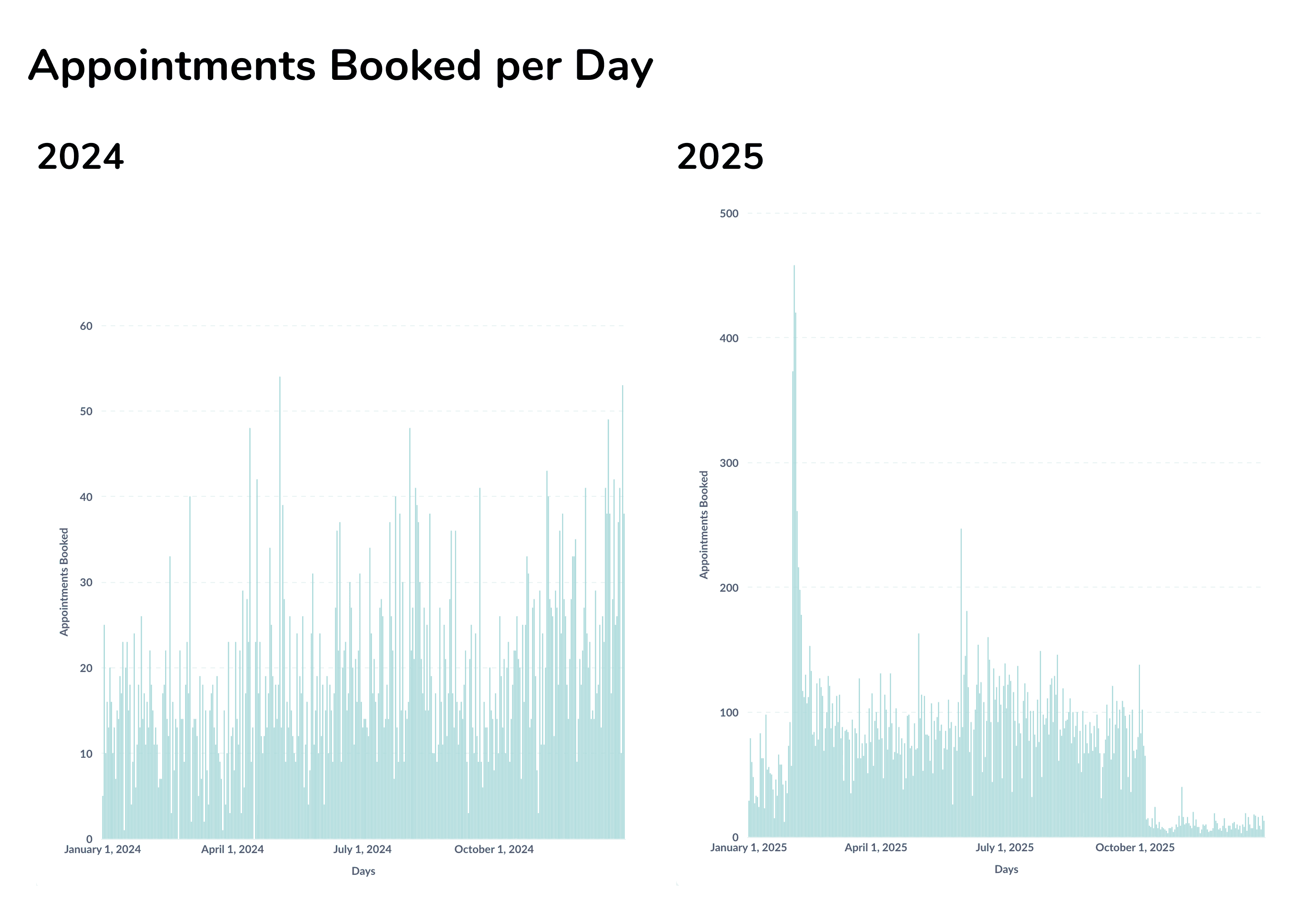
We increased the average number of appointments booked per day
from ~25-30 in 2024 to ~95-100 in 2025
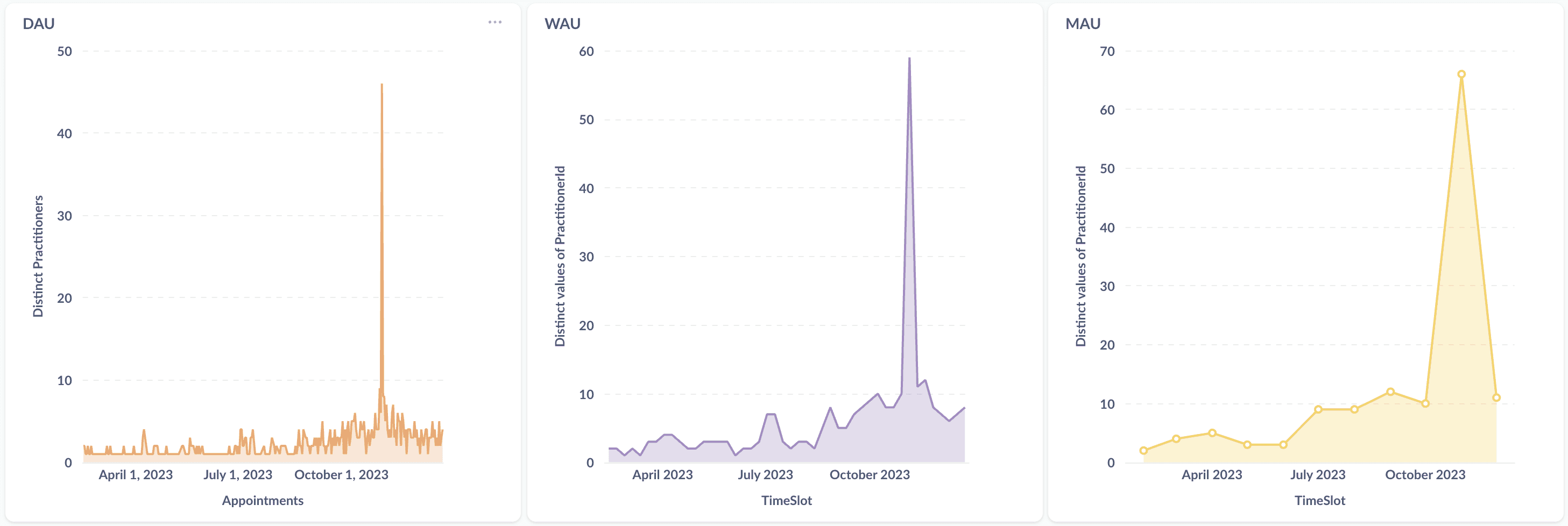
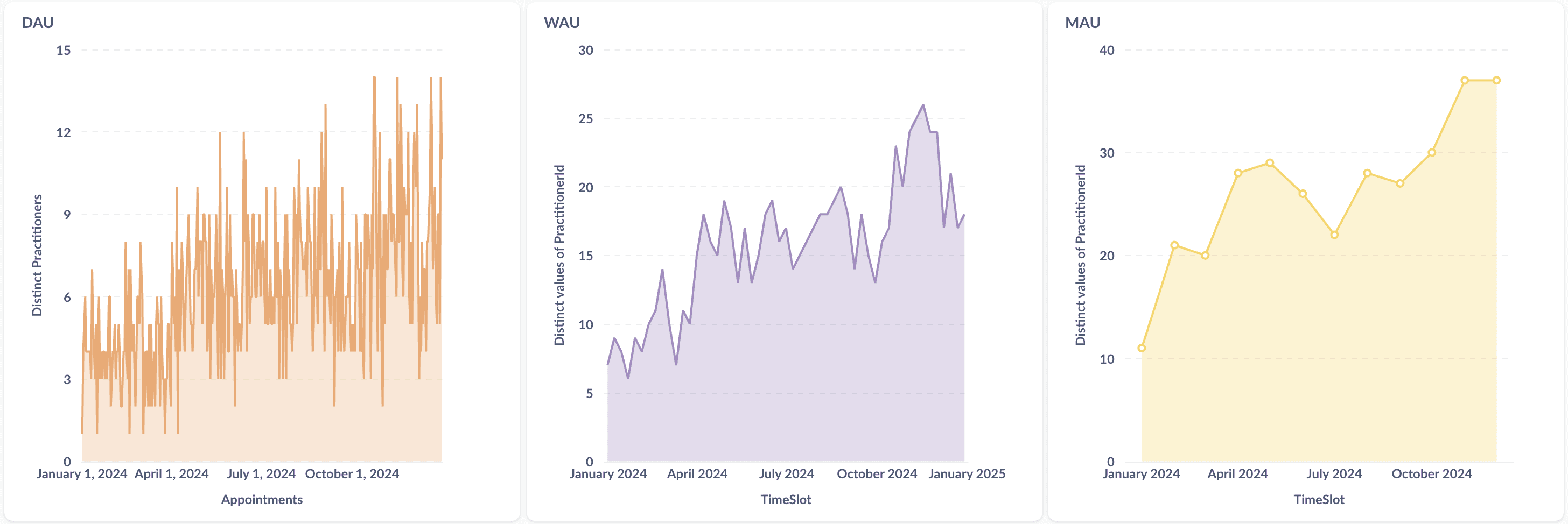
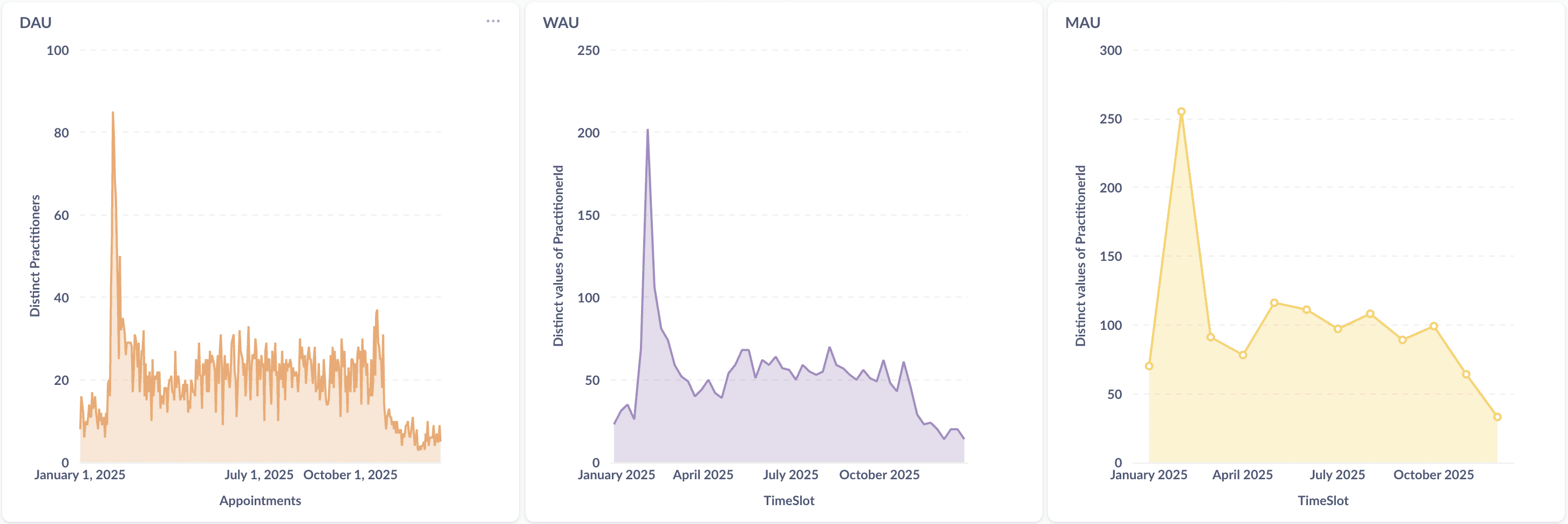
Steady increase in DAU, WAU, MAU between 2023 - 2025
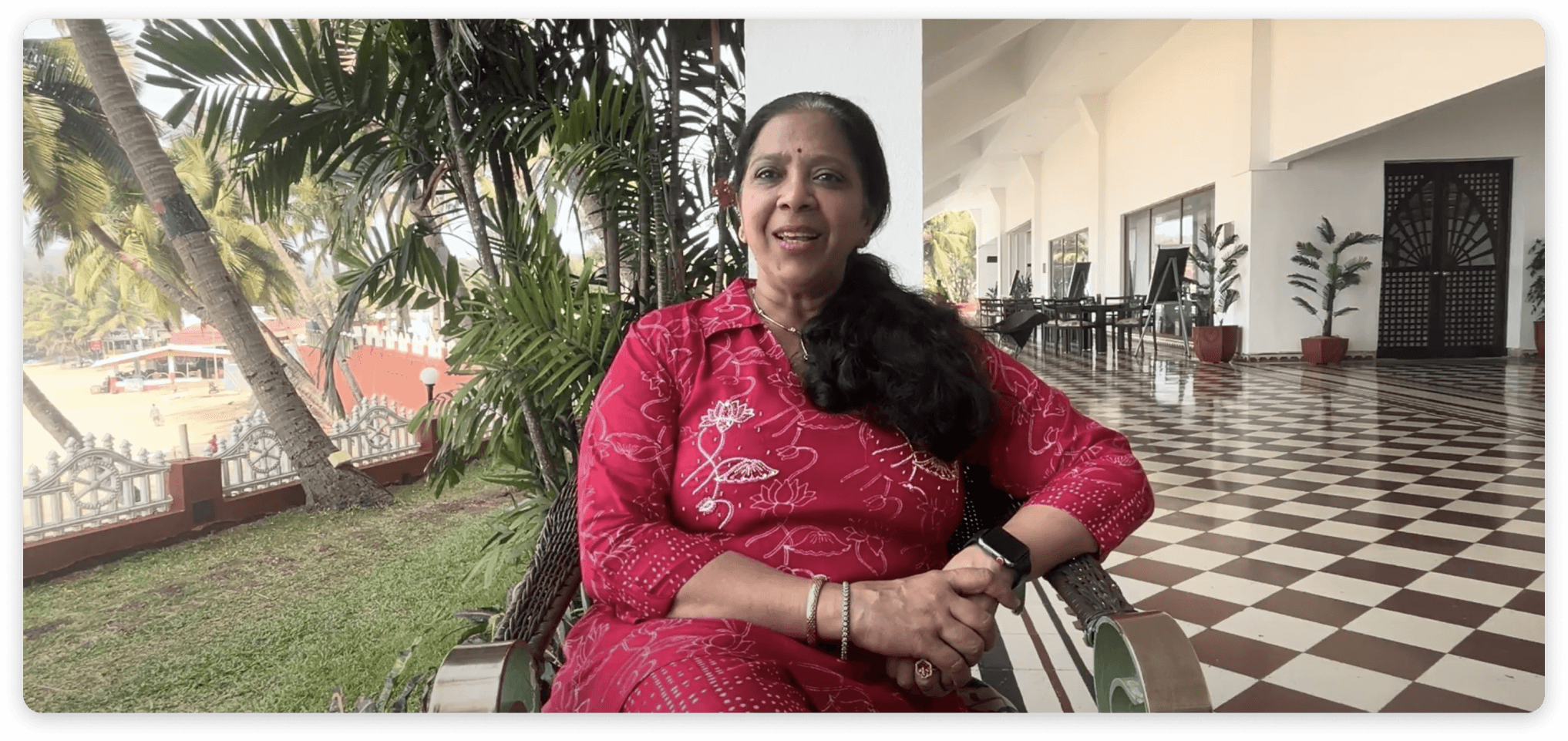
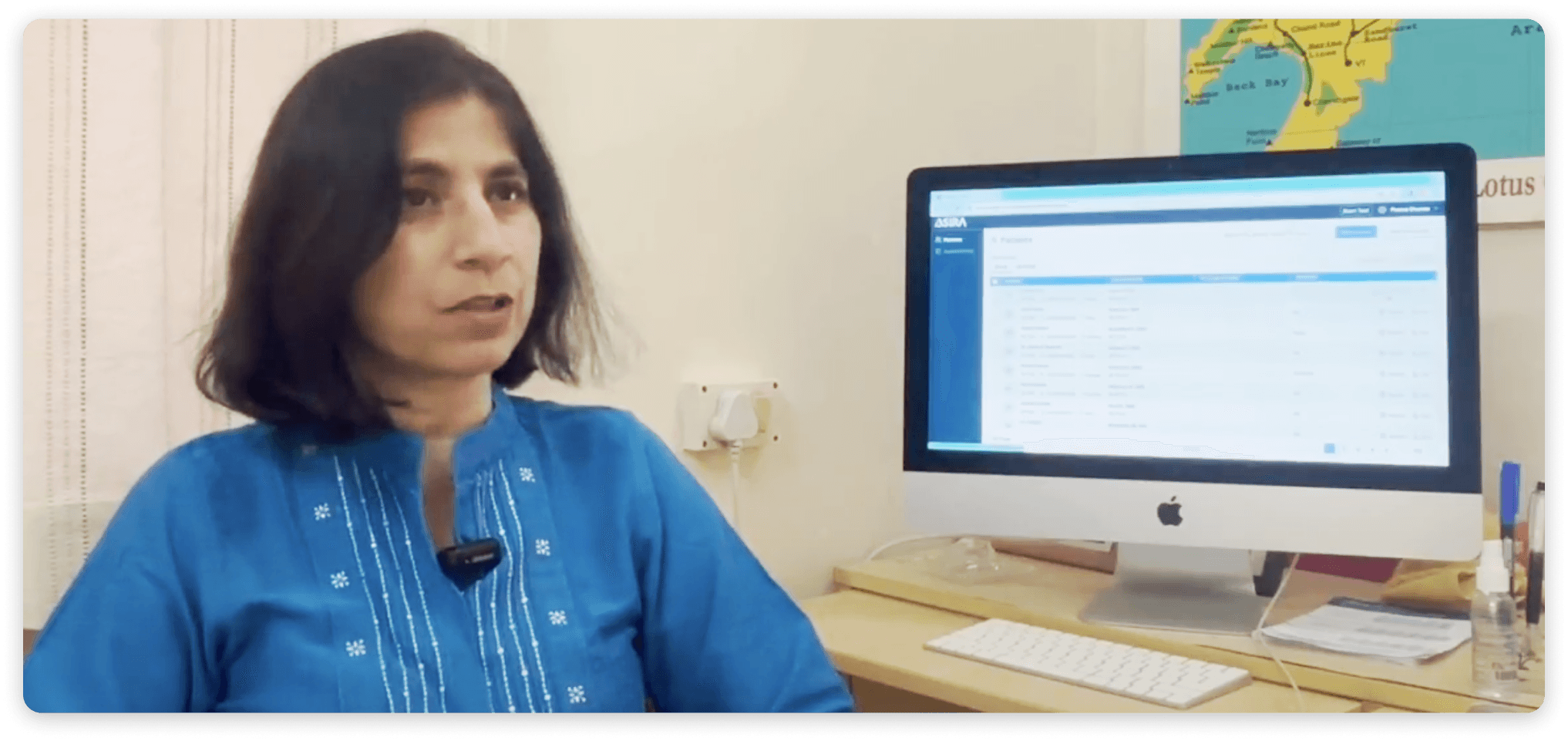
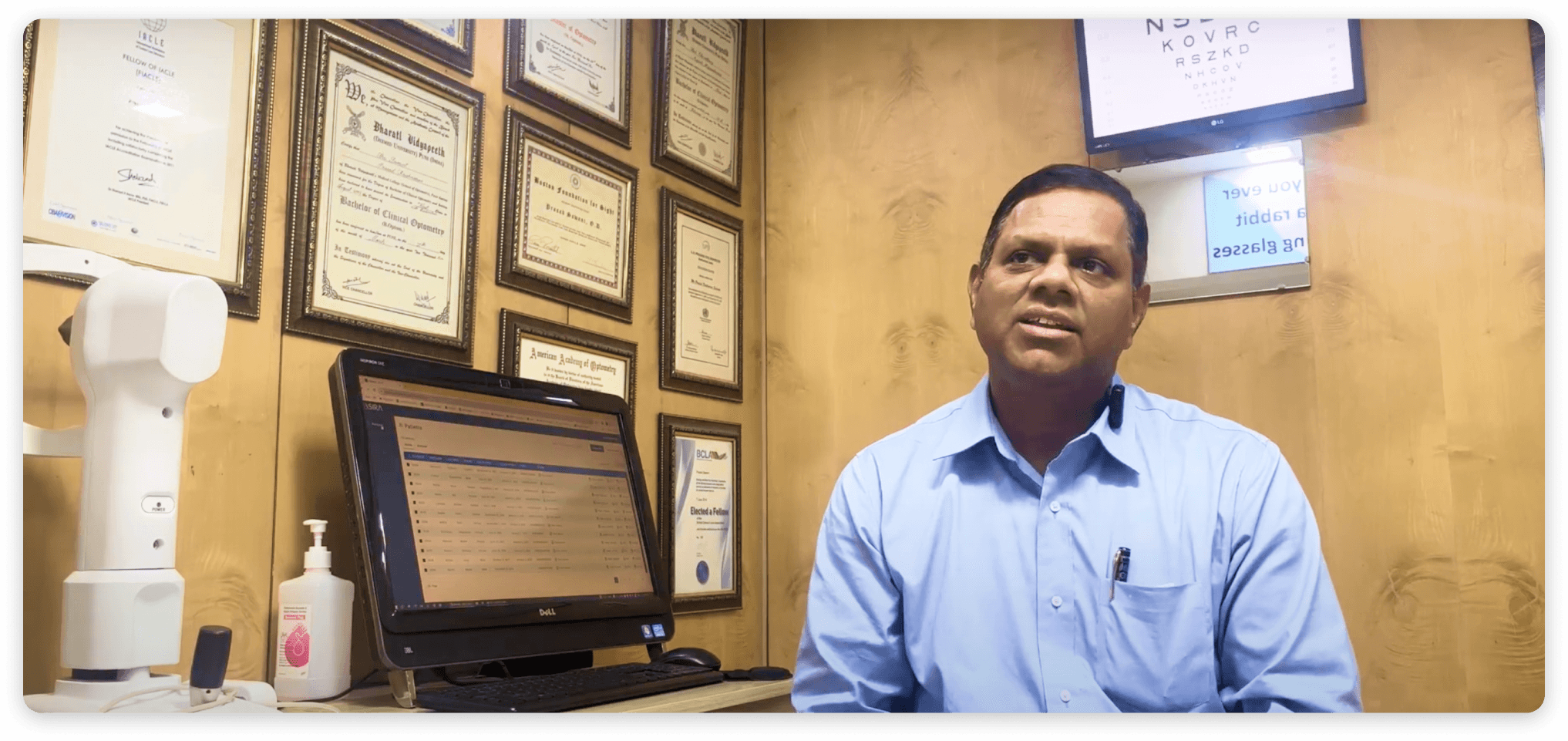
customer testimonials




Conferences
We attend conferences and seminars every year to grow ASIRA. Conferences are a great way for us to meet and talk with customers, generate leads, learn what people want from their software, and grow awareness and discovery of the ASIRA brand.
Masterclass 2022
In a week, I designed and built a launch page and a static HTML product demo which we used to attract leads at our first conference in 2022 at Masterclass, Pune.
During the three day event, we captured emails and phone numbers of hundreds of leading optometrists and ophthalmologists that expressed interest in ASIRA.
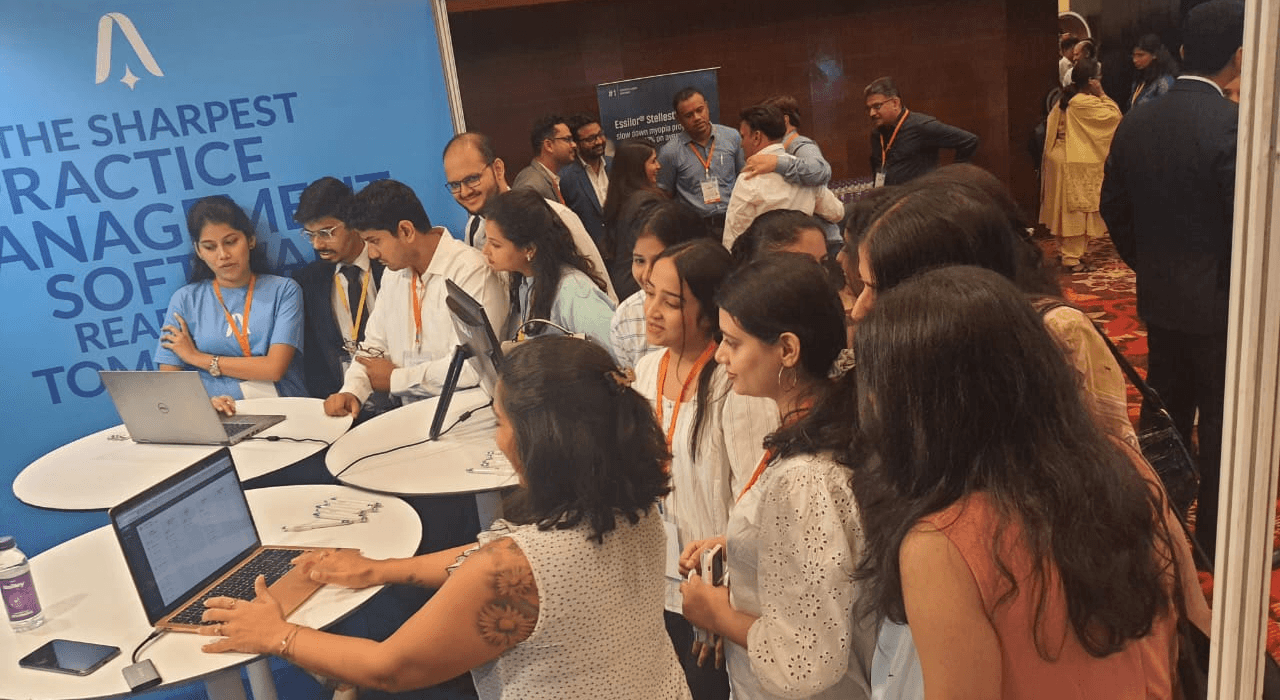
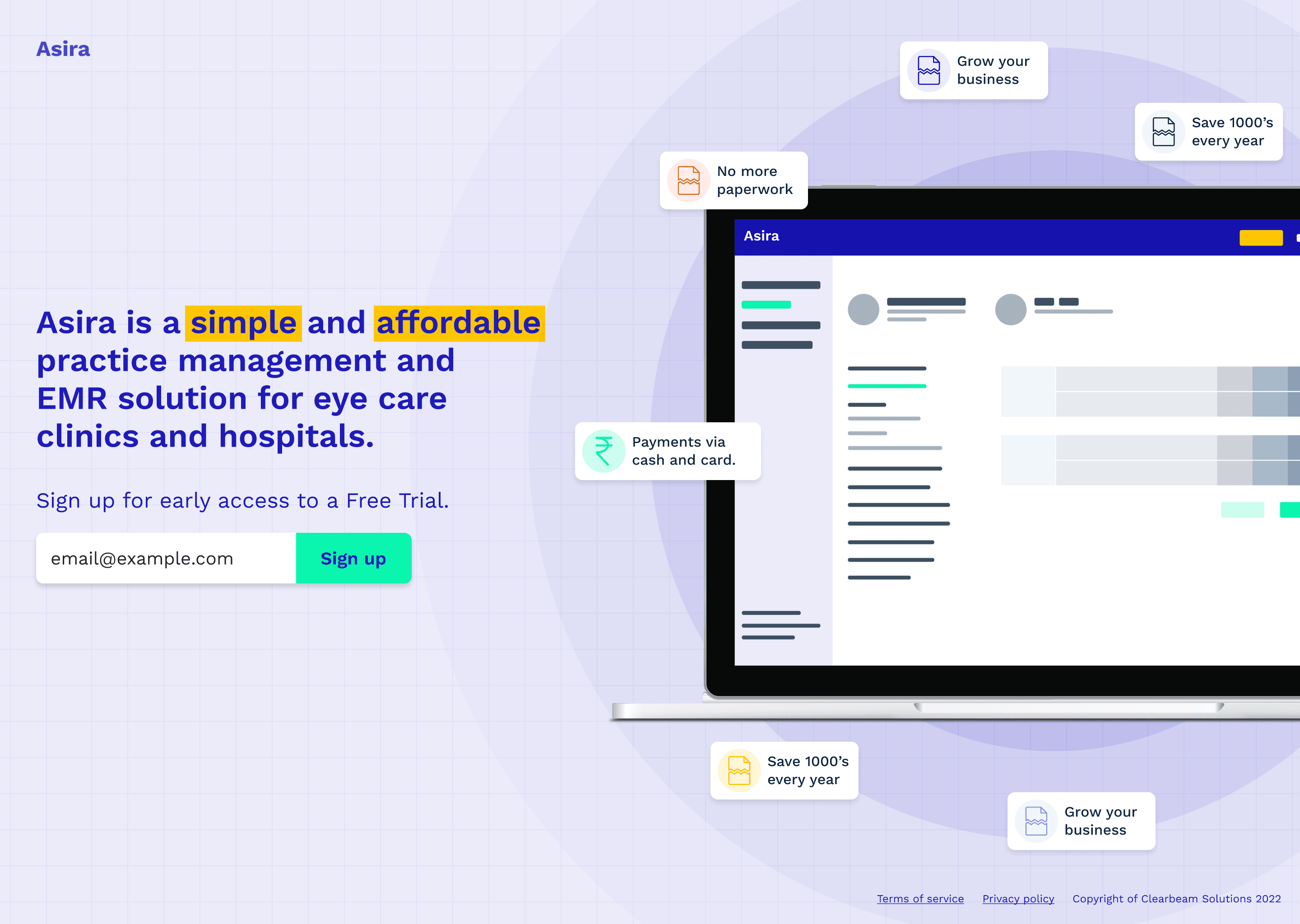
The very first version of ASIRA was a launch page that we created for Masterclass 2022 in order to gauge user interest and capture leads.
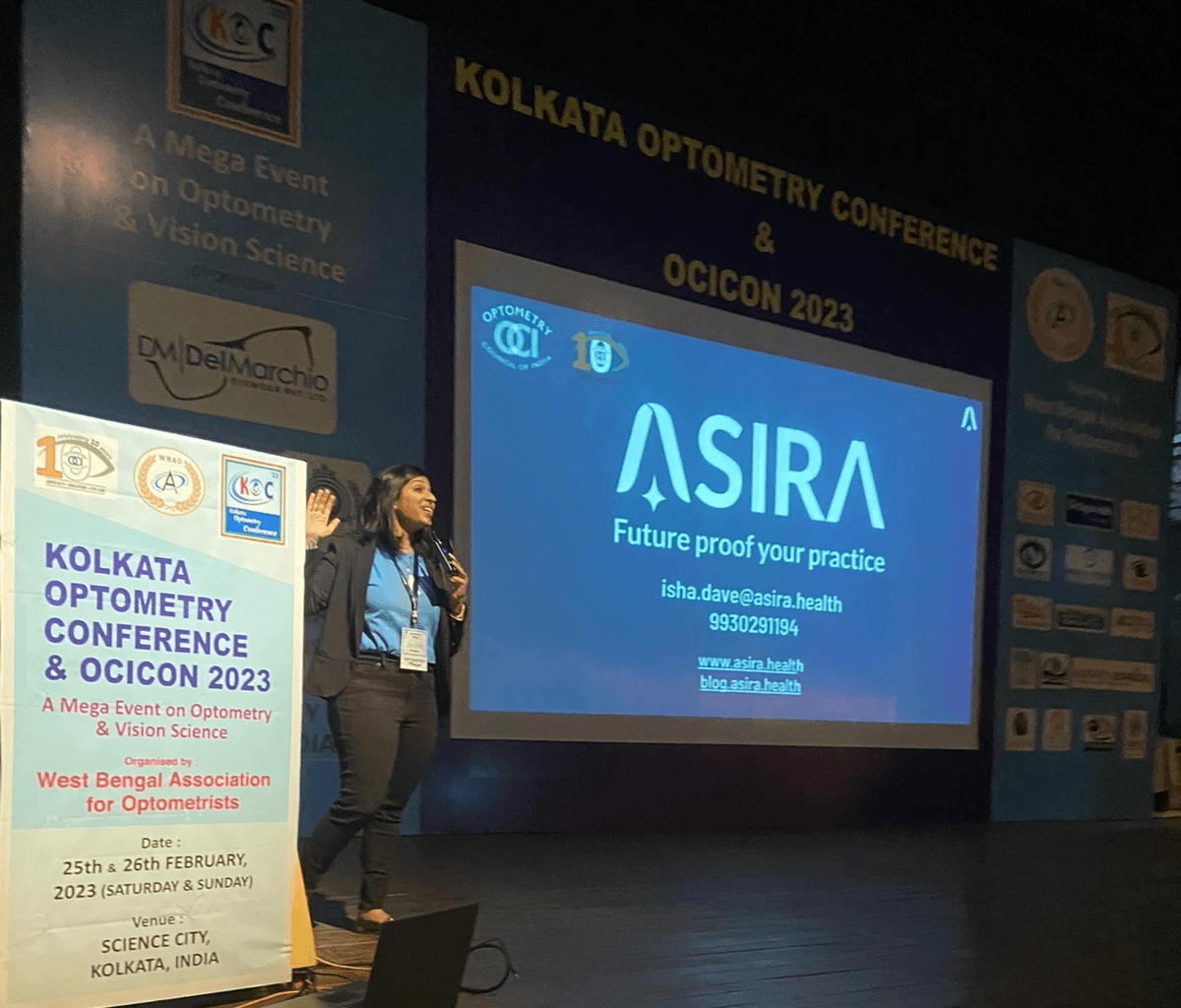
OCI 2023

Between January and February 2023, we betaed our MVP across five territories in India, as part of a series of seminars organized by the Optometry Council of India.
During this time, we also partnered with the OCI to offer all OCI members a 10% discount on all ASIRA plans.

EIVOC 2025
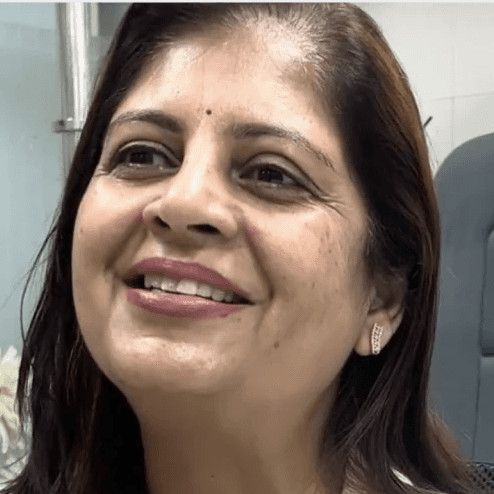
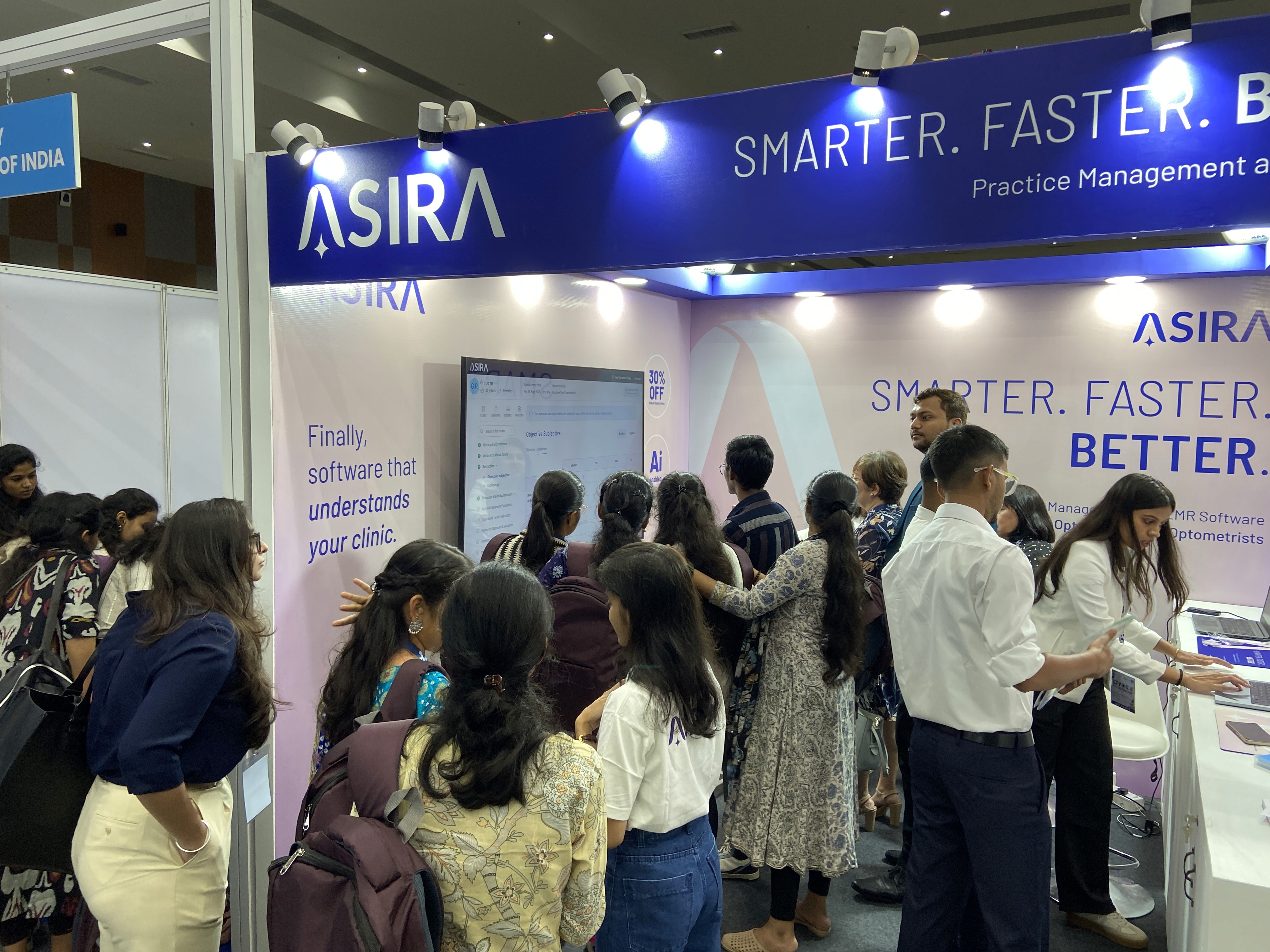
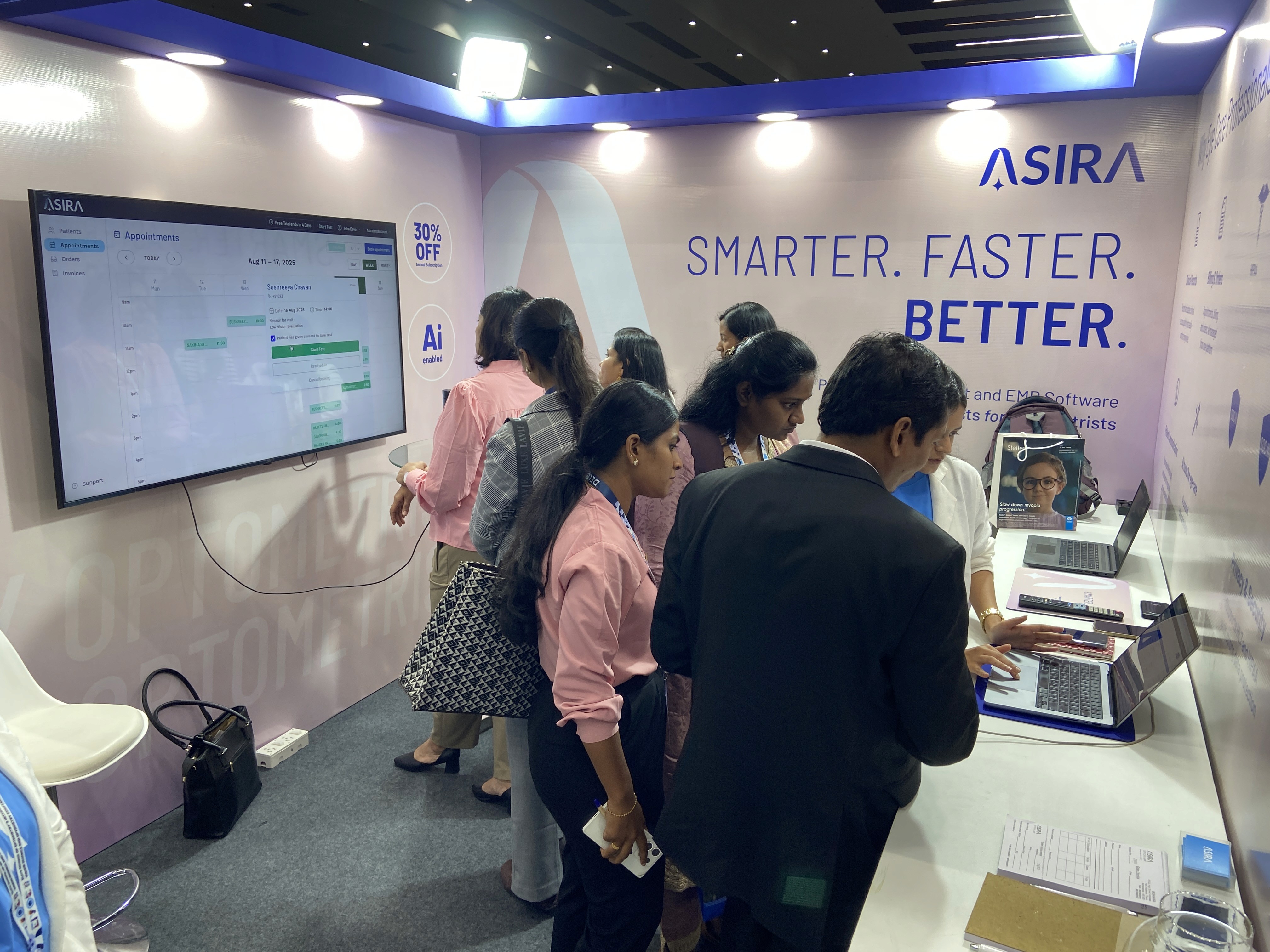
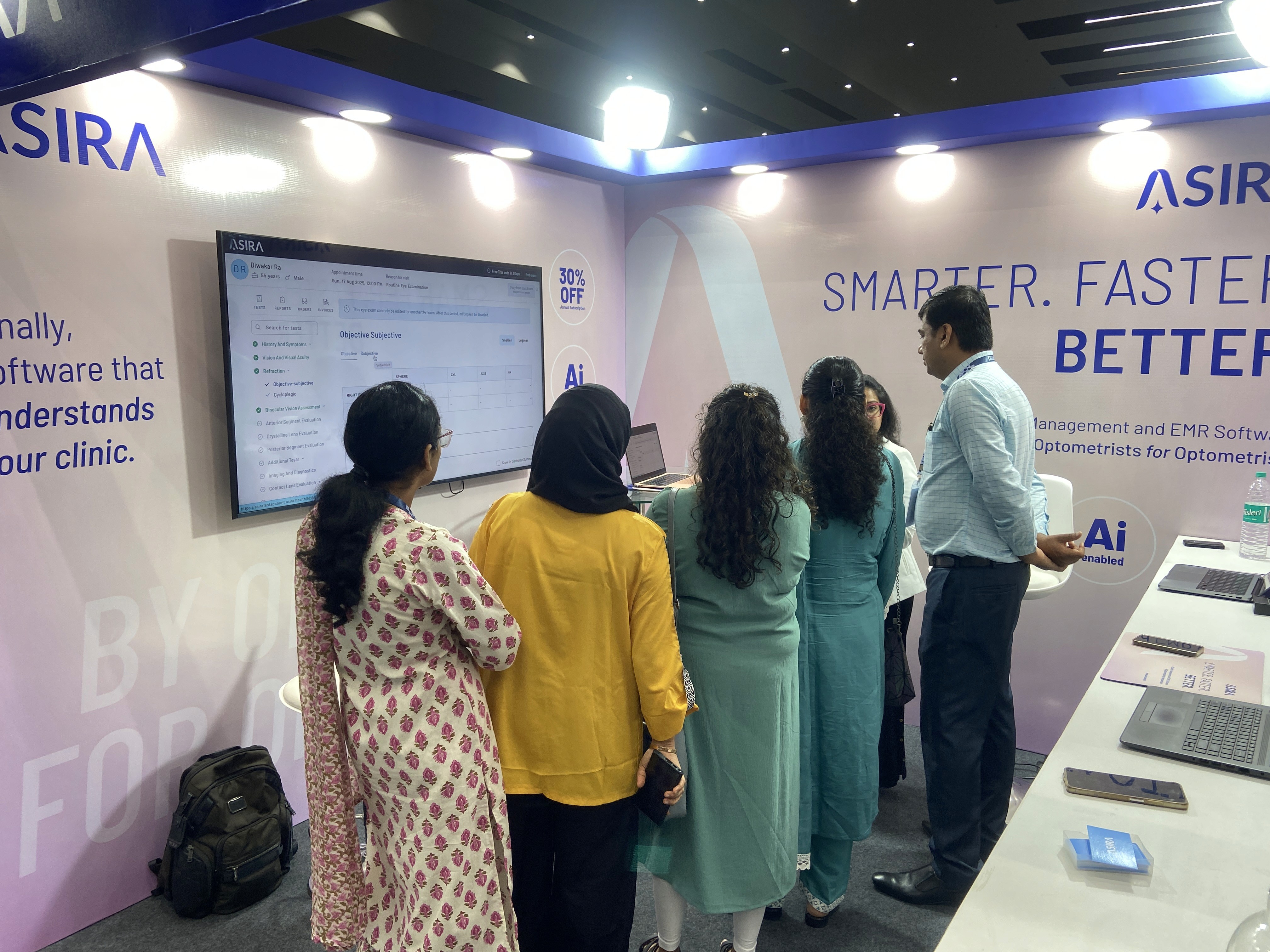
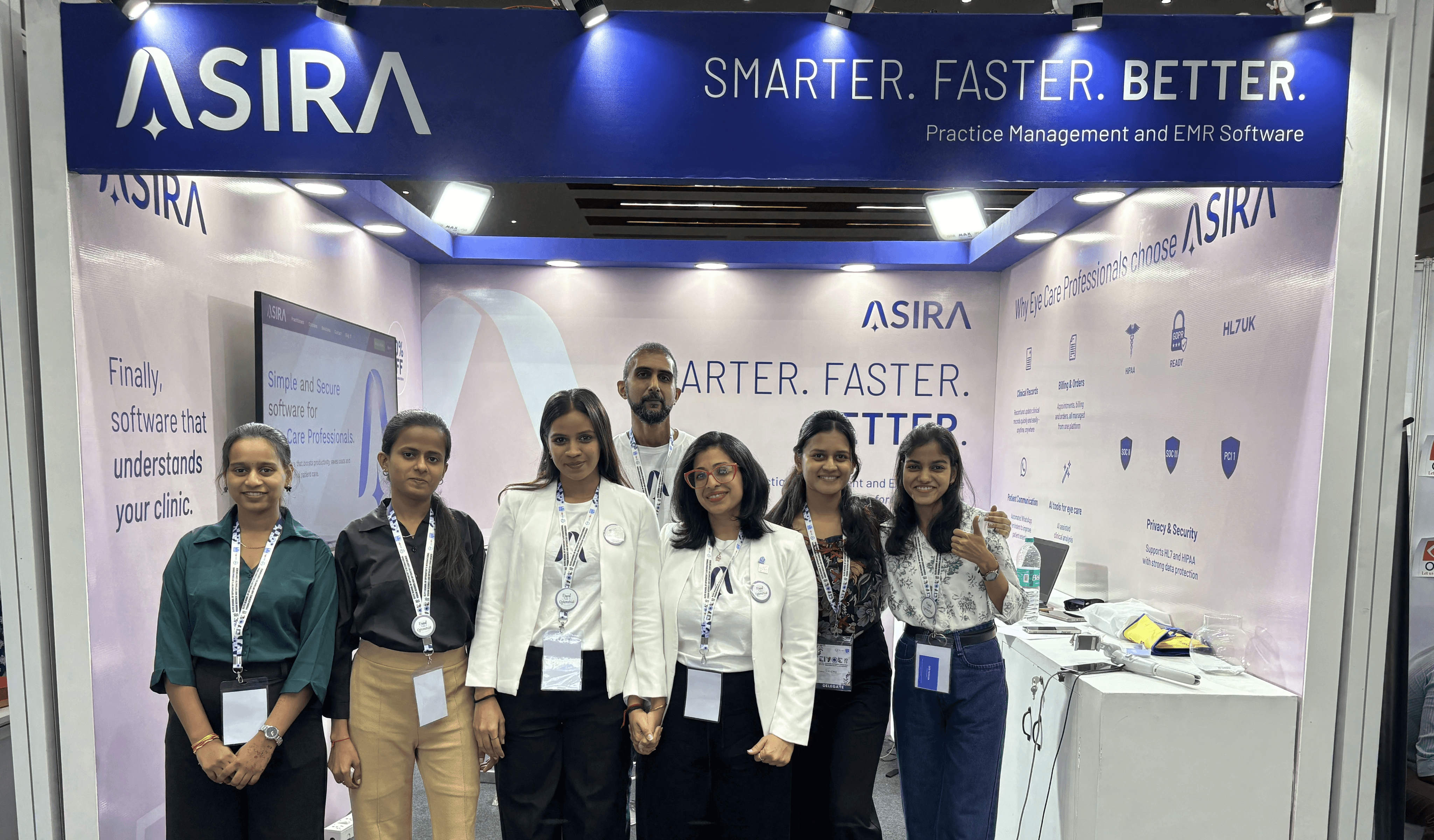
In August 2025, team ASIRA attended EIVOC 2025 in Chennai, India, a conference aimed at bringing optometrists together to learn from a series of seminars and workshops aimed at helping eye care professionals to learn more about emerging technologies, new products and tools, current ocular trends, ways to grow their practice and much more.
Learnings
Updated my coding skills to be able to take a B2B product from 0-1
We initially considered outsourcing the engineering since I hadn't coded in over six years. However, as a founder I think it's important to know your product inside out, including how the codebase works.
I taught myself how to think and code in React using Nextjs. In addition, I also integrated Prisma ORM, Postgres, Docker, Ansible, the AWS Stack and myriad client side libraries.
These days, I rely on AI tools such as Cursor, BugBot and ChatGPT's Codex to build and prototype components, APIs and pages. This has helped us rapidly deploy features, updates and bug fixes every week.


















My updated toolkit that I actively use in order to build and deploy ASIRA Clinical and
the ASIRA Optician App.
Empathise with the team and adapt to everyones different learning curves
As the only engineer and designer on the team, I have to routinely check my expectations of the other members of the team who are not as technically proficient as myself.
Healthcare professionals are generally late adopters when it comes to technology and need extra support and empathy when guiding them through a technical product.
Acknowledgements
ASIRA would not be possible without the combined effort of the engineering, sales and marketing teams. As a small team of three, everyone put in their best work to build India's first eye care specific EMR. A huge thanks to Shirish Kamath for building the initial engineering infrastructure that helps Asira grow and scale with minimal effort.
A big thanks also goes out to Chirag Vyas who interned with ASIRA during the summer of 2023 and who's code is still an integral part of the product.
VISIT ASIRA CLINICAL
Frankensteined in Mumbai.
Fueled by YouTube, 90s cartoons & Heavy Metal.